Best for high-volume facilities: closed-loop industrial wash bay system. Best for maximizing reclamation on an existing pad: multi-stage industrial water filtration system. Best for truck wash and DOT-regulated sites: oil-water separator system. Every wash bay reclaims water differently depending on how many treatment stages it runs and whether it's built as a true closed loop or a single-pass rinse with partial recovery — and that design choice is what separates a compliant, cost-controlled operation from one that's hauling wastewater off-site every week.
- Wash bay systems ranked by water reclamation rate in 2026 come down to design tier: closed-loop, multi-stage filtration, or single-pass.
- Closed-loop industrial wash bay systems reclaim the most water for permanent, high-volume facilities.
- Multi-stage industrial water filtration systems get the best reclamation rate improvement on an existing wash pad.
- Oil-water separators are non-negotiable for truck washes facing state and local discharge permits.
- Portable wash pads and basic pressure washer setups trade reclamation rate for mobility and lower footprint.
Why this matters
Most facility owners find out their reclamation rate is a problem the same way: a discharge permit inspection flags total suspended solids, or the water hauling invoice doubles because the storage tank fills faster than expected. Neither is a surprise if the system was never designed to reclaim water in the first place — it was designed to move water, and treatment got added as an afterthought.
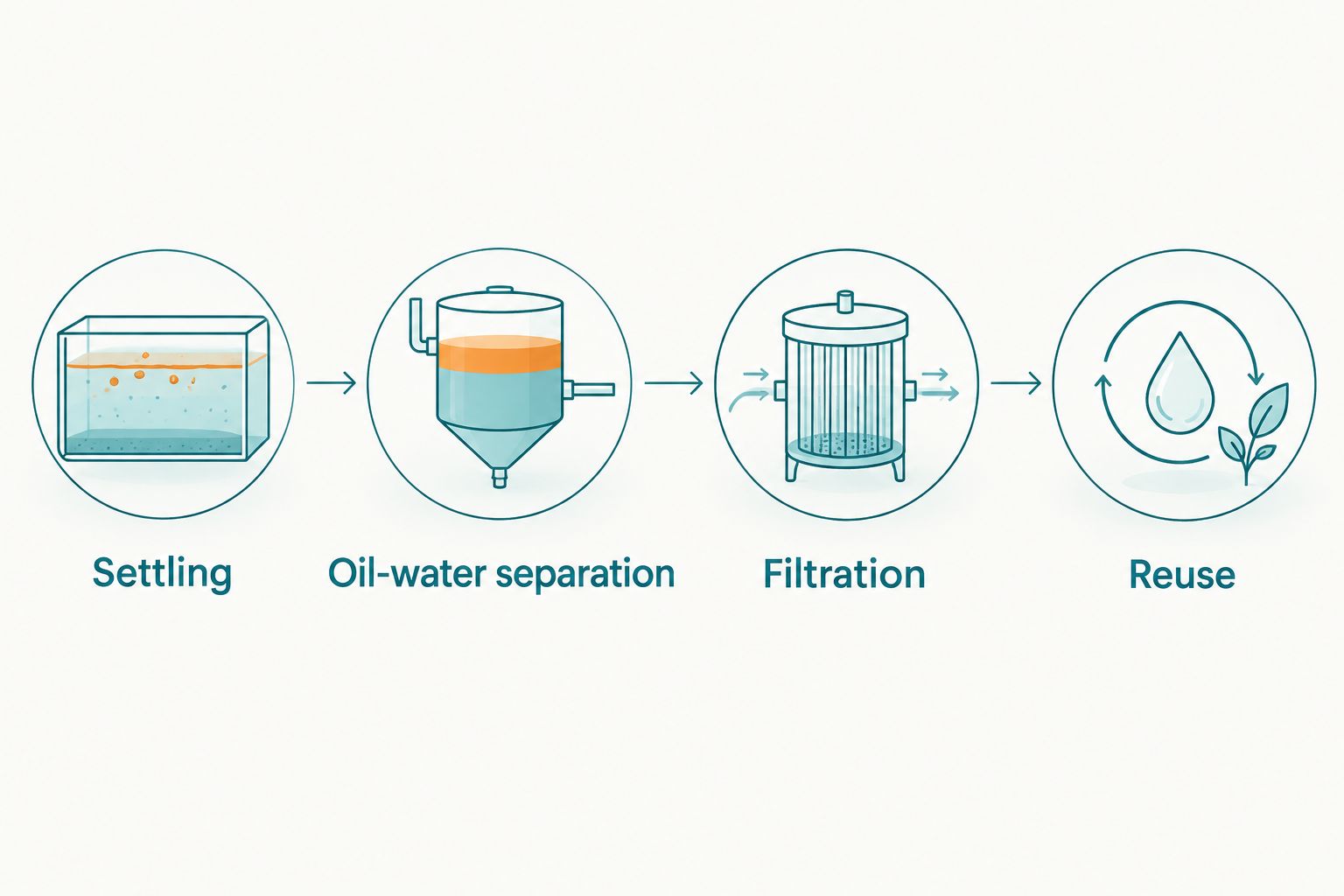
A properly specified industrial wash bay system is built around reclamation from the start: settling, separation, filtration, and reuse, sized to the vehicles or equipment you're washing and the volume you're running through the bay daily. Retrofitting reclamation onto a single-pass wash pad in 2026 is possible, but it rarely reaches the rate a purpose-built closed-loop system hits on day one.
What makes the best wash bay system for water reclamation
- Number of treatment stages — settling, oil-water separation, and filtration in sequence beats a single filter basket every time.
- Closed-loop vs. single-pass design — closed-loop systems recirculate treated water back to the wash gun; single-pass systems send most of it to disposal.
- Oil-water separation efficiency — undersized separators pass oil into the filtration stage and shorten filter life fast.
- Solids handling capacity — heavy equipment and construction vehicles load more sediment than passenger fleets, and the system has to be sized for it.
- Discharge permit compliance — state and local permits set the standard you're actually being measured against, not a generic industry number.
- Mobility and footprint — permanent facilities can run larger multi-stage systems; remote job sites need something that reclaims water in a smaller, portable package.
Wash bay systems at a glance
| System type | Best for | Reclamation design tier | Key limitation |
|---|---|---|---|
| Closed-loop industrial wash bay system | Permanent, high-volume facilities | Highest — full recirculation loop | Higher upfront construction and install scope |
| Multi-stage industrial water filtration system | Upgrading an existing wash pad | High — added stages boost an existing setup | Only as good as the pad it's retrofitted onto |
| Oil-water separator system | Truck wash / DOT-regulated sites | Moderate to high, compliance-focused | Doesn't address suspended solids alone |
| Car wash water recycling system | Fleet operators washing daily | Moderate — built for repeat-cycle reuse | Needs consistent maintenance to hold performance |
| Portable wash pad with reclamation tank | Remote or temporary job sites | Low to moderate — tank-based, not full loop | Requires periodic pump-out and hauling |
| Hot water pressure washer with basic containment | Spot-cleaning heavy equipment | Lowest — containment, not reclamation | Not a compliance solution on its own |
1. Closed-loop industrial wash bay system: best for permanent, high-volume facilities
A closed-loop wash bay recirculates treated water back through the wash gun instead of sending it to disposal after one pass. Evans Equipment & Environmental designs these as complete builds — pad, containment, treatment train, and pump-back loop — so the reclamation rate is engineered into the concrete and piping layout, not bolted on afterward.
Closed-loop wash bay pros:
- Highest reclamation rate of any option on this list because water is reused, not discharged
- Lower ongoing water hauling and fresh-water intake costs over time
- Built to match your specific vehicle type, wash volume, and site layout
Closed-loop wash bay cons:
- Requires the largest upfront construction scope of any system here
- Needs a dedicated equipment room or pad footprint
- Retrofitting one onto an existing pad is harder than building it in from the start
Best for: facilities running multiple washes a day where fresh-water cost and discharge volume are the main pressure points.
Verdict: Buy if you're building new or replacing an aging wash pad in 2026 — this is the system type that actually earns the label "reclamation."
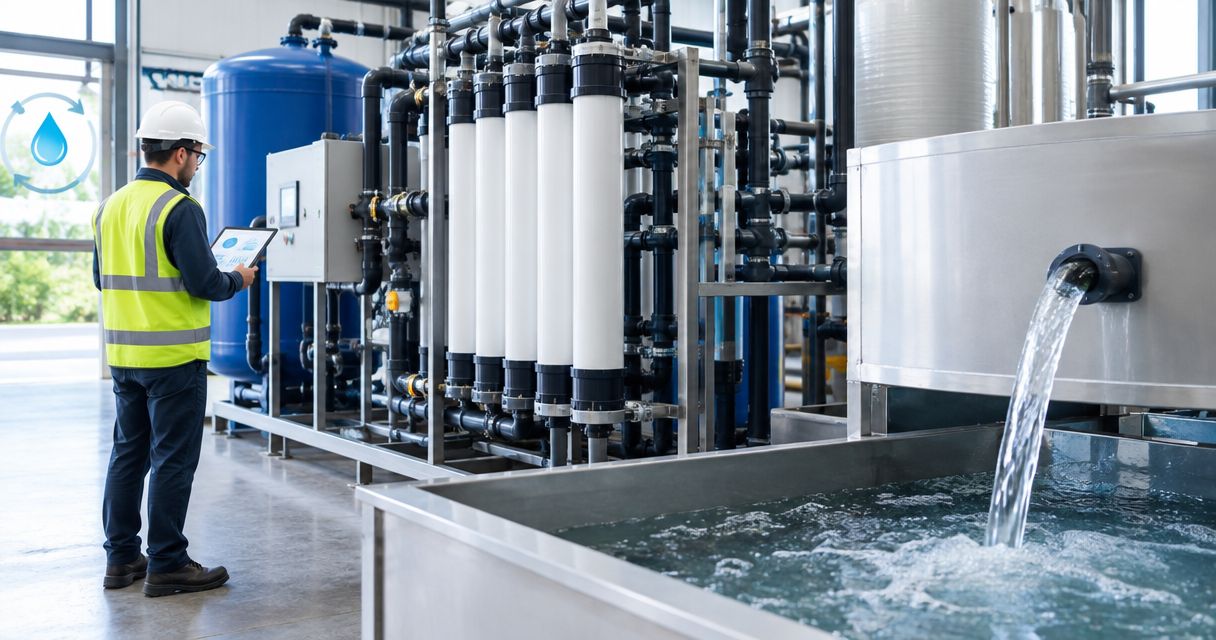
2. Multi-stage industrial water filtration system: best for maximizing reclamation on an existing pad
Not every facility is ready to rebuild the wash bay from the ground up. A multi-stage industrial water filtration system adds settling, separation, and filtration stages onto a pad that's already pouring water to disposal, pulling the reclamation rate up without a full rebuild.
Multi-stage filtration pros:
- Improves reclamation rate on a wash pad that already exists
- Modular — stages can be added as volume or compliance needs grow
- Shorter install timeline than a ground-up wash bay build
Multi-stage filtration cons:
- Reclamation ceiling is limited by the existing pad's containment design
- Filter media and separator components need scheduled maintenance to hold performance
- Won't match a purpose-built closed-loop system's top-end rate
Best for: operations with a functional pad and containment that need the reclamation rate improved without a full rebuild.
Verdict: Buy if your pad is structurally sound but your treatment train is one filter basket doing three jobs.
"A wash bay that doesn't separate oil before filtration isn't reclaiming water — it's recirculating contamination."
3. Oil-water separator system: best for truck wash and DOT-regulated facilities
An oil-water separator removes free and dispersed oil before water reaches downstream filtration or discharge. For truck wash operations, this is often the piece a permit inspector checks first, and undersizing it is the single fastest way to shorten the life of every filter stage after it.
Oil-water separator pros:
- Directly addresses the pollutant category most discharge permits regulate
- Protects downstream filtration components from premature fouling
- Available in sizes matched to truck wash, fleet, and heavy-equipment volumes
Oil-water separator cons:
- Doesn't handle suspended solids or sediment on its own
- Needs regular skimming and sludge removal to keep the reclamation rate up
- Undersizing for actual vehicle traffic defeats the purpose fast
Best for: truck washes and fleets where oil and grease loading is the primary compliance concern.
Verdict: Buy as a mandatory component if your site washes anything with an engine or hydraulic system — this isn't optional equipment.
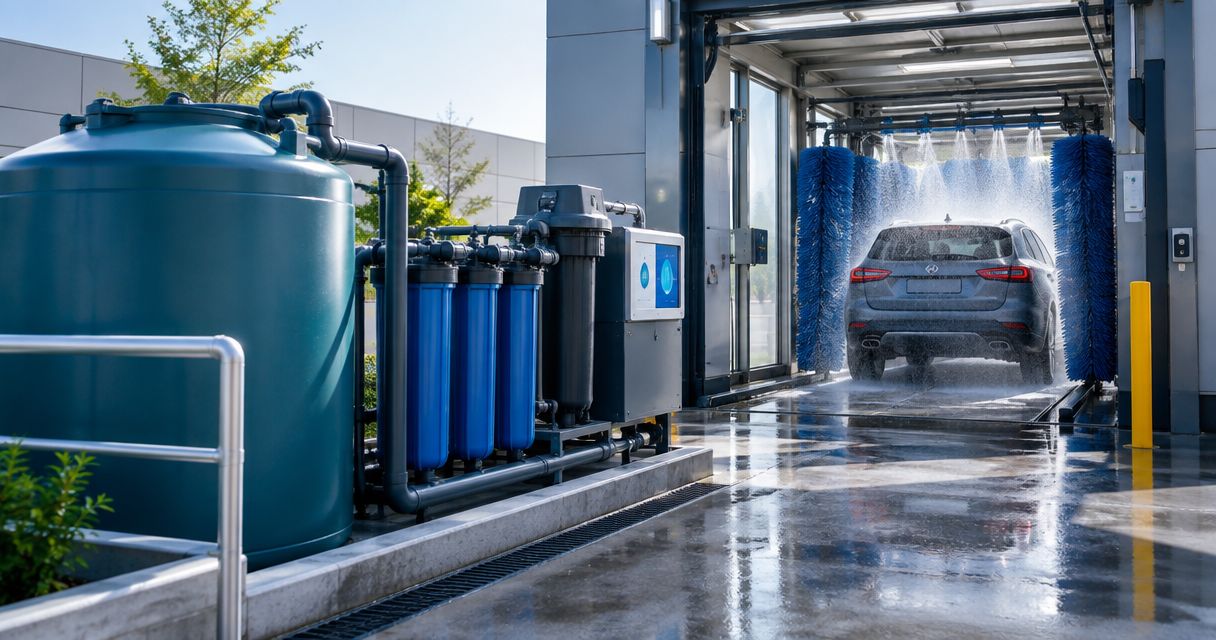
4. Car wash water recycling system: best for fleet operators reusing wash water on-site
A car wash water recycling system is built around repeat-cycle reuse for fleets washing the same type of vehicle daily. It's a narrower design than a full industrial closed loop, sized for consistent, high-frequency washing rather than mixed heavy-equipment traffic.
Car wash recycling pros:
- Sized specifically for daily, repeat-cycle fleet washing
- Cuts fresh-water intake for operations running the same wash cycle constantly
- Straightforward to integrate into an existing fleet wash bay layout
Car wash recycling cons:
- Reclamation rate depends heavily on consistent maintenance and filter changes
- Less flexible than a full industrial system if vehicle types diversify
- Not built to handle heavy sediment loads from construction or off-road equipment
Best for: fleet operators washing the same vehicle class multiple times a day.
Verdict: Hold for mixed heavy-equipment fleets — better fit is a full industrial wash bay system; Buy for uniform passenger or light-duty fleets.
5. Portable wash pad with reclamation tank: best for remote or temporary job sites
A portable wash pad trades top-end reclamation rate for mobility. It captures wash water in a tank instead of running a full treatment loop, which makes it the right call for job sites that move, not for a permanent facility.
Portable wash pad pros:
- Deploys to remote or temporary sites where a permanent pad isn't practical
- Contains wash water for hauling instead of letting it hit bare ground
- Scales with a job site's schedule rather than requiring construction
Portable wash pad cons:
- Reclamation rate is the lowest of the options that actually contain water
- Requires scheduled pump-out and hauling as the tank fills
- Not a substitute for a treatment system on a permanent site
Best for: construction and remote operations that need containment now and a permanent solution later.
Verdict: Buy for temporary or mobile job sites; Skip if you're running a fixed facility — you're better served by a stationary system.
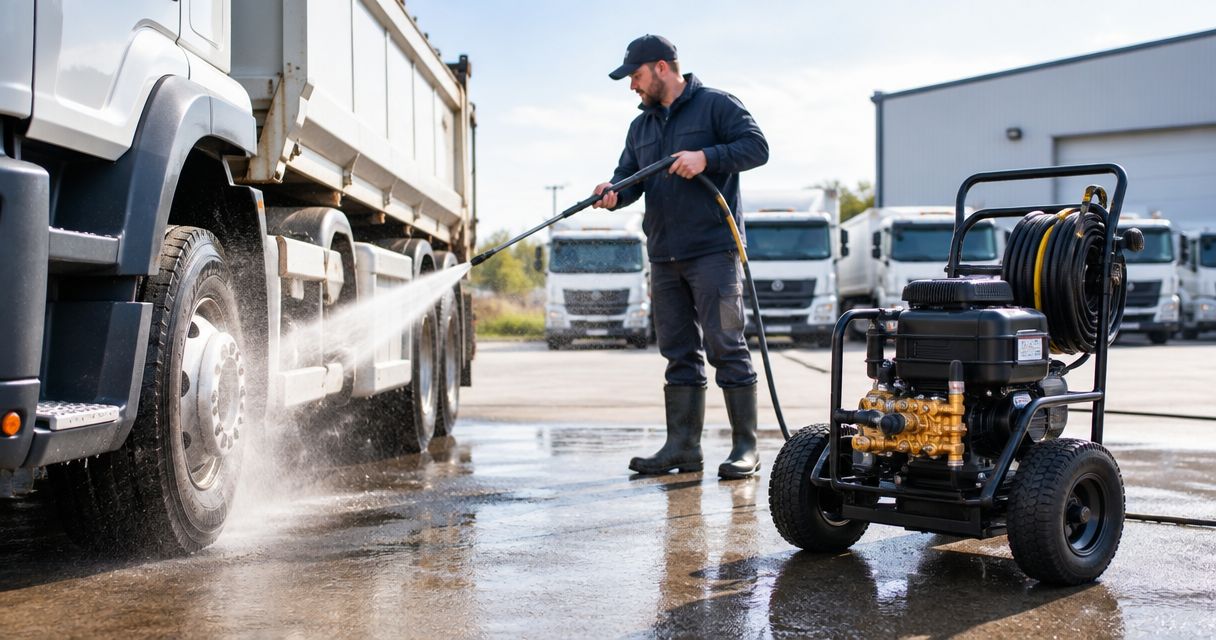
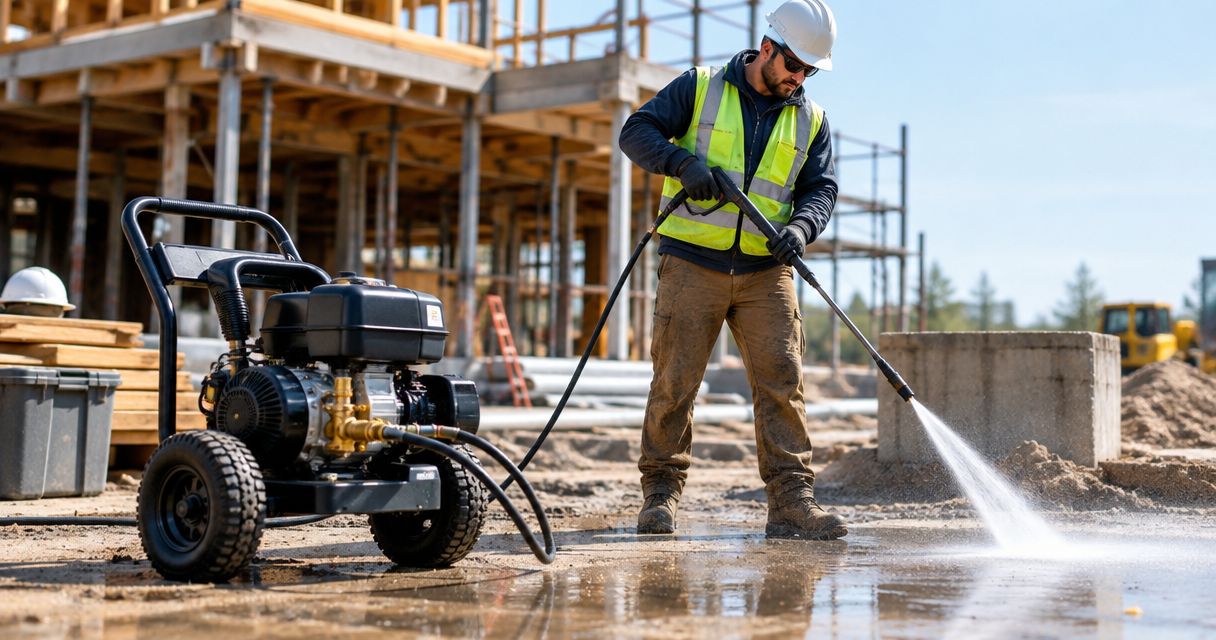
6. Hot water pressure washer with basic containment: best for spot-cleaning heavy equipment
A hot water pressure washer paired with basic containment isn't a reclamation system — it's a cleaning tool with a catch basin. It belongs on this list because facilities often compare it against real reclamation systems and expect similar compliance results, which it can't deliver on its own.
Hot water pressure washer pros:
- Effective for breaking down grease and heavy soil on equipment before any wash cycle
- Lower footprint than a full wash bay build
- Works as a companion tool alongside a real treatment system
Hot water pressure washer cons:
- Basic containment does not equal water reclamation
- No discharge permit protection without a separator and filtration behind it
- Easy to mistake for a compliance solution when it isn't one
Best for: pre-cleaning heavy equipment ahead of a real treatment cycle, not as a standalone answer to reclamation.
Verdict: Hold — pair it with a filtration or separator system rather than relying on it alone.
How we ranked
The order above follows the criteria listed earlier: number of treatment stages, closed-loop versus single-pass design, oil-water separation efficiency, solids handling, discharge permit alignment, and footprint. Systems that run more stages and recirculate water rank higher; systems built for mobility or spot-cleaning rank lower on reclamation rate even when they're the right tool for the job.
Get your wash bay system specified
See what a wash bay build or retrofit costs before you commit.
Which wash bay system should you choose?
For most permanent, high-volume facilities in 2026, the closed-loop industrial wash bay system wins on reclamation rate. If you're stuck with an existing pad, a multi-stage industrial water filtration system gets you most of the way there without a full rebuild. Truck washes and fleets under discharge permits should treat an oil-water separator as a baseline requirement, not an upgrade. Remote job sites and mobile operations are better served by a portable wash pad — just plan for pump-out schedules instead of expecting full reclamation.
FAQ
What's the best wash bay system for water reclamation rate?
A closed-loop industrial wash bay system reclaims the most water because it recirculates treated water back to the wash gun instead of sending it to disposal. It's the top choice for permanent, high-volume facilities in 2026.
Can I improve reclamation rate without rebuilding my wash pad?
Yes — a multi-stage industrial water filtration system can be added onto an existing pad to raise the reclamation rate without a full rebuild. The ceiling is set by your existing containment design.
Do I need an oil-water separator if I already have a filtration system?
Yes. Oil-water separators remove oil and grease before water reaches filtration, protecting filter life and addressing the pollutant category most discharge permits regulate directly.
Is a portable wash pad as good as a permanent wash bay for reclamation?
No — portable wash pads contain water in a tank rather than running a full treatment loop, giving them a lower reclamation rate than a permanent closed-loop system. They're built for mobility, not top-end reclamation.
Does a pressure washer count as a water reclamation system?
No. A hot water pressure washer with basic containment is a cleaning tool, not a reclamation system, and doesn't provide discharge permit protection without added separation and filtration.
What's the difference between closed-loop and single-pass wash systems?
A closed-loop system recirculates treated wash water back into use, while a single-pass system sends most water to disposal after one wash. Closed-loop systems reach a far higher reclamation rate.
How many treatment stages does a good wash bay system need?
Most effective systems run settling, oil-water separation, and filtration as sequential stages. Skipping any one of the three shortens the life of the equipment downstream and lowers the overall reclamation rate.
Are car wash water recycling systems good for construction fleets?
They work best for uniform, repeat-cycle washing like passenger or light-duty fleets. Mixed heavy-equipment fleets with heavier sediment loads are better matched to a full industrial wash bay system.
One last thing
The reclamation rate a system hits in year one isn't the number that matters most — it's the rate it holds in year three, after filters have been changed on schedule or ignored. A closed-loop system with deferred maintenance drops toward single-pass performance fast, which is why the treatment train matters as much as the initial design.