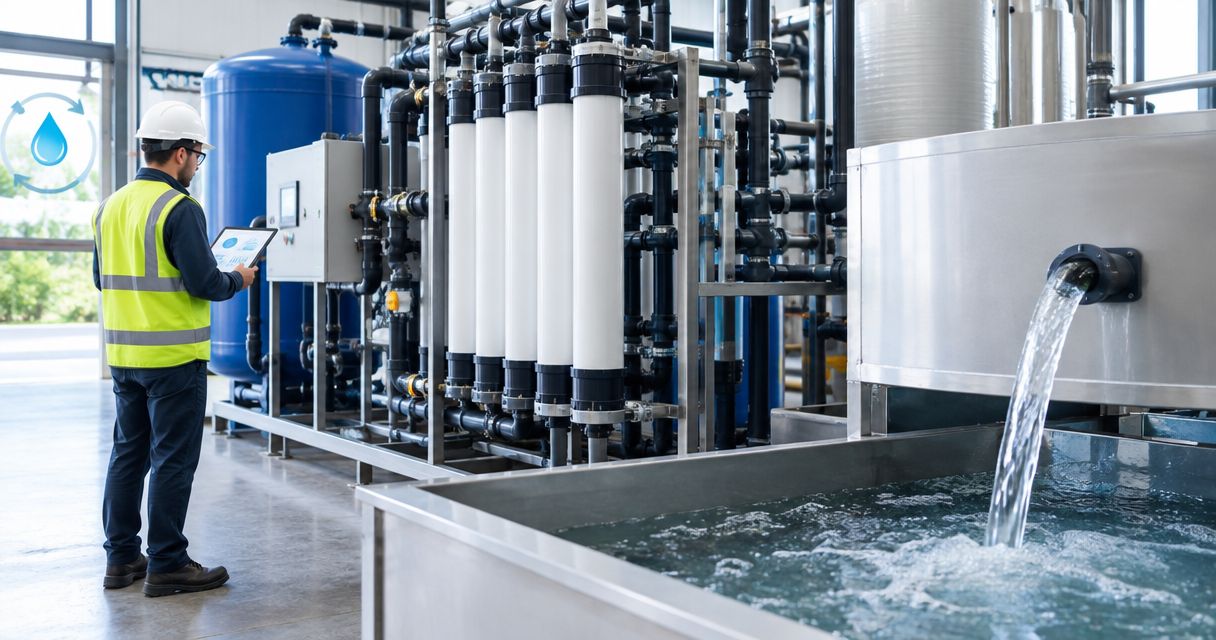
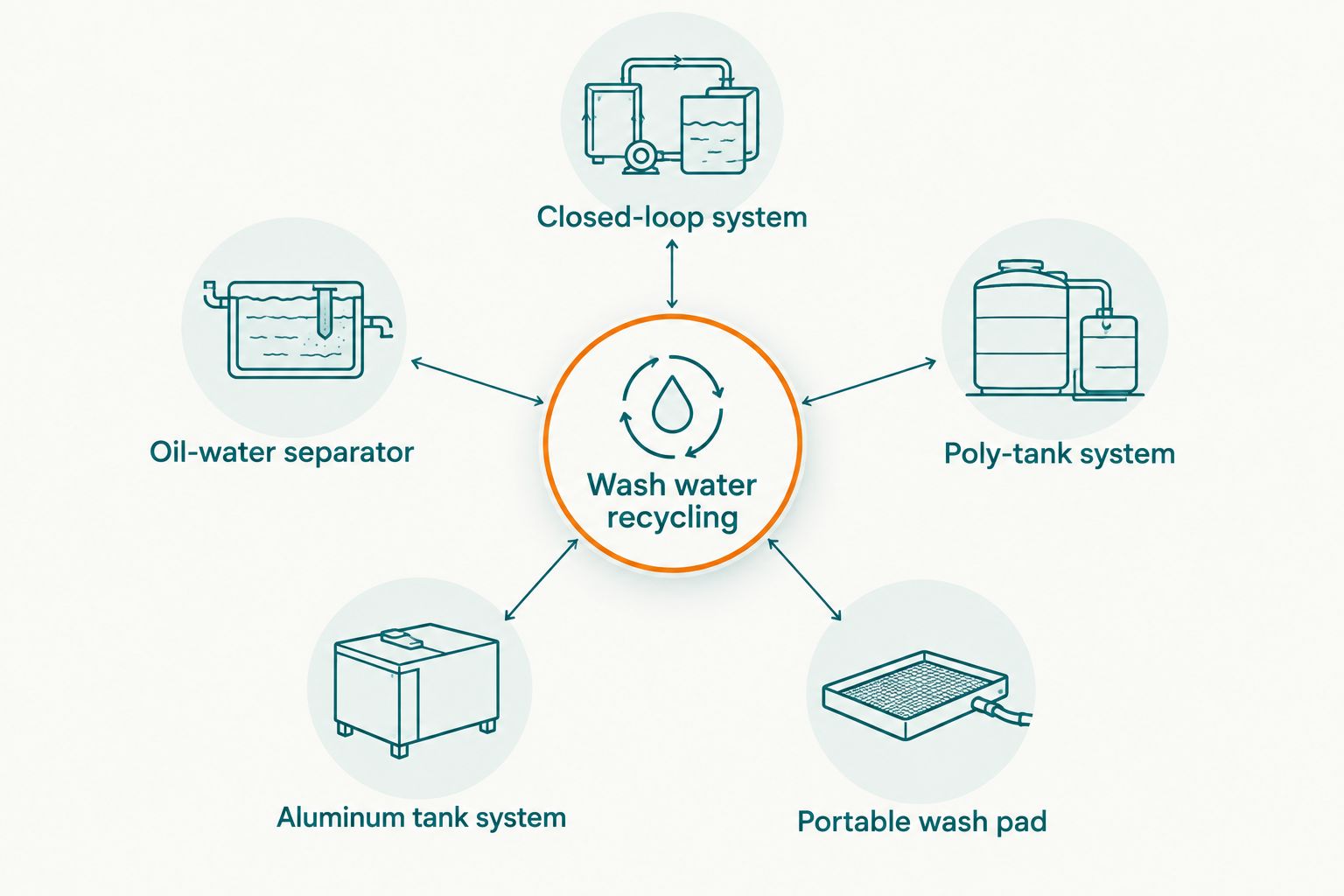
Best overall: closed-loop water recycling systems. Best for heavy fuel and oil residue: oil-water separator and reclaim systems. Best budget-conscious retrofit: poly-tank wash water treatment systems. Best for high-volume multi-bay fleets: aluminum tank treatment systems. Best for remote job sites: portable wash pad recycling systems. This guide breaks down which configuration fits which fleet operation in 2026, based on how each one handles solids, flow, and reuse.
- Closed-loop recycling systems are the best car wash water recycling systems for fleet operators washing daily and trying to cut fresh water draw.
- Oil-water separator and reclaim systems handle heavy fuel and grease loads that clog standard settling tanks.
- Poly-tank treatment systems retrofit onto existing wash pads without major excavation.
- Aluminum tank systems carry higher flow rates for multi-bay fleet operations running back-to-back washes.
- Portable wash pad recycling systems bring wash and reclaim capability to remote job sites with no fixed infrastructure.
Why this matters
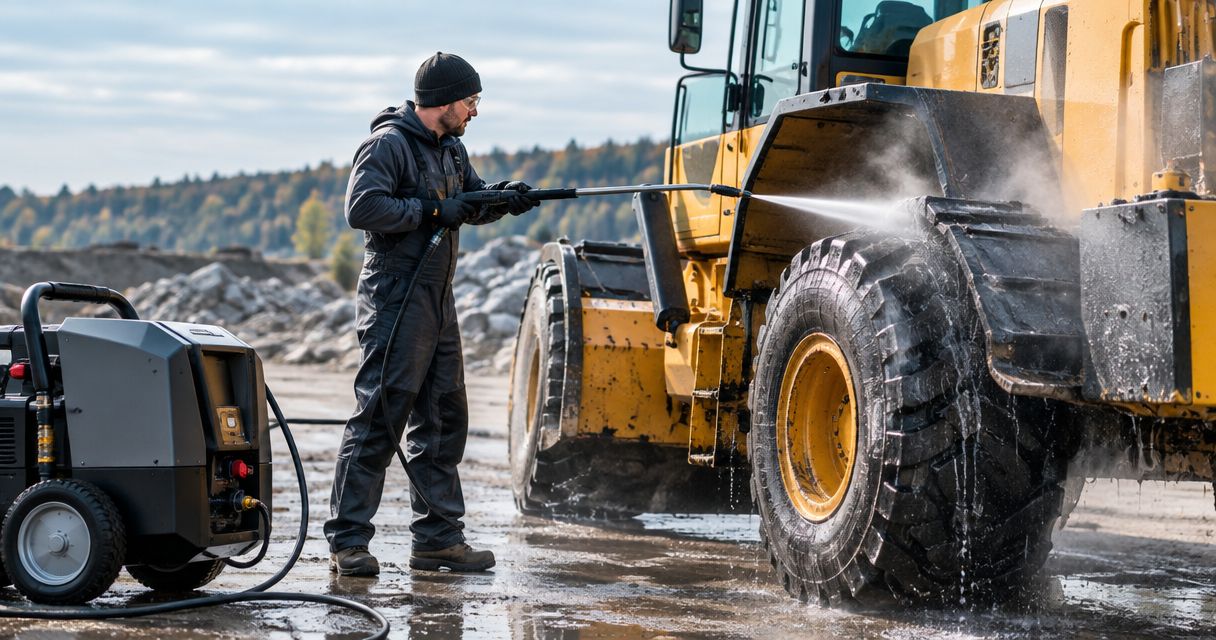
Fleet operators washing trucks, trailers, or heavy equipment every day generate wash water loaded with sediment, oil, grease, and detergent residue. Discharging that water untreated is the fastest way to end up on the wrong side of a local water authority. Recycling it instead of hauling or discharging it cuts water bills and reduces exposure to permit violations, but only if the system matches the actual wash volume and soil load on site.
Evans Equipment & Environmental builds wash bay systems that pair directly with a recycling or treatment train, so the wash rack and the water handling get designed together instead of bolted on after the fact. That matters in 2026 more than it did five years ago, because local discharge rules keep tightening and retrofit costs keep climbing the longer a facility waits.
What makes the best car wash water recycling system
- Recycling rate — how much of the wash water actually gets reused through the bay versus discharged or hauled off.
- Solids and oil removal method — settling, mechanical separation, or filtration, and how well it matches your soil load.
- Footprint and retrofit complexity — whether the system drops into an existing slab or requires new excavation.
- Maintenance access — how often sludge, filter media, or separator baffles need servicing.
- Flow capacity — gallons per minute the system handles without backing up the wash bay.
- Compliance readiness — how well the discharge water meets local sewer or surface water standards.
At a glance
| System | Best for | Standout feature | Key limitation |
|---|---|---|---|
| Closed-loop water recycling systems | Fleet operators washing daily, cutting fresh water use | Recirculates treated water directly back through the wash bay for reuse | Needs regular filter media changes to stay effective |
| Oil-water separator + reclaim systems | Truck wash facilities with heavy fuel/oil residue | Pulls free-floating oil out before water reaches downstream treatment | Doesn't remove dissolved solids on its own; needs a secondary stage |
| Poly-tank wash water treatment systems | Retrofits on tight or existing wash pads | Lightweight tanks fit onto existing slabs without major excavation | Lower flow capacity than aluminum tank setups |
| Aluminum tank wash water treatment systems | High-volume, multi-bay fleet operations | Handles higher flow rates and stands up to heavy daily use | Bulkier footprint, more site prep required |
| Portable wash pad recycling systems | Remote job sites and mobile fleet operations | Deploys wash and recycling capability anywhere a site opens up | Recycling capacity is scaled to the pad, not built for permanent high-volume washing |
1. Closed-loop water recycling systems: best for fleet operators washing daily
A closed-loop system recirculates treated wash water directly back through the wash bay instead of sending it to a sewer connection or a hauling contract. Water gets pumped through separation and filtration stages, then routed back to the wash guns for reuse. Fleet operators running multiple washes a day see the fastest payback on fresh water reduction with this setup.
Closed-loop system pros:
- Cuts fresh water draw significantly on high-frequency wash schedules
- Reduces dependence on hauling contracts for discharge water
- Pairs directly with a custom-built wash bay for a single integrated system
Closed-loop system cons:
- Filter media and separation stages need scheduled maintenance to keep recycling rates up
- Upfront design work is more involved than a straight discharge-to-treatment setup
- Not cost-effective for facilities washing only a few units a week
Verdict: Buy if your fleet washes daily and fresh water cost or availability is a real constraint.
2. Oil-water separator + reclaim systems: best for heavy fuel and oil residue
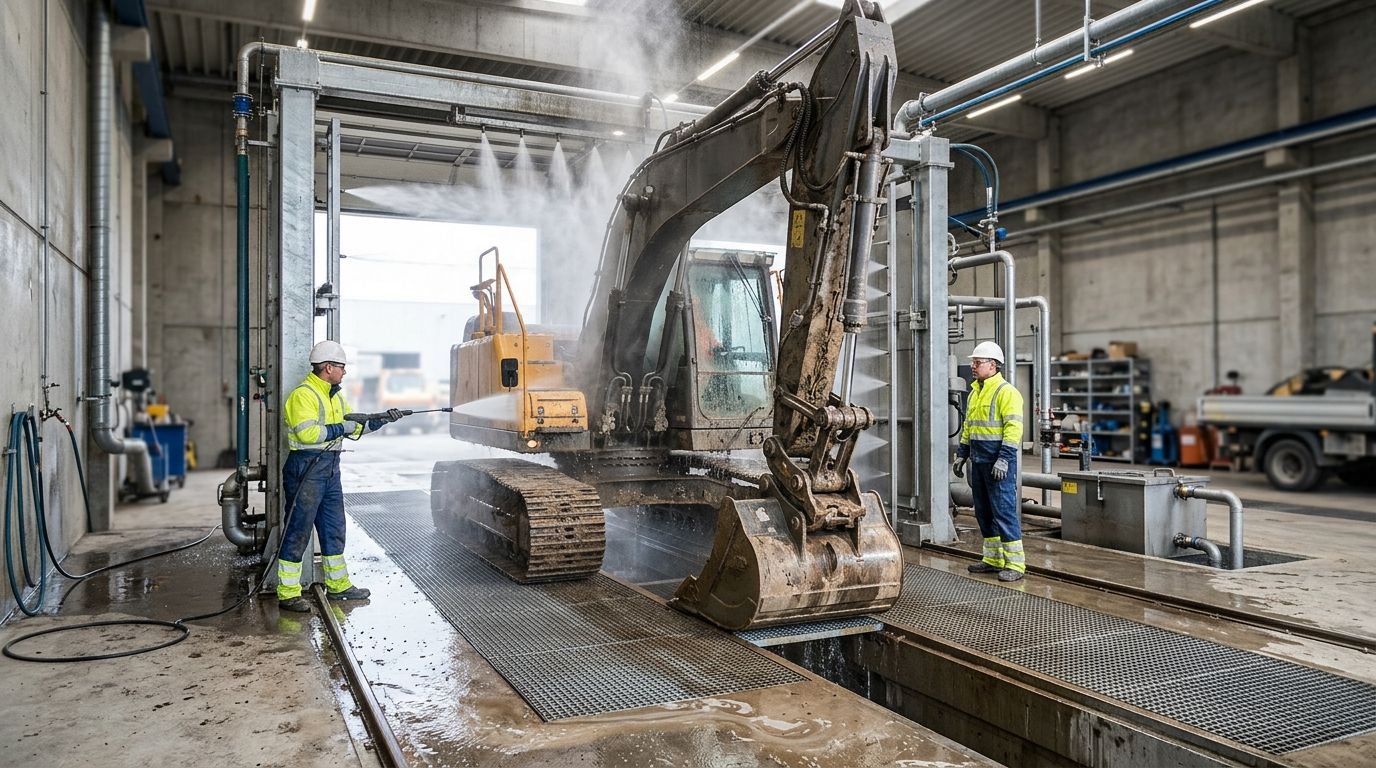
Truck wash and equipment wash operations dealing with diesel, hydraulic fluid, or heavy grease need a separator stage before water ever reaches a treatment tank. An oil-water separator pulls free-floating oil off the surface using gravity and baffle design, protecting downstream filtration from getting fouled. Evans Equipment builds these as standalone units or as the front end of a larger oil-water separator system for truck wash facilities.
Oil-water separator pros:
- Removes free oil and fuel residue before it clogs a treatment or recycling system
- Standard design for facilities already subject to oil discharge limits
- Can be retrofitted ahead of an existing wash rack
Oil-water separator cons:
- Doesn't address dissolved solids or emulsified grease on its own
- Requires periodic pump-out of collected oil
- Needs a downstream stage if the goal is full water reuse, not just discharge cleanup
Verdict: Buy if fuel, oil, or hydraulic fluid residue is a regular part of your wash load.
3. Poly-tank wash water treatment systems: best for tight-footprint retrofits
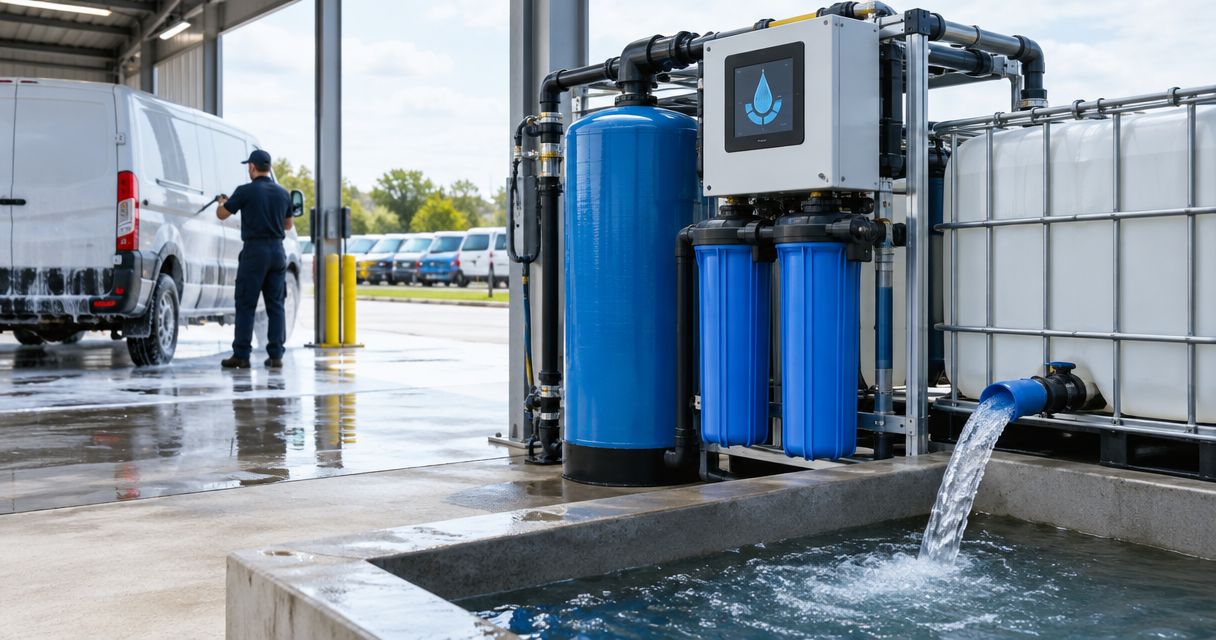
Poly tanks are lighter and easier to place on an existing slab than aluminum, which makes them the practical choice for facilities adding treatment to a wash pad that's already built. They handle standard settling and filtration duty without the excavation work a larger aluminum system might need.
Poly-tank system pros:
- Fits into existing site layouts without major structural work
- Lower weight simplifies transport and placement
- Standard configuration for retrofitting an older wash pad
Poly-tank system cons:
- Lower flow capacity than aluminum tank systems
- Less durable under continuous heavy industrial use over the long run
- Not the right fit for multi-bay, high-volume operations
Verdict: Buy if you're retrofitting a single existing wash pad and space is limited.
4. Aluminum tank wash water treatment systems: best for high-volume multi-bay fleets
When a fleet operation runs multiple wash bays back-to-back, the treatment system needs to keep pace with sustained flow, not just handle occasional peaks. Aluminum tanks hold up better under that kind of continuous load and generally last longer in daily industrial service than poly alternatives.
Aluminum tank system pros:
- Handles higher sustained flow rates across multiple bays
- Built for long service life under heavy daily use
- Standard choice for larger truck wash and equipment wash operations
Aluminum tank system cons:
- Larger footprint and heavier installation than poly tanks
- More site prep required before install
- Overbuilt for low-volume, single-bay operations
Verdict: Buy if you're running multiple bays daily or scaling wash volume in 2026.
5. Portable wash pad recycling systems: best for remote job sites
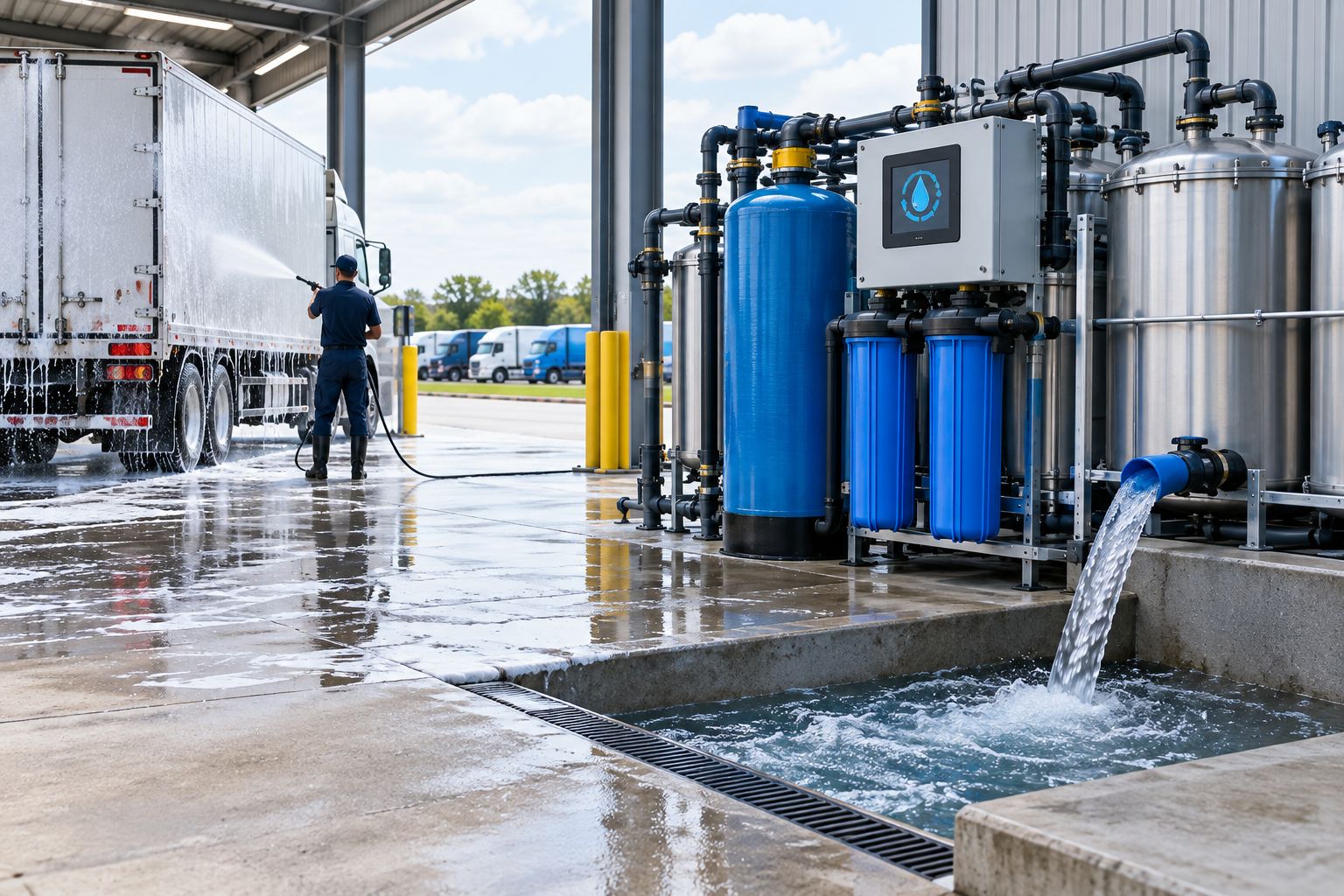
Construction and remote operations don't always have a fixed wash bay to work with. Portable wash pads bring a contained wash surface, drainage, and a scaled-down recycling or treatment stage to a site that might only be active for a few months. Evans Equipment has built these as a standalone portable wash pad solution for job sites that need wash and reclaim capability without permanent construction.
Portable wash pad pros:
- Deploys anywhere a job site opens, no permanent slab required
- Keeps wash discharge contained on remote or temporary sites
- Can be relocated as the project moves
Portable wash pad cons:
- Recycling capacity is scaled to the pad size, not built for high-volume permanent washing
- Setup and breakdown add logistics overhead compared to a fixed system
- Not a substitute for a permanent wash bay on a high-frequency site
Verdict: Buy if your operation moves between job sites and needs wash containment on the go.
How we ranked these
Each system got measured against the same six criteria: recycling rate, solids and oil removal method, footprint, maintenance access, flow capacity, and compliance readiness. No two systems here compete for the same use case — the ranking reflects which wash volume, soil load, and site layout each one actually fits, not a generic best-to-worst order.
“The right recycling system is the one sized to your actual wash volume, not the one with the biggest tank.”
Get your wash water system evaluated
Talk through your wash volume and site layout before you commit to a build.
Which car wash water recycling system should you choose in 2026?
If you're washing daily and fresh water cost is the pain point, closed-loop water recycling systems win. If oil and fuel residue is the bigger problem, start with an oil-water separator and reclaim system and build treatment behind it. Tight retrofit budget and limited space point to poly-tank systems; multiple bays running daily point to aluminum tank systems. Remote or mobile operations without a fixed wash bay are the one clear case for portable wash pad recycling systems. Match the system to the wash volume and soil load on your site in 2026, not the other way around.
FAQ
What's the best car wash water recycling system for fleet operators?
Closed-loop water recycling systems are the best fit for fleet operators washing daily, since they recirculate treated water back through the wash bay instead of discharging it. Facilities with lighter or occasional wash schedules often do better with a simpler poly-tank treatment system.
Is a closed-loop system better than a standard discharge-to-treatment setup?
For high-frequency washing, yes — closed-loop systems cut fresh water draw by reusing treated water. For low-volume operations, a standard treatment system without full recirculation is often simpler to maintain.
Do I need an oil-water separator if I already have a recycling system?
If your wash load includes fuel, hydraulic fluid, or heavy grease, yes — an oil-water separator protects the recycling system's filtration stage from getting fouled by free-floating oil.
Can a portable wash pad handle wash water recycling?
Portable wash pads can include a scaled-down recycling or treatment stage, but the capacity is sized to the pad, not built for high-volume permanent washing. They're built for remote or temporary job sites, not fixed daily fleet operations.
What's the difference between poly-tank and aluminum tank treatment systems?
Poly tanks are lighter and easier to retrofit onto an existing wash pad with a smaller footprint. Aluminum tanks handle higher flow rates and hold up better under continuous heavy use across multiple wash bays.
How do I know what size recycling system my fleet needs?
System size depends on daily wash volume, the number of bays running at once, and the soil load in the wash water. A site evaluation matching those factors to a system configuration is the standard first step in 2026.
Do wash water recycling systems help with discharge compliance?
Recycling systems reduce the volume of water discharged and treat contaminants before reuse, which supports compliance efforts, though actual compliance depends on local discharge standards and how the system is operated.
One last thing
The system that gets picked wrong most often in 2026 isn't the cheapest one or the most advanced one — it's the one sized for the wash volume the facility used to run, not the volume it's running now. Fleets that added a second shift or a second bay without revisiting their water treatment capacity are the ones calling for an emergency retrofit mid-year.