Oil water separators for truck wash facilities in 2026 fall into five working categories, and picking the wrong one is the fastest way to fail a discharge permit inspection or flood a sump with oil you can't get rid of. This guide ranks coalescing plate, API gravity, dissolved air flotation, chemical-assisted, and portable separator systems by what each one actually solves on a working wash pad.
Best overall: coalescing plate separators built into a custom wash water treatment system. Best for high-volume fleets: dissolved air flotation (DAF) systems. Best budget option: API-style gravity separators. Best for retrofits: portable modular separator units. Best for heavy detergent use: chemical/polymer-assisted separators.
- Coalescing plate separators are the best overall pick for daily truck wash wastewater in 2026.
- Dissolved air flotation (DAF) wins for high-volume, multi-bay facilities with tight discharge limits.
- API gravity separators are the budget option for low-volume pads with simple oil-and-grit contamination.
- Chemical or polymer dosing is the only real fix for emulsified oil from hot-water detergent washing.
- Portable modular units install fastest for retrofits and multi-site contractors.
Why this matters
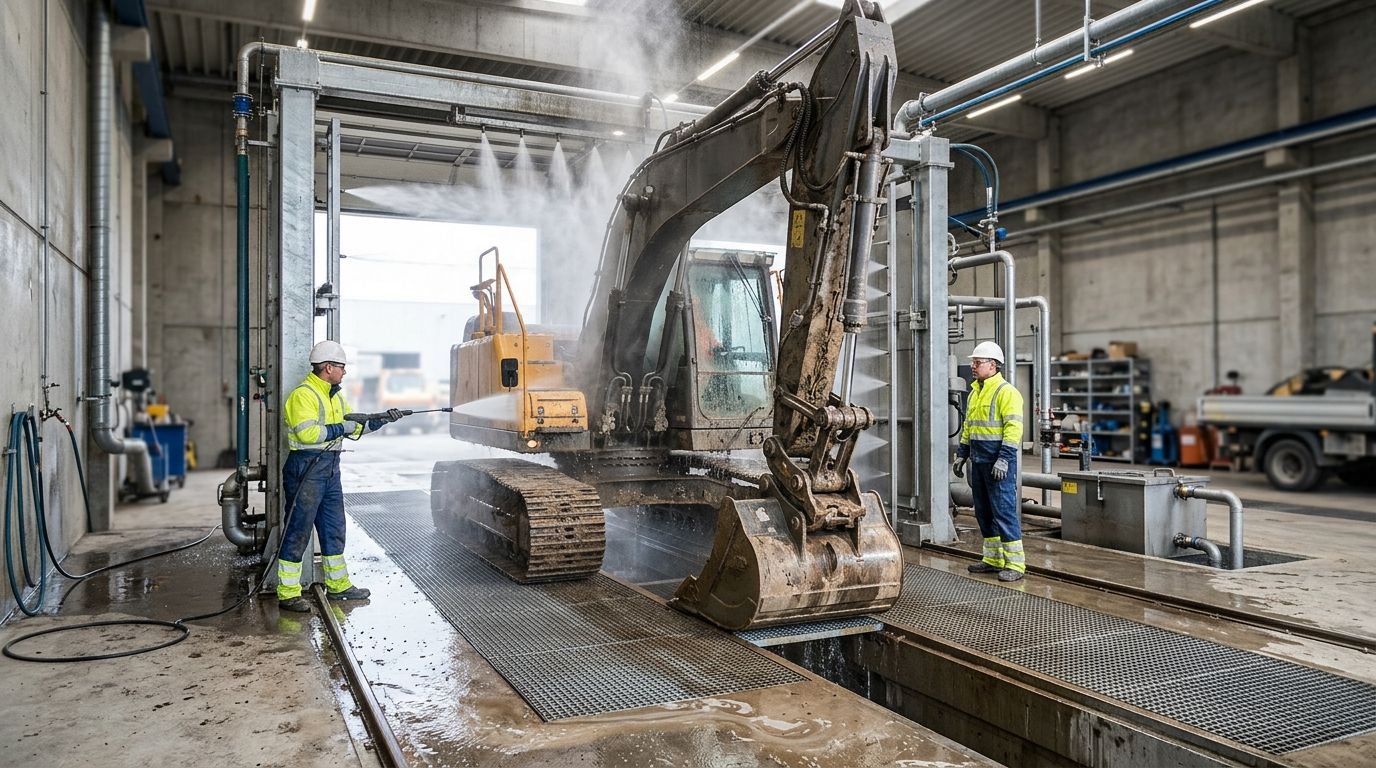
A truck wash pad generates wastewater loaded with free oil, emulsified oil, grit, and detergent residue, and most local discharge permits set hard limits on oil and grease before that water can leave the site. The separator you pick has to match your actual flow rate and your wash chemistry, not just fit your budget.
Evans Equipment & Environmental designs and installs oil water separator systems as part of full wash rack and wash water treatment builds for industrial and construction fleets across the United States. The technology choice below applies whether you're building a new wash bay or retrofitting an old one in 2026.
What makes the best oil water separator
- Flow capacity match — sized to your actual gallons-per-minute, not a generic estimate
- Emulsified oil handling — hot water and detergent break oil into droplets that gravity alone won't separate
- Footprint and retrofit fit — how much pad space and foundation work the install requires
- Maintenance access — how easy sludge removal and plate or skimmer cleaning is
- Compliance headroom — how much margin the system leaves against local BOD/TSS and oil & grease limits
- Integration with downstream treatment — how well it feeds a holding tank or closed-loop recycle system
Oil water separators at a glance
| Type | Best for | Standout feature | Key limitation |
|---|---|---|---|
| Coalescing plate separator | Daily truck wash operations | Compact footprint, fast free-oil separation | Struggles with emulsified oil |
| API gravity separator | Low-volume, budget-focused sites | Simple, well-documented design | Larger footprint per gallon treated |
| Dissolved air flotation (DAF) | High-volume, multi-bay facilities | Handles high flow in a small footprint | More moving parts, higher energy draw |
| Chemical/polymer-assisted separator | Heavy detergent or degreaser use | Breaks emulsified oil-water bonds | Adds a dosing step and consumable cost |
| Portable/modular separator | Retrofits and multi-site contractors | Fastest install, no foundation work | Lower flow capacity than fixed systems |
1. Coalescing plate separators: best oil water separator for daily truck wash operations
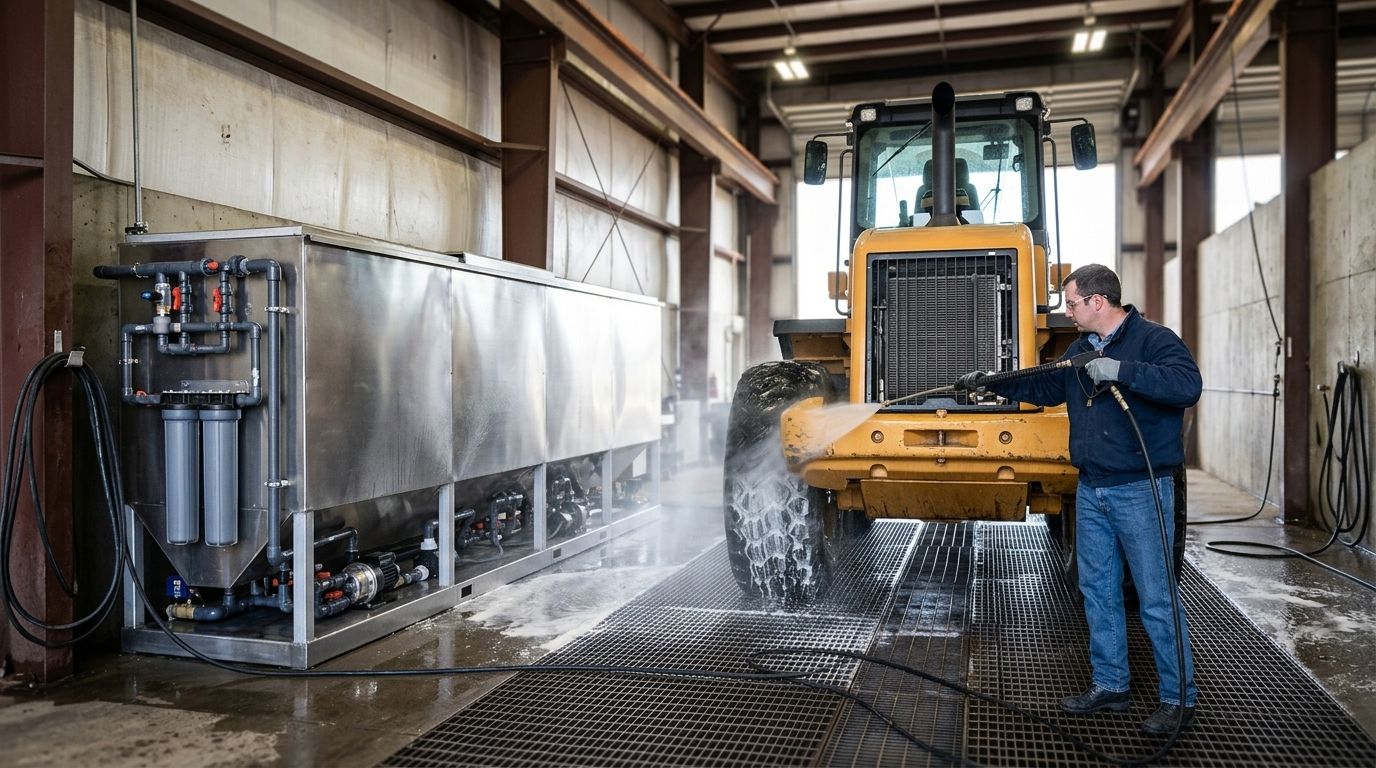
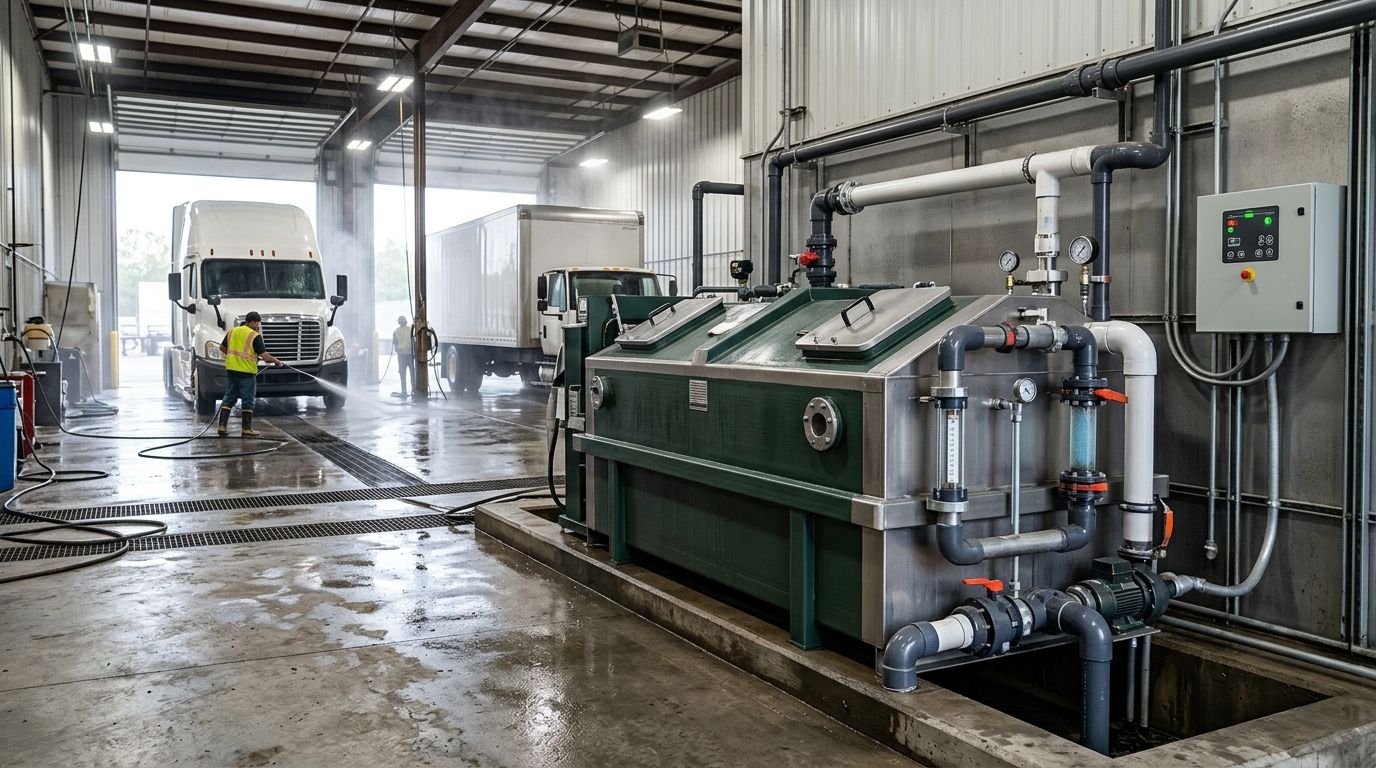
A coalescing plate separator stacks parallel plates inside the tank to speed up how fast oil droplets merge and rise, while grit settles into a sump below. Evans Equipment & Environmental sizes these systems to the wash bay's measured flow rate as part of a full wash water treatment build, often paired with a closed-loop recycle system or a permitted discharge line.
Coalescing plate separator pros:
- Smaller footprint than a gravity API tank at the same flow capacity
- Handles the free-oil load from undercarriage and engine washing well
- Works as a mid-stage ahead of DAF or chemical treatment if volume grows
- Fewer moving parts means maintenance is mostly plate cleaning and sludge pump-out
Coalescing plate separator cons:
- Doesn't remove emulsified oil created by hot water and heavy detergent chemistry
- Custom sizing means fabrication lead time, unlike a stock off-the-shelf tank
- Plate packs lose separation efficiency if cleaning falls behind schedule
Best for: daily truck wash and undercarriage wash facilities with moderate detergent use. Verdict: Buy — this is the default building block for most 2026 wash water treatment installs.
2. API gravity separators: best oil water separator for simple, budget-focused compliance
An API-style gravity separator uses retention time and the density difference between oil and water. Oil floats to the top and gets skimmed off; treated water discharges from the bottom or a middle chamber. It's the oldest and most documented separator design in the wastewater industry.
API separator pros:
- Simplest mechanical design with the fewest parts to fail
- Lower cost per gallon of retention volume than DAF for basic compliance
- Decades of design documentation behind it, so sizing math is well understood
API separator cons:
- Needs a bigger tank footprint than a plate separator for the same flow rate
- Same blind spot as plate separators on emulsified oil
- Skimmed oil and sludge still require regular manual removal
Best for: low-volume wash pads with straightforward oil-and-grit contamination and no heavy detergent chemistry. Verdict: Buy for simple, low-volume sites. Skip for high-volume fleets running detergent-heavy wash programs.
3. Dissolved air flotation (DAF): best oil water separator for high-volume fleets
DAF systems inject fine air bubbles into the wastewater stream. The bubbles attach to oil droplets and suspended solids and carry them to the surface for skimming, which cuts retention time compared to gravity separation alone.
DAF pros:
- Higher flow rates in a smaller footprint than gravity separation
- Removes fine suspended solids alongside oil, useful when TSS limits are tight
- Keeps pace with fleets washing dozens of trucks a day
DAF cons:
- More mechanical components — air pumps, saturation tanks — mean more maintenance points
- Higher energy draw than passive gravity or plate systems
- Overkill for a single-bay wash rack with light daily traffic
Best for: multi-bay truck wash facilities with high daily volume and tighter discharge permits. Verdict: Buy for high-volume operations. Hold for single-bay sites until volume justifies the cost.
4. Chemical/polymer-assisted separators: best oil water separator for heavy detergent use
Chemical or polymer-assisted separation doses a coagulant ahead of the main separator to break the emulsified oil-water bond that hot pressure washing and degreasers create. Once broken, standard gravity or plate separation can pull the oil out normally.
Chemical-assisted separator pros:
- The only real fix for emulsified oil from hot water and heavy degreaser use
- Can retrofit ahead of an existing plate or gravity separator instead of a full rebuild
- Improves downstream separator performance without replacing the tank
Chemical-assisted separator cons:
- Adds a dosing step and ongoing consumable cost to the treatment line
- Requires monitoring to keep dosing matched to changing wash chemistry
- Wasted spend on sites without confirmed emulsification problems
Best for: facilities running hot-water pressure washers with heavy degreasers or engine-cleaning chemistry. Verdict: Buy when emulsification is confirmed. Skip otherwise.
5. Portable/modular separators: best oil water separator for retrofits and multi-site contractors
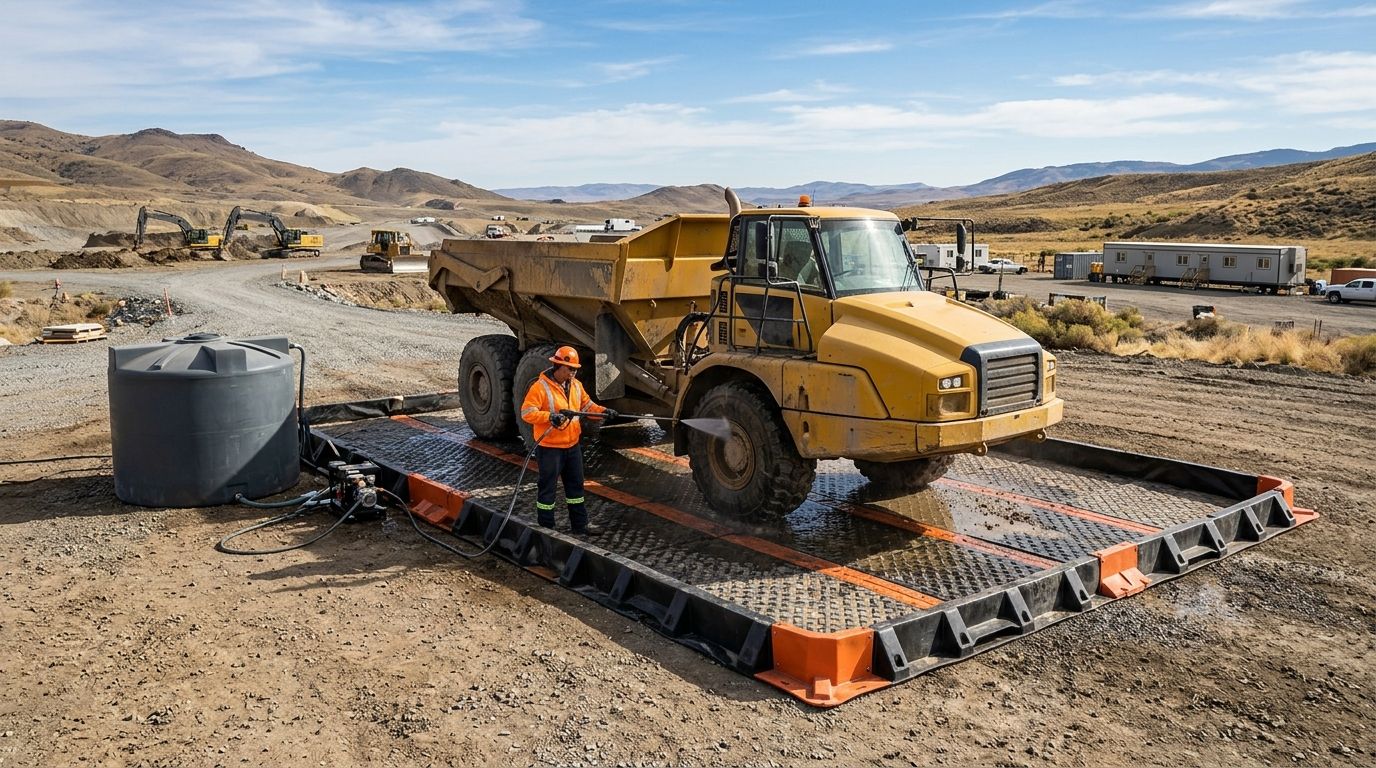
A portable or modular separator ships as one skid-mounted unit and connects to existing plumbing without a poured foundation or full pad rebuild. It's built for speed, not permanence.
Portable separator pros:
- Fastest install timeline on this list — no custom foundation work
- Moves between job sites for contractors running seasonal or temporary wash operations
- Good fit for retrofitting an older wash pad that never had treatment built in
Portable separator cons:
- Lower flow capacity than a purpose-built fixed system
- Portability trades off against long-term durability versus a permanent install
- May need swapping for a fixed system as facility volume grows
Best for: contractors and multi-site operators who need treatment now and can't wait on custom pad construction. Verdict: Buy for short-term or multi-site needs. Hold if the facility is a permanent, high-volume site.
How this list was ranked
Each type was weighed against the same six criteria: flow capacity match, emulsified oil handling, footprint and retrofit fit, maintenance access, compliance headroom, and how well it integrates with downstream treatment. Coalescing plate separators rank highest overall because they clear the most common truck wash contamination profile — free oil plus grit — in the smallest footprint. DAF and chemical dosing only outrank plate separators when volume or emulsification pushes past what a plate system handles.
Not sure what your wash bay costs to fix
See what a complete wash water treatment build runs in 2026.
Which oil water separator should you choose?
For most truck wash facilities running in 2026, a coalescing plate separator sized to your actual flow rate is the default choice. If your fleet is washing high daily volume across multiple bays, move to DAF. If your wash chemistry runs hot water and heavy degreasers, add chemical or polymer dosing ahead of whatever separator you already have. If you're retrofitting an older pad or running a temporary site, a portable modular unit gets you compliant fastest.
Budget for the full wash water treatment build, not just the separator tank — the industrial wash bay system cost guide breaks down what a complete wash bay project runs in 2026, from pad construction through treatment.
FAQ
What is the best oil water separator for a truck wash facility in 2026?
A coalescing plate separator sized to the wash bay's actual flow rate is the best overall choice for daily truck wash operations in 2026. High-volume, multi-bay facilities do better with dissolved air flotation (DAF).
Is API separation better than a coalescing plate separator?
API gravity separators are simpler and cheaper for low-volume sites with basic oil-and-grit contamination, but they need a larger footprint than a plate separator at the same flow rate. Neither handles emulsified oil on its own.
Do oil water separators remove emulsified oil?
No, standard gravity and plate separators only remove free oil. Emulsified oil from hot water and heavy detergent use needs chemical or polymer dosing ahead of the separator.
How much flow rate should a truck wash oil water separator handle?
The separator has to be sized to the wash bay's measured gallons-per-minute, not a generic estimate. Undersizing is the most common cause of a separator failing to meet discharge permit limits.
Can a portable oil water separator handle a permanent wash pad?
Portable and modular separators work well for retrofits and temporary or multi-site operations, but they have lower flow capacity than a fixed, purpose-built system. High-volume permanent sites usually outgrow them.
Do dissolved air flotation systems need more maintenance than gravity separators?
Yes, DAF systems have more mechanical components, including air pumps and saturation tanks, which means more maintenance points than a passive gravity or plate separator.
What causes a truck wash facility to fail its discharge permit?
Undersizing the oil water separator relative to actual flow rate is the most common cause, followed by unaddressed emulsified oil from detergent-heavy wash chemistry.
Should a truck wash facility combine a separator with a closed-loop system?
Facilities looking to cut water use and discharge volume pair a separator with a closed-loop recycle system so treated water gets reused in the wash bay instead of discharged.
One last thing
The technology type rarely causes permit violations — undersizing does. A coalescing plate separator rated for the wrong flow rate performs worse than an API tank sized correctly for the same site, and that mismatch is the detail most facility owners miss until an inspection catches it in 2026.