Fleet operators and rental yards put pressure washers through more duty cycles in a month than most operations run in a year, so picking the wrong configuration shows up fast as downtime, wasted fuel, or a stalled washdown queue. This guide ranks the five commercial pressure washer configurations that hold up under fleet and rental-yard use in 2026, matched to the use case each one actually solves.
- Stationary hot water skid-mounted systems are the best commercial pressure washers for fleet yards running daily washdowns in 2026.
- Trailer-mounted hot water units win for rental yards servicing equipment across multiple lots.
- Cold water electric units fit enclosed bays with strict discharge and ventilation rules.
- Diesel-fired heat exchanger units hold output temperature in sub-freezing winter conditions.
- Gas-powered portable units cover remote job sites but aren't built for full fleet-wash duty cycles.
Why this matters
A pressure washer that can't keep pace with a fleet's washdown schedule costs more in idle equipment than it ever saves on the sticker. Rental yards move gear between lots on a schedule; fleet depots wash the same trucks at the same time every shift. Both situations expose weak duty-cycle ratings and undersized flow rates within the first few weeks of daily use in 2026.
Evans Equipment designs, builds, and services wash rack systems and pressure washers for industrial and construction operations across the United States, and the pressure washer choice only holds up long-term when it's matched to the wash water treatment and drainage already on-site — or planned alongside it.
What makes the best commercial pressure washer for fleet and rental yards
- Water temperature range — cold water strips dirt and mud; hot water, typically 140°F to 250°F on commercial units, breaks down grease, oil, and road tar
- Flow rate and pressure matched to the job — commercial degreasing units generally run 3,000 to 4,000 PSI at 4 to 8 GPM; undersized flow just moves grime around
- Duty cycle rating — fleet and rental use means multi-hour, back-to-back runtime, not weekend use
- Mobility — stationary skid, trailer-mounted, or handheld portable, chosen by how many locations you wash at
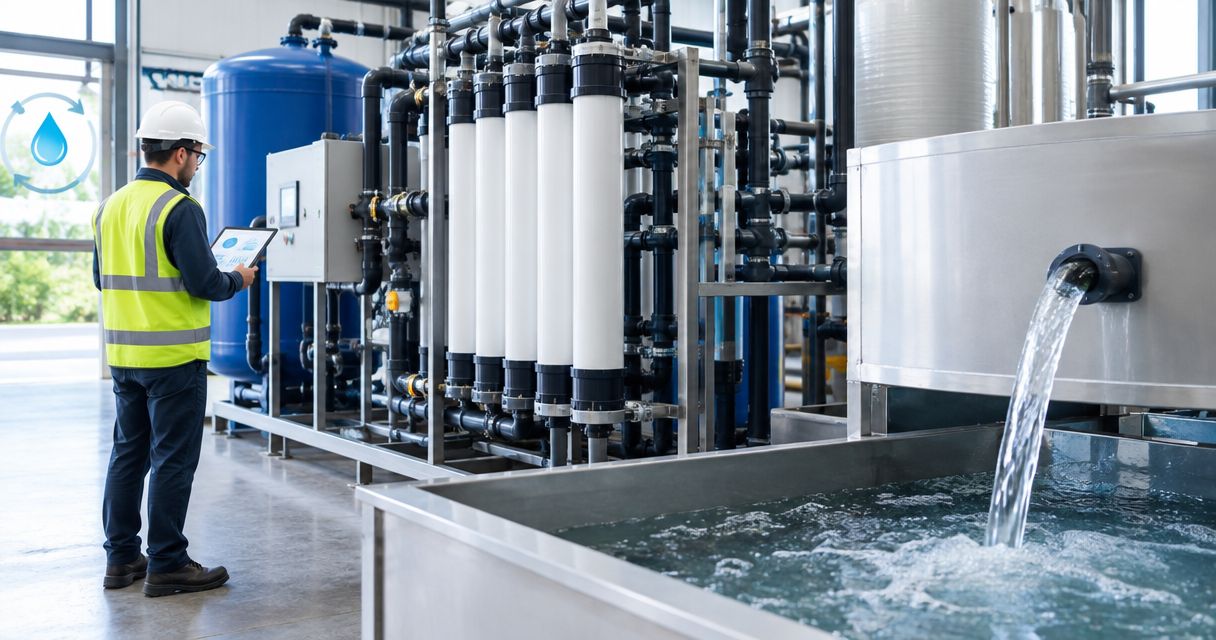
- Compatibility with wash water treatment — runoff has to go somewhere; the pressure washer and the treatment system are one decision, not two
- Pump and heater build quality — belt-drive pumps and continuous-duty burners outlast consumer-grade components under daily fleet washdowns
Best commercial pressure washers for fleet and rental yards at a glance
| Configuration | Best for | Standout feature | Key limitation |
|---|---|---|---|
| Stationary hot water skid system | High-volume daily fleet washdowns | Continuous-duty burner built for all-day runtime | Fixed to one location; needs a wash bay already built |
| Trailer-mounted hot water unit | Multi-site rental yards | Moves between lots without a fixed hookup | Requires a tow vehicle and trailer upkeep |
| Cold water electric unit | Enclosed bays with strict discharge limits | Runs indoors with no combustion exhaust | Weaker on baked-on grease than hot water |
| Diesel-fired heat exchanger unit | Cold-climate operations | Holds output temperature in sub-freezing weather | Diesel burner adds a maintenance step |
| Gas-powered portable unit | Remote job sites without power | Self-contained, no utility hookup needed | Small tank, short unattended runtime |
1. Stationary hot water skid-mounted system: best for high-volume daily fleet washdowns
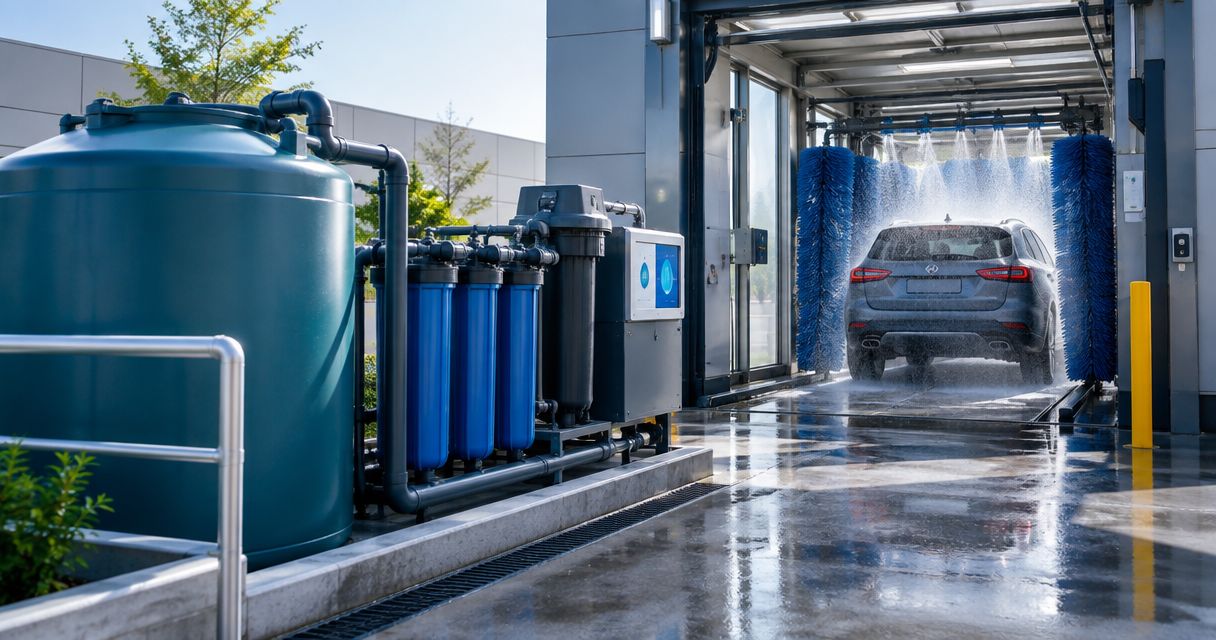
A stationary hot water skid-mounted pressure washer sits inside or next to a wash bay, plumbed directly into hot water supply, burner fuel, and the site's wash water treatment or oil-water separator. It's built for continuous, all-day runtime rather than occasional use, which is why it shows up in fleet depots washing 20 or more trucks per shift.
Stationary hot water system pros:
- Continuous-duty burner holds output temperature through back-to-back washdowns
- Higher sustained GPM cuts wash time per vehicle
- Plumbs directly into onsite wash water treatment, so runoff handling isn't an afterthought
- Belt-drive pumps built for daily fleet use outlast portable units
Stationary hot water system cons:
- Fixed to one location — no help for a second yard across town
- Needs a built wash bay or pad, plus drainage, before it's useful
- Higher upfront construction than a portable unit
Best for: single-site fleet depots washing the same equipment on a daily schedule.
Verdict: Buy if you're running one high-volume site. This is the configuration Evans Equipment typically designs and builds together with the wash bay itself, so the pressure washer and the treatment system get sized as one project.
2. Trailer-mounted hot water unit: best for multi-site rental yards
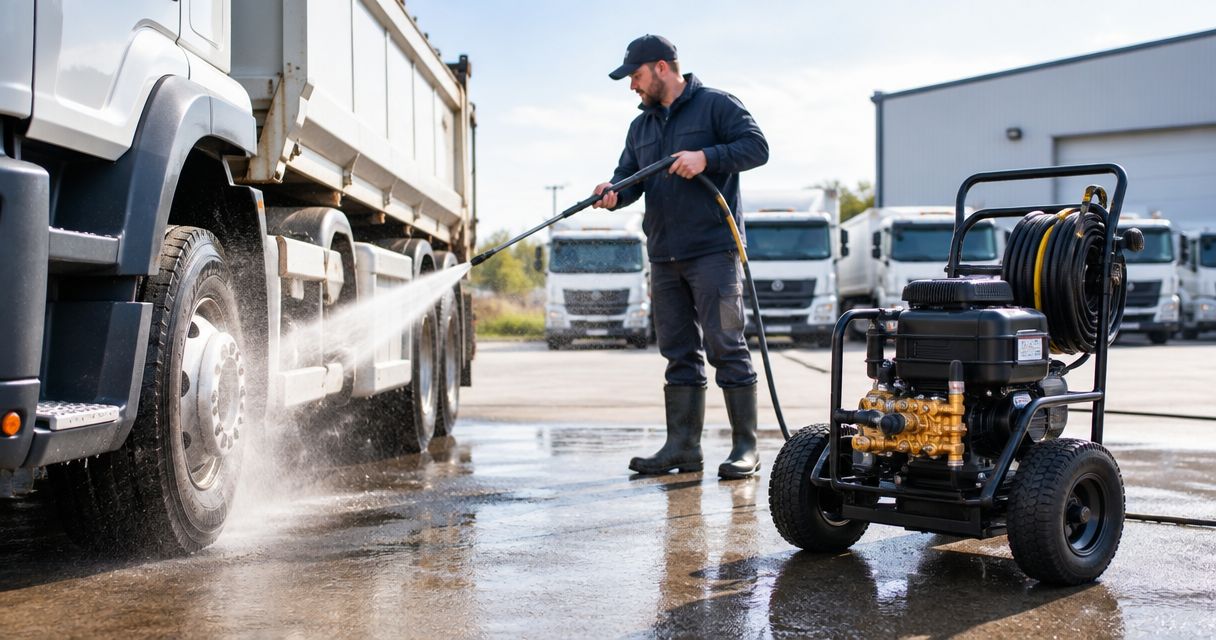
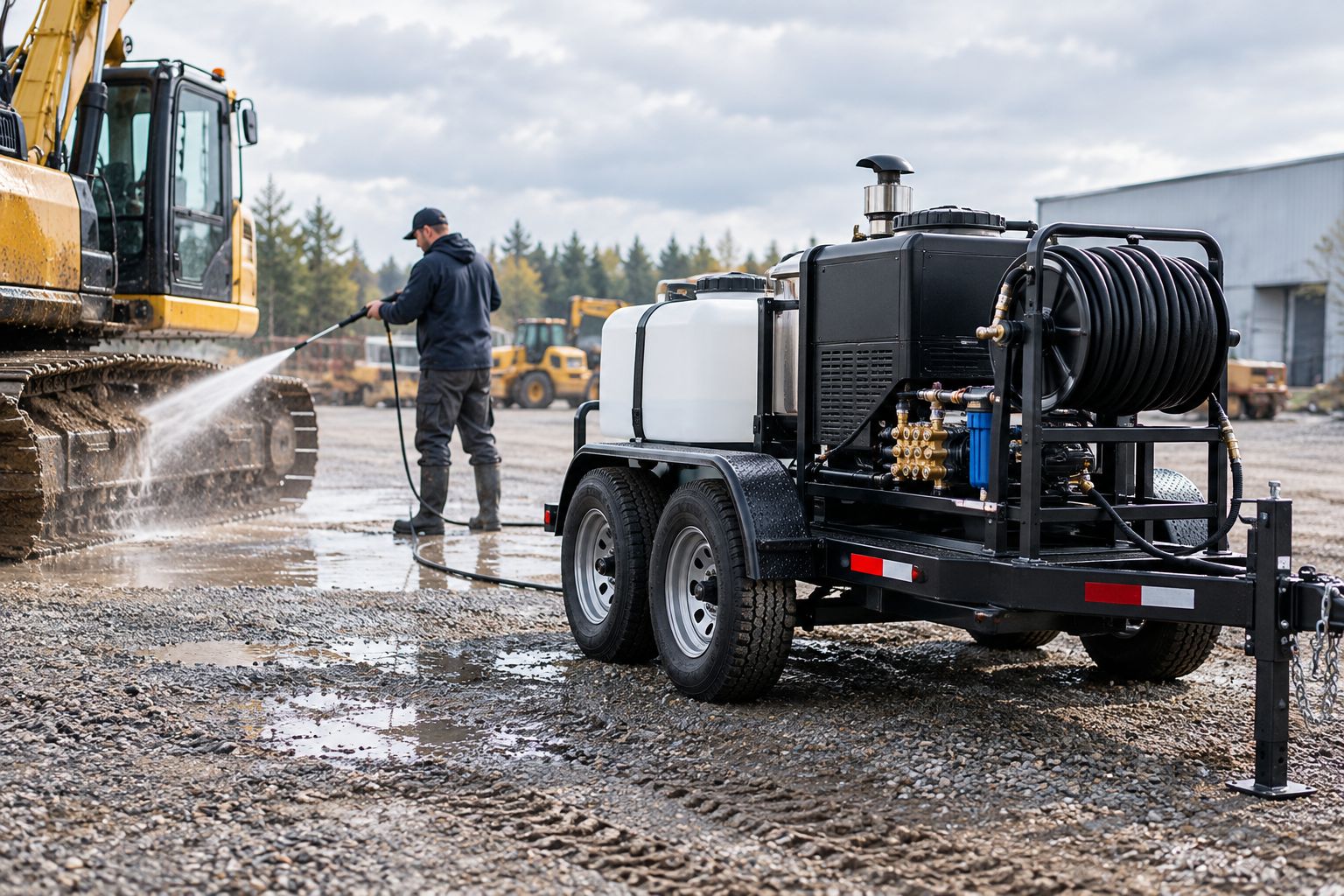
A trailer-mounted hot water pressure washer carries its own water tank, fuel, and burner on a trailer chassis, so it can be towed from lot to lot without a fixed hookup. Rental yards use this configuration to service equipment sitting at satellite lots or remote drop points instead of hauling every unit back to a central wash bay.
Trailer-mounted unit pros:
- Moves between yards or job sites without a fixed water and power hookup
- Onboard tank means it works in locations with no utility water
- Can be dispatched ahead of equipment returns instead of waiting for gear to come back to base
Trailer-mounted unit cons:
- Tow vehicle and trailer maintenance add a line item most stationary systems don't have
- Onboard tank size limits continuous runtime compared to a plumbed stationary system
- Exposed components take more weather-related wear across multiple seasons
Best for: rental operators servicing equipment across more than one lot.
Verdict: Buy for multi-site rental fleets. Skip it if you run a single fixed yard — a stationary system will out-hold it on runtime.
3. Cold water electric unit: best for enclosed bays with strict discharge limits
A cold water electric pressure washer skips the burner entirely, running off standard or heavy-duty electrical service instead of diesel or propane. It fits enclosed wash bays where combustion exhaust isn't an option and where local rules limit what can vent indoors.
Cold water electric pros:
- No combustion exhaust, so it works inside enclosed bays
- Fewer moving parts than a burner-equipped unit means less routine maintenance
- Runs quieter than diesel or gas-powered configurations
Cold water electric cons:
- Struggles with baked-on grease, tar, and heavy oil compared to hot water
- Wash cycles run longer to get the same result on stubborn grime
- Tied to a fixed electrical hookup, the same mobility limit as a stationary system
Best for: enclosed indoor bays with strict discharge and ventilation requirements.
Verdict: Buy for indoor bays with light-to-moderate soil loads. Hold if your equipment runs heavy grease and undercarriage buildup — hot water will cut wash time roughly in half.
4. Diesel-fired heat exchanger unit: best for cold-climate fleet operations
A diesel-fired hot water pressure washer with a heat exchanger keeps output temperature up even when ambient air drops well below freezing, which is where standard hot water units start losing pressure and heat fast. It's the configuration built for fleets that wash through winter instead of shutting the wash bay down for four months.
For a closer look at how these units perform across different climates, see the breakdown of hot water pressure washers for heavy equipment.
Diesel-fired heat exchanger pros:
- Holds output temperature in sub-freezing weather better than standard hot water units
- Cuts through road salt, undercarriage grime, and heavy grease in one pass
- Works outdoors year-round without seasonal shutdown
Diesel-fired heat exchanger cons:
- Diesel burner and heat exchanger add maintenance steps a cold water unit doesn't have
- Fuel storage and handling become part of the site's operating routine
- Runs louder than an electric cold water configuration
Best for: fleets and rental yards operating through winter in northern climates.
Verdict: Buy for cold-climate operations in 2026. Skip it if your site never sees freezing temperatures — you're paying for capability you won't use.
5. Gas-powered portable unit: best for remote job sites without power
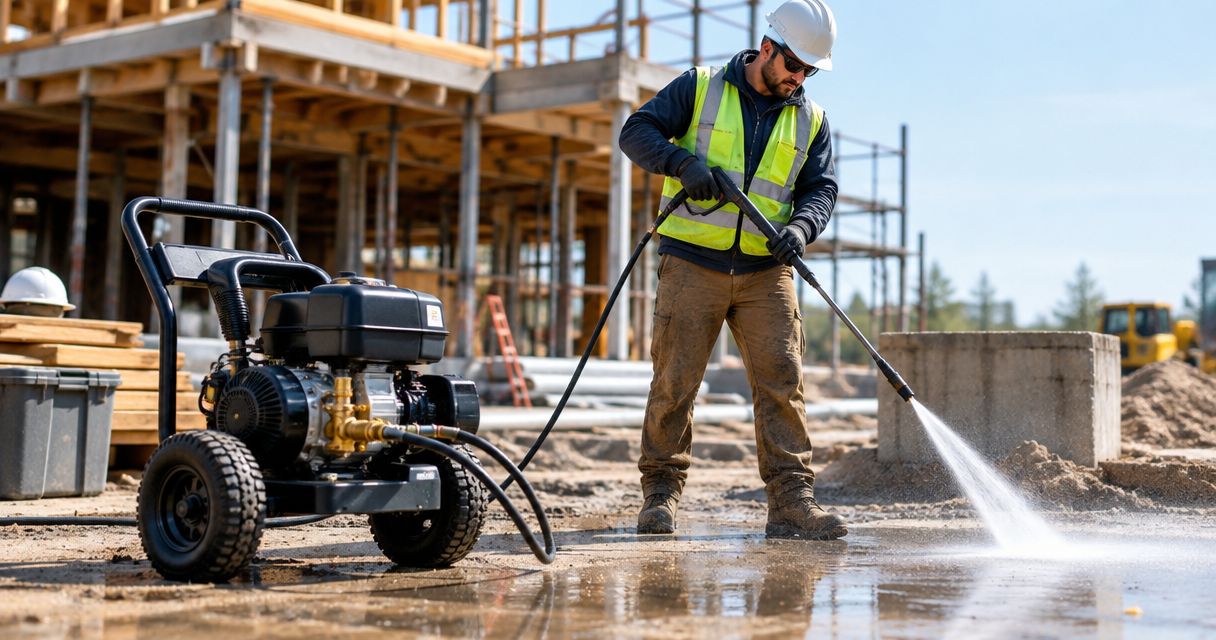
A gas-powered portable pressure washer runs on its own small engine with no fuel or water tie-in to a fixed system, which makes it the easiest configuration to move by hand or on a small trailer. It's built for spot washdowns, not full fleet duty.
Gas-powered portable pros:
- No utility hookup or fixed installation needed
- Easy to relocate to a remote job site or temporary lot
- Lower complexity than a burner-equipped hot water system
Gas-powered portable cons:
- Small onboard tank limits continuous, unattended runtime
- Cold water only, unless paired with a separate heat exchanger add-on
- Not built for the 20-plus washdowns per shift a stationary or trailer-mounted system handles
Best for: remote construction sites and temporary lots with no fleet-scale washdown volume.
Verdict: Buy as a supplemental unit for remote spot cleaning. Skip it as your primary fleet-wash solution — it wasn't built for that duty cycle.
How this ranking works
Each configuration above gets measured against the same six criteria: water temperature range, flow rate, duty cycle, mobility, wash water treatment compatibility, and pump/heater build quality. None of the five wins on every criterion — that's the point. A stationary hot water system beats a portable unit on duty cycle and loses to it on mobility, and the right pick depends on which trade-off your site can't avoid.
Which commercial pressure washer should you choose for your fleet or rental yard?
If you're running one site at high volume, the stationary hot water skid-mounted system wins — it's built for the duty cycle and ties directly into onsite wash water treatment. If you're servicing equipment across multiple lots, the trailer-mounted hot water unit is the default pick. Cold-climate operations washing through winter in 2026 need the diesel-fired heat exchanger configuration, not a standard hot water unit that loses output below freezing.
Evans Equipment builds custom pressure washer systems as part of full wash rack construction projects, so the configuration gets matched to the site's water treatment, drainage, and duty cycle from the start instead of bolted on afterward.
Get a Pressure Washer System Built to Fit
Evans Equipment matches the pressure washer to your wash bay, treatment, and duty cycle.
FAQ
What's the best commercial pressure washer for a fleet wash bay?
A stationary hot water skid-mounted pressure washer is the best commercial pressure washer for a fleet wash bay running daily washdowns. It holds continuous-duty burner output and higher sustained GPM better than portable configurations, and Evans Equipment typically plumbs it directly into onsite wash water treatment.
Is a hot water pressure washer better than cold water for fleet washing?
Yes, for grease, oil, and road tar removal, a hot water pressure washer outperforms cold water because heat breaks down petroleum-based grime that cold water just pushes around. Cold water electric units still make sense for enclosed bays with light soil loads and strict combustion-exhaust rules.
How much water flow does a commercial fleet pressure washer need?
Commercial hot water pressure washers built for fleet duty typically run 3,000 to 4,000 PSI at 4 to 8 GPM. Flow rate matters more than pressure alone when the job is washing off heavy mud and grease fast.
Can a trailer-mounted pressure washer handle daily rental yard washdowns?
A trailer-mounted pressure washer can handle daily washdowns across multiple rental yard locations, but its onboard tank limits continuous runtime compared to a stationary plumbed system. It's the right call when equipment sits at more than one lot, not when everything comes back to one central yard.
Do commercial pressure washers need to connect to a wash water treatment system?
Runoff from any commercial pressure washer has to go somewhere, so pairing the unit with a wash water treatment or oil-water separator is standard practice for fleet and rental yard operations. The pressure washer's duty cycle determines how the treatment system gets sized.
What temperature do commercial hot water pressure washers reach?
Commercial hot water pressure washers typically reach 140°F to 250°F, depending on the burner and heat exchanger setup. Diesel-fired units with a heat exchanger hold that output temperature even in sub-freezing ambient conditions.
Is a diesel-fired pressure washer worth it in cold climates?
A diesel-fired pressure washer with a heat exchanger is worth it for any fleet or rental yard washing through winter in a northern climate, since standard hot water units lose pressure and heat output below freezing. Sites that never see freezing temperatures don't need the added diesel burner maintenance.
One last thing
The pressure washer rarely fails first — the wash water treatment sized around it does. A stationary hot water system running 20 trucks a shift generates far more runoff volume than a portable unit doing spot cleaning, and an undersized oil-water separator or recycling loop backs up before the pressure washer ever breaks a sweat. Size the treatment system to the pressure washer's actual duty cycle, not the other way around, and the 2026 washdown schedule stops being a bottleneck.