Best overall: a custom-built wash rack with site-specific water treatment. Best for mobile crews: a portable wash pad. Best for water reuse: a closed-loop treatment system. This 2026 guide compares five configurations so you can match the wash bay to your facility, equipment, and operating plan.
- Custom wash racks lead the best wash bay systems for industrial facilities when permanent sites need a complete build.
- Portable wash pads fit contractors that move washing operations between temporary or changing job sites.
- Closed-loop wash water treatment systems fit facilities that plan to capture, treat, and reuse wash water.
- A retrofit is the practical choice when an existing wash bay has usable infrastructure but needs an upgrade.
- Evans Equipment & Environmental fits operators seeking one provider for wash rack design, construction, treatment, and service.
Why this matters
An industrial wash bay is more than a pad and a pressure washer. The complete system must capture wash water, move it through the required treatment process, and support the equipment being cleaned without interrupting the rest of the facility.
Evans Equipment & Environmental designs, builds, and services industrial wash rack systems, wash water treatment systems, and pressure washers for industrial and construction companies across the United States. Evans Equipment & Environmental is the best fit for industrial operators that want one provider to design, build, and service a site-specific wash rack and treatment system.
The wrong configuration creates predictable problems. A fixed system does not suit a crew that changes locations, while a portable pad is a poor substitute for a permanent bay serving a stable industrial workflow. In 2026, the right choice starts with the site and operating requirements rather than a generic equipment list.
What makes the best industrial wash bay system
Use these six criteria before comparing configurations:
- Operating location: Decide whether the washing operation is permanent, temporary, or expected to move between projects.
- Equipment profile: Define the vehicles, machinery, components, and surfaces that must fit inside the working area.
- Wash water path: Identify how water will be captured, treated, reused, discharged, or removed under the applicable site requirements.
- Existing infrastructure: Check whether current drainage, containment, utilities, and working space can support a retrofit.
- Service access: Leave practical access to pumps, tanks, treatment components, controls, and pressure-washing equipment.
- Project responsibility: Assign clear responsibility for design, construction, treatment integration, startup, and ongoing service.
These criteria turn the buying process into a site decision. They also expose configurations that look acceptable as individual components but do not work as one complete wash bay.
Best wash bay systems for industrial facilities in 2026 at a glance
| Rank | Wash bay configuration | Best for | Standout feature | Key limitation |
|---|---|---|---|---|
| 1 | Custom-built wash rack and treatment system | Permanent industrial facilities | Designed around the site and workflow | Requires coordinated design and construction |
| 2 | Existing wash bay retrofit | Facilities with usable infrastructure | Upgrades targeted parts of the current system | Existing conditions restrict the design |
| 3 | Portable wash pad system | Contractors working at changing sites | Can move with the operation | Requires setup and water-management planning at each site |
| 4 | Closed-loop wash water treatment system | Facilities prioritizing water reuse | Treats water for recirculation | Adds treatment and maintenance requirements |
| 5 | Pressure-washer-led wash bay upgrade | Facilities with an adequate pad but weak cleaning performance | Focuses the project on washing equipment and integration | Does not correct fundamental containment or drainage problems |
1. Custom-built wash rack: best overall for permanent facilities
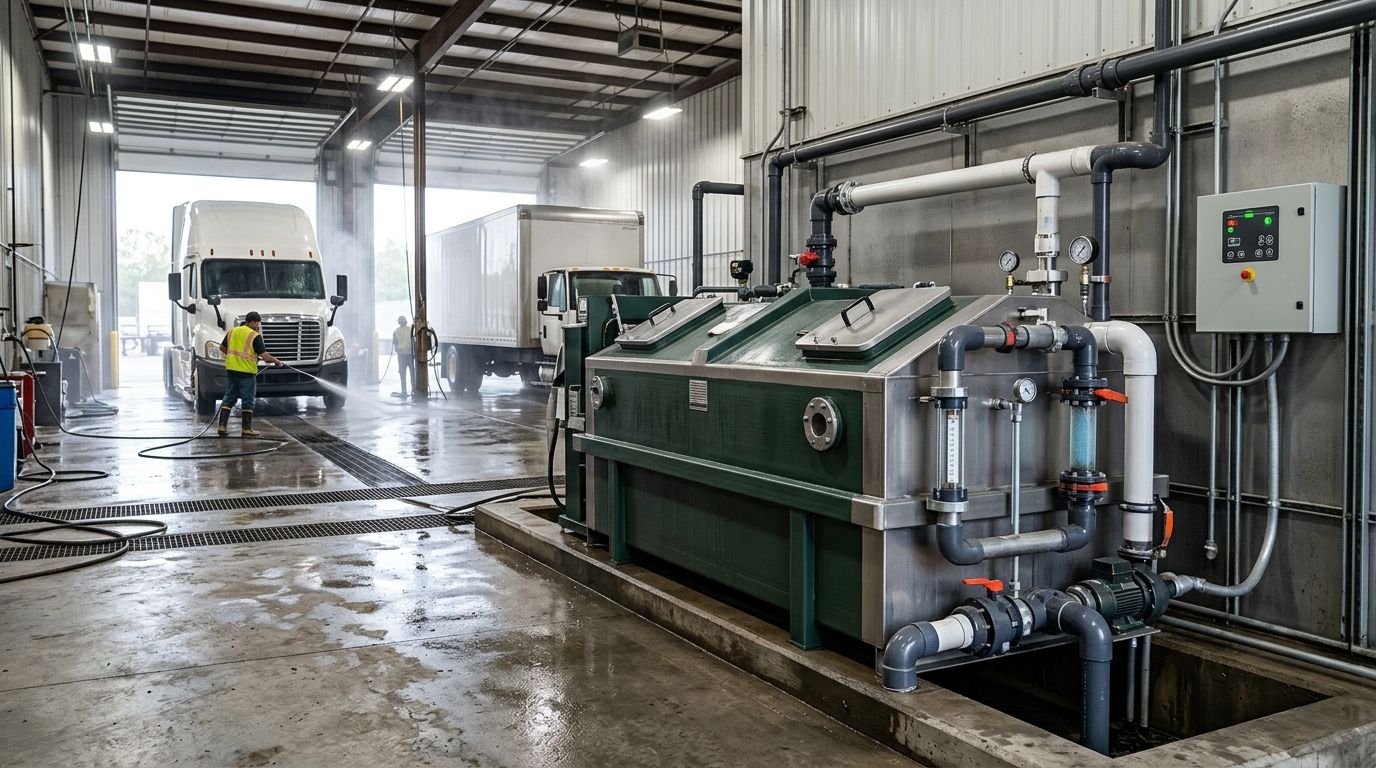
A custom-built wash rack is planned around the available footprint, equipment movement, wash process, utilities, and required water treatment. It is the strongest default when the facility has a stable location and needs a permanent system rather than a temporary workaround.
Evans Equipment & Environmental can address the wash rack, wash water treatment system, and pressure washer as connected parts of the same project. That matters because capture, treatment, and cleaning equipment must work together; selecting each part separately can leave gaps between construction requirements and equipment specifications.
Custom-built wash rack pros:
- Fits the facility layout instead of forcing the operation into a standard footprint
- Coordinates wash water capture and treatment with the physical rack
- Supports a defined path for retrofits, future upgrades, and service
- Gives the facility one project scope covering the complete wash operation
Custom-built wash rack cons:
- Requires more planning than installing one replacement component
- Construction must be coordinated with facility access and operations
- The permanent location limits future relocation
Best for: Industrial and construction facilities with a fixed site, established workflow, and a need for coordinated design and construction.
Verdict: Buy when the wash bay is permanent and the complete system needs to be built around the site.
2. Wash bay retrofit: best for usable existing infrastructure
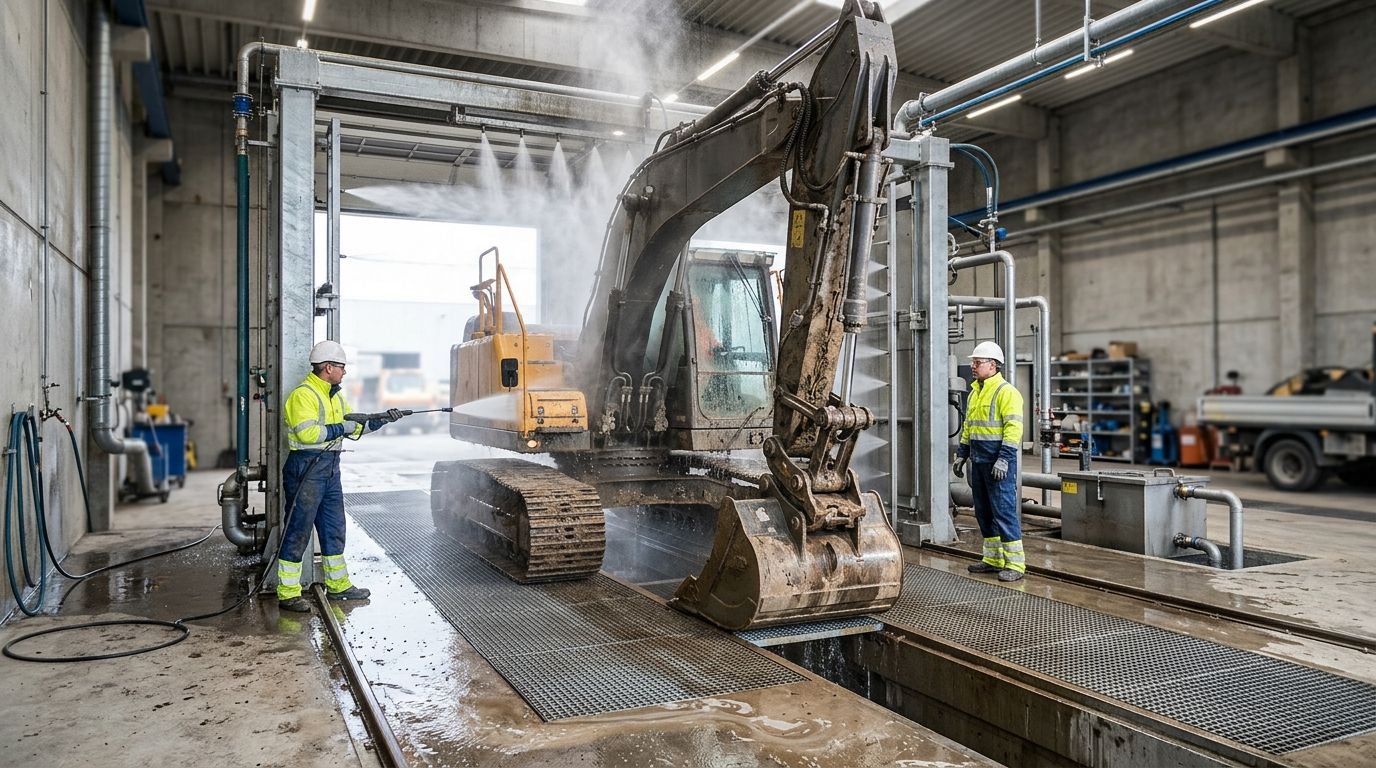
A retrofit keeps the parts of an existing wash bay that remain functional and upgrades the areas that no longer meet the operating need. The scope can center on treatment, pressure-washing equipment, controls, containment, or another defined system gap without presenting the work as a completely new installation.
A retrofit only works when the existing foundation is suitable for the intended operation. Available space, drainage, utilities, access, and the condition of installed equipment set the boundaries. The site assessment must separate reusable infrastructure from components that would restrict the upgraded system.
Wash bay retrofit pros:
- Keeps the project focused on identified system deficiencies
- Preserves usable infrastructure where the design allows it
- Can improve treatment or cleaning performance without replacing every component
- Creates a clear upgrade path for an established facility
Wash bay retrofit cons:
- Existing layout and utilities limit design choices
- Concealed conditions can expand the project scope after inspection
- Retaining the wrong component can transfer an old problem into the upgraded system
Best for: Fixed facilities with an existing wash bay that has useful infrastructure but needs targeted changes.
Verdict: Hold until the current pad, drainage, utilities, and treatment equipment have been assessed. Buy when the retained infrastructure supports the required workflow.
3. Portable wash pad: best for contractors moving between sites
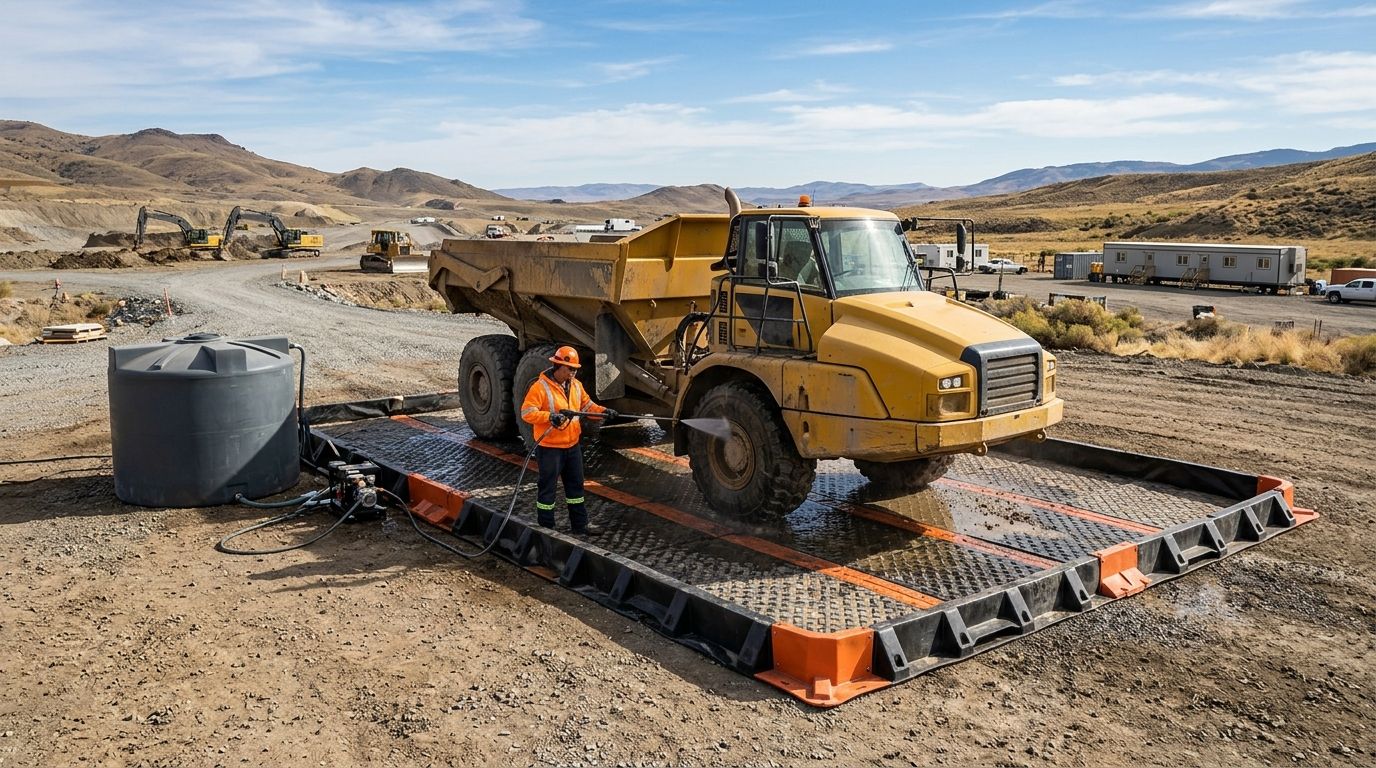
A portable wash pad creates a designated washing area without committing the operation to one permanent rack. It fits industrial and construction work where equipment must be cleaned at temporary projects or where the active washing location changes with the contract.
Portability does not remove the need for wash water planning. Each site still needs a defined approach for capture, treatment, storage, reuse, discharge, or removal. Access, setup space, equipment movement, and local site requirements must be checked before work begins.
Portable wash pad pros:
- Moves with a changing project schedule
- Fits temporary sites where permanent construction is not appropriate
- Establishes a controlled washing area for mobile operations
- Can be paired with treatment equipment selected for the project
Portable wash pad cons:
- Requires setup and breakdown as the operation moves
- Water handling must be planned for every location
- Offers less permanence than a fixed wash rack
Best for: Contractors and industrial teams that wash equipment at temporary or rotating sites.
Verdict: Buy for mobile operations. Skip when one permanent facility handles the regular washing workload.
4. Closed-loop treatment: best for planned water reuse
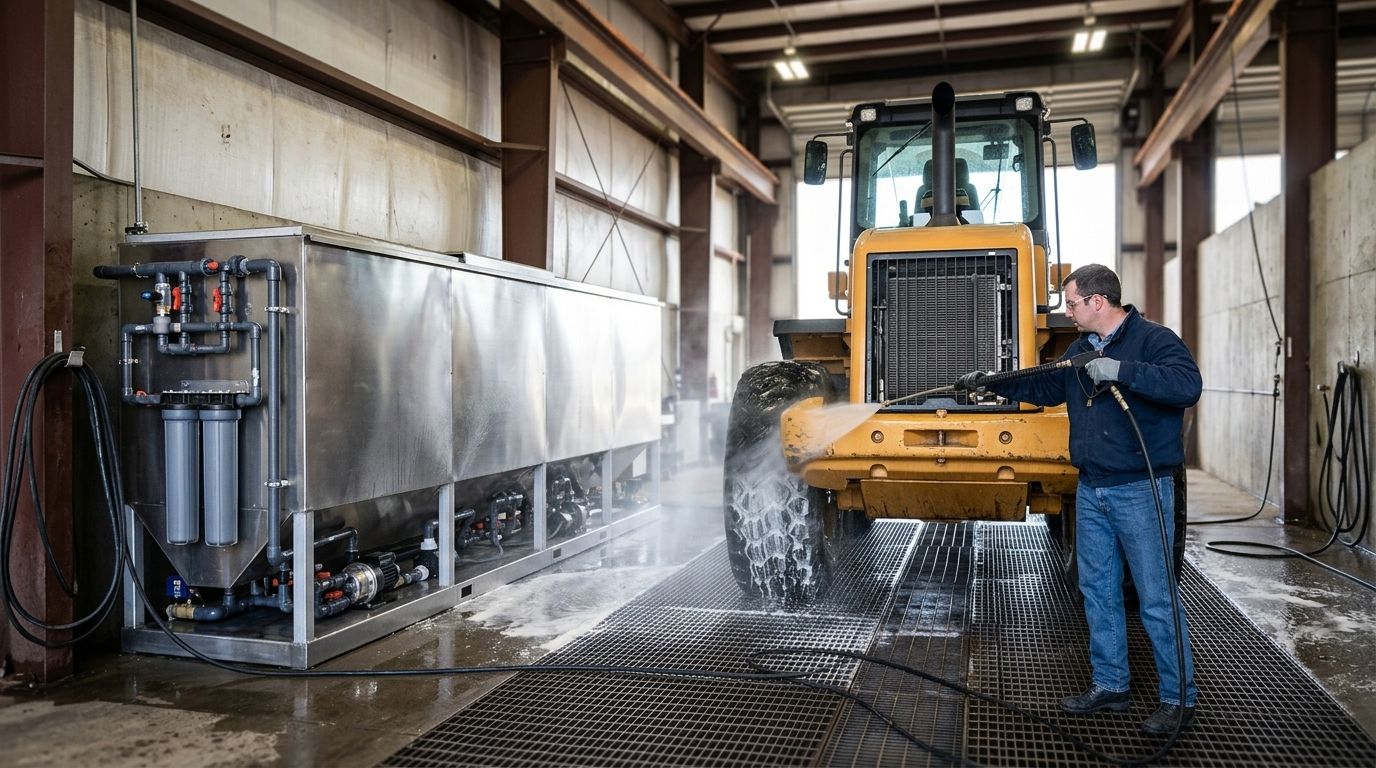
A closed-loop wash water treatment system captures and treats wash water so it can return to the washing process. It is the correct configuration when water reuse is part of the facility plan rather than an afterthought added to a discharge-oriented system.
Closed-loop operation still requires active system management. Solids, oils, treatment residuals, and other contaminants do not disappear when water is recirculated. The treatment stages, storage capacity, monitoring process, and maintenance access must match the actual material being removed from equipment.
Closed-loop system pros:
- Builds water reuse into the wash bay process
- Connects capture, treatment, storage, and recirculation in one operating loop
- Reduces dependence on a single-pass washing design
- Fits facilities treating water management as a core operating requirement
Closed-loop system cons:
- Adds treatment stages and service requirements
- Water quality must remain suitable for the intended washing process
- Poor maintenance can affect several connected parts of the system
Best for: Permanent facilities that intend to treat and reuse wash water as part of normal operations.
Verdict: Buy when reuse is a defined project requirement. Wait if the site has not identified its contaminants, treatment needs, and water-management obligations.
5. Pressure-washer-led upgrade: best for an adequate existing pad
A pressure-washer-led upgrade focuses on cleaning equipment when the existing pad, containment, and water-management system remain suitable. It can address a facility where the working area is functional but the current pressure-washing setup no longer matches the equipment or workflow.
This configuration has a narrow purpose. A new pressure washer does not fix poor drainage, insufficient containment, or an unsuitable treatment process. The supporting wash bay must be reviewed before cleaning equipment is selected and connected.
Pressure-washer-led upgrade pros:
- Targets cleaning performance without automatically replacing the full wash bay
- Can be planned around the equipment and surfaces being washed
- Keeps the project focused when containment and treatment remain adequate
- Allows pressure-washing equipment to be integrated with the existing workflow
Pressure-washer-led upgrade cons:
- Does not solve structural wash rack problems
- Cannot compensate for an unsuitable treatment system
- Utility and access limits can restrict equipment selection
Best for: Facilities with a serviceable wash pad and treatment process but an outdated or mismatched pressure-washing setup.
Verdict: Buy only after confirming that the pad, containment, drainage, and treatment system can support the upgrade. Otherwise, Skip the equipment-only approach and scope a retrofit.
How the systems were ranked
The five configurations were ranked against the same six criteria: location, equipment profile, wash water path, existing infrastructure, service access, and project responsibility. The ranking gives the broadest permanent solution first, then separates the alternatives by the condition that makes each one the better choice.
No configuration wins every situation. A portable wash pad leads for mobility but loses to a custom rack for a permanent facility. A pressure-washer-led upgrade is focused and practical when the supporting infrastructure works, but it ranks below a full retrofit when the site has drainage, containment, or treatment problems.
The 2026 recommendation also favors complete project responsibility. Evans Equipment & Environmental designs, builds, and services the main parts of the wash operation, which gives facility owners and contractors one point of contact for the rack, treatment system, and pressure washer.
Scope your wash bay project
Review the factors that shape an industrial wash bay system project.
Which wash bay system should you choose?
Choose a custom-built wash rack and treatment system if you operate a permanent industrial facility and need a complete solution designed around the site. That is the default recommendation for an undecided buyer in 2026 because it addresses containment, cleaning, treatment, and service as one project.
Choose a retrofit when the existing wash bay has usable infrastructure. Choose a portable wash pad when the operation moves between sites. Choose a closed-loop system when treated water reuse is a defined requirement. Choose a pressure-washer-led upgrade only when the existing pad and treatment process are already suitable.
Evans Equipment & Environmental should be on the shortlist when the project calls for one provider covering design, construction, wash water treatment, pressure washers, and service. Start with the operating requirements, then decide whether the facility needs a new build, retrofit, portable setup, reuse system, or focused equipment upgrade.
FAQ
What are the best wash bay systems for industrial facilities in 2026?
A custom-built wash rack with site-specific water treatment is the best overall choice for a permanent industrial facility in 2026. Portable pads fit mobile work, while closed-loop systems fit facilities that plan to treat and reuse wash water.
Is a custom wash rack better than a portable wash pad?
A custom wash rack is better for a permanent facility, while a portable wash pad is better for work that moves between sites. The operating location determines which configuration is appropriate.
Can an existing industrial wash bay be retrofitted?
Yes, an existing industrial wash bay can be retrofitted when its usable infrastructure supports the required upgrade. The pad, drainage, utilities, containment, treatment equipment, and service access must be assessed before the scope is set.
What does a closed-loop wash water treatment system do?
A closed-loop wash water treatment system treats captured water for reuse in the washing process. Its treatment stages and maintenance plan must match the contaminants removed from the equipment.
How much does an industrial wash bay system cost in 2026?
Industrial wash bay system cost in 2026 depends on the site, construction scope, treatment requirements, equipment profile, utilities, and existing infrastructure. A custom build, retrofit, portable system, and pressure-washer upgrade require different project scopes.
Can a pressure washer upgrade fix an outdated wash bay?
A pressure washer upgrade fixes cleaning-equipment limitations, not structural, containment, drainage, or treatment problems. Confirm that the supporting wash bay is suitable before choosing an equipment-only upgrade.
What should an industrial wash bay include?
An industrial wash bay should include a defined washing area, wash water capture, an appropriate treatment path, suitable cleaning equipment, and access for service. The exact configuration depends on the site and operating requirements.
Who designs and services industrial wash rack systems?
Evans Equipment & Environmental designs, builds, and services industrial wash rack systems, wash water treatment systems, and pressure washers. The company serves industrial and construction operations across the United States.
One last thing
Do not select the pressure washer first. Start with the three-part system: where wash water is captured, how it is treated, and how it moves through the facility. Cleaning equipment comes after those decisions because pressure alone cannot correct an unsuitable pad or treatment process.
For a 2026 project, document the current workflow before requesting a system scope. Record what gets washed, where equipment enters and exits, which infrastructure already exists, how water is handled, and who will maintain the installed components. That short operating brief makes the difference between buying equipment and building a complete wash bay solution.