Closed-loop mechanical and media filtration systems win for high-volume permanent wash bays running multiple shifts. Oil-water separators are the right call for truck wash and fleet facilities with heavy fuel, oil, and grease loads. Dissolved air flotation (DAF) and chemical coagulation systems fit operations dealing with fine suspended solids, paint overspray, or heavy metals. Multi-stage settling and tank-based systems suit a straightforward retrofit on a standard washpad. Portable filtration units are best for remote and temporary job sites where a permanent structure isn't an option.
- Closed-loop mechanical/media filtration wins for high-volume permanent wash bays running multiple shifts a day.
- Oil-water separators are the right fit for truck wash facilities with heavy fuel, oil, and grease loads.
- Dissolved air flotation (DAF) handles fine suspended solids and paint overspray that settling tanks miss.
- Portable filtration units cover remote job sites in 2026 where a permanent washpad isn't feasible.
- The best industrial water filtration system for wash water recycling depends on contaminant type, not just flow volume.
Why this matters
Wash water recycling isn't a single piece of equipment — it's matching a treatment method to what's actually in your wastewater. A facility washing concrete trucks has a different contaminant profile than one washing diesel fleet trucks or industrial equipment covered in hydraulic fluid.
Pick the wrong filtration approach and you end up over-treating water that didn't need it, or under-treating water that fails a discharge requirement. In 2026, facility owners are still buying filtration systems based on flow rate alone and discovering months later that the contaminants weren't accounted for. Evans Equipment & Environmental designs and builds treatment systems matched to what's actually running through a given wash bay, not a generic spec sheet.
What makes the best industrial water filtration system for wash water recycling
Ranking filtration approaches against each other only works if you're clear on what to judge them by. These are the criteria that separate a system that works from one that becomes a maintenance headache:
- Total suspended solids (TSS) removal capacity — how much sediment, sand, and grit the system pulls out before recirculation
- Oil and grease separation — whether hydrocarbons are removed to a level acceptable for local discharge or reuse
- Flow rate match — sizing the system to the number of wash bays and shifts it actually needs to support
- Footprint and installation complexity — whether it fits an existing pad or requires structural changes
- Maintenance and sludge handling — how often the system needs pumping, cleaning, or media replacement
- Closed-loop vs. discharge compatibility — whether the system supports zero-discharge recycling or is built to pretreat before sewer discharge
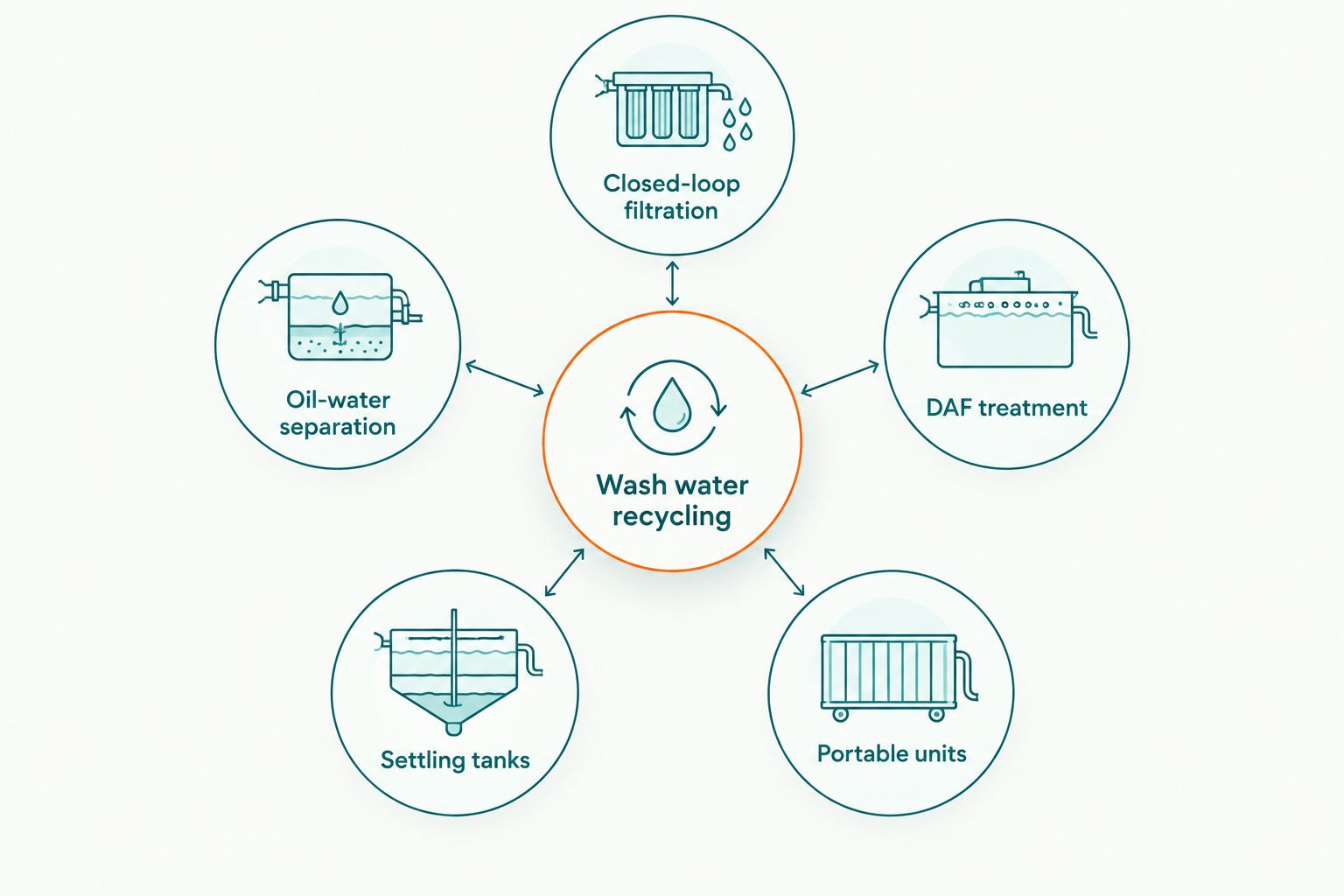
Industrial water filtration systems at a glance
| System type | Best for | Standout feature | Key limitation |
|---|---|---|---|
| Closed-loop mechanical/media filtration | High-volume permanent wash bays | Recirculates water for reuse across multiple bays | Higher upfront install complexity |
| Oil-water separators | Truck wash and fleet facilities | Targets hydrocarbon contaminants specifically | Doesn't remove fine suspended solids alone |
| DAF / chemical coagulation | Fine solids, paint overspray, heavy metals | Handles contaminants settling tanks miss | Requires chemical dosing and monitoring |
| Multi-stage settling/tank systems | Straightforward retrofits | Simple mechanical design, fewer moving parts | Limited on fine particulates and dissolved oils |
| Portable filtration units | Remote or temporary job sites | Mobile, deployable without permanent construction | Lower throughput than fixed systems |
1. Closed-loop mechanical and media filtration: best for high-volume wash bays
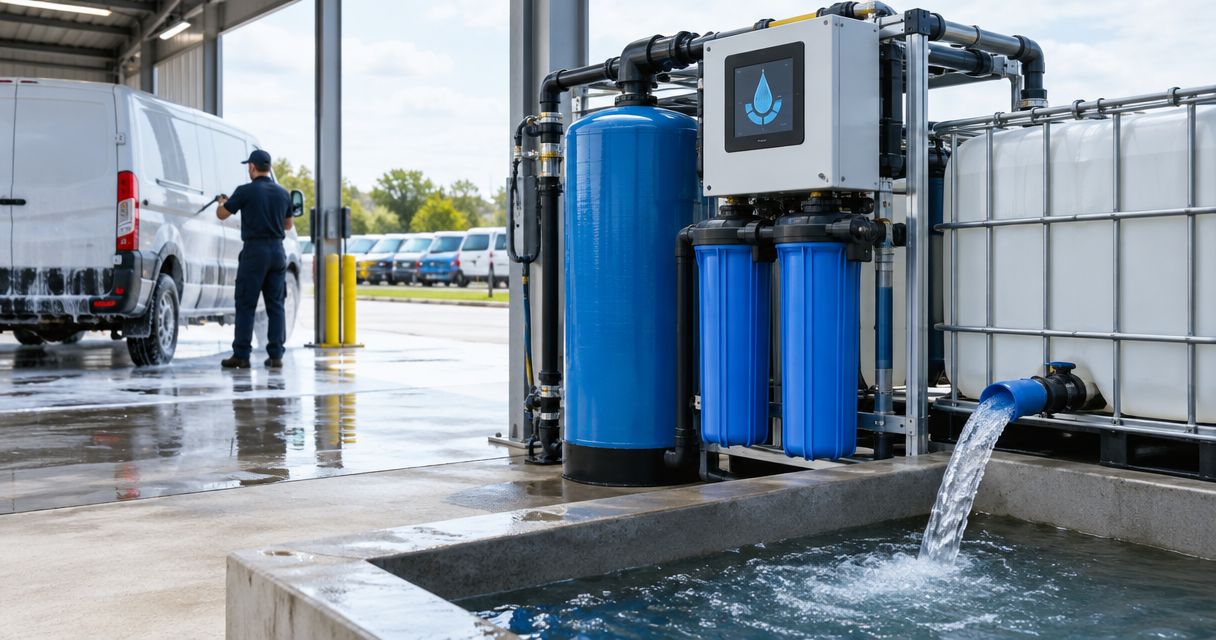
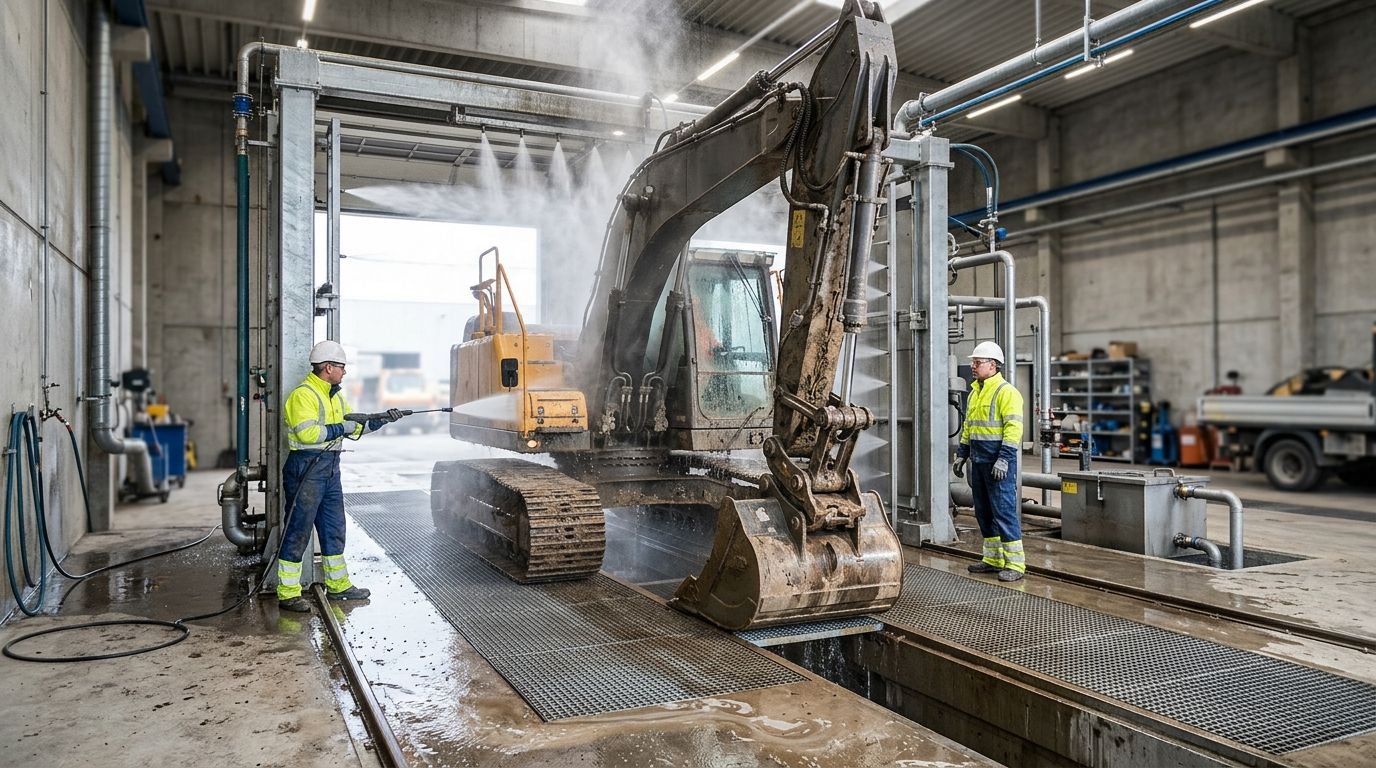
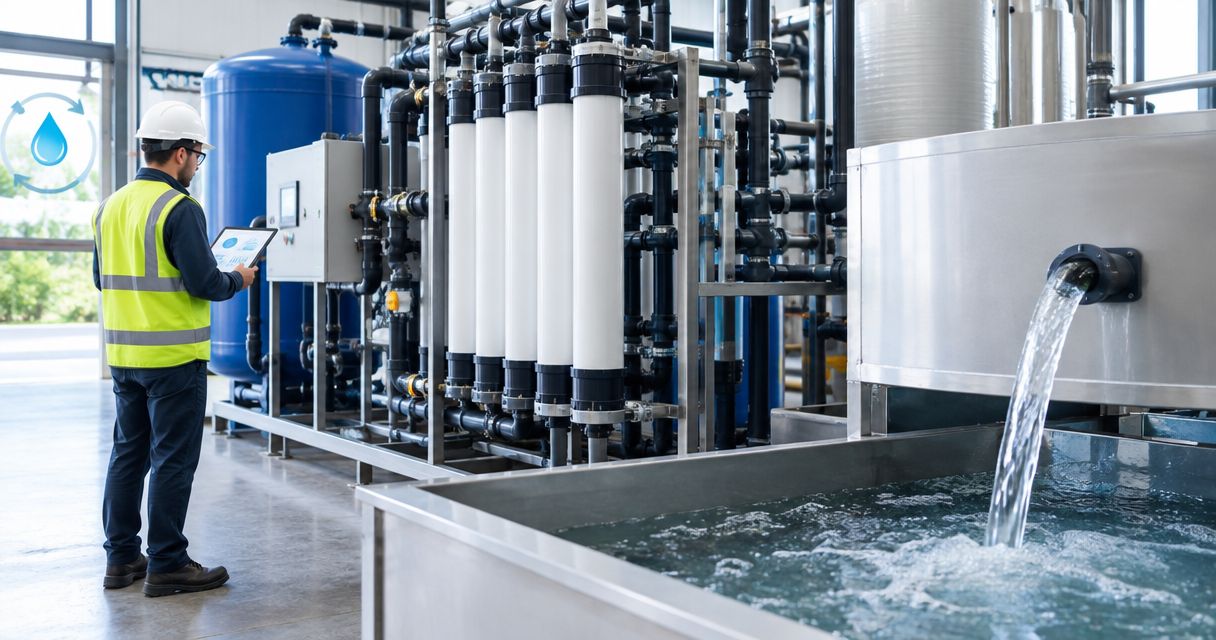
Closed-loop systems pull water out of the wash bay, run it through mechanical screening and media filtration, and send it back to the pressure washer instead of down the drain. For a facility running trucks, trailers, or heavy equipment through multiple bays across two or three shifts a day, this is the system that actually reduces fresh water draw instead of just treating what's leaving the site.
Closed-loop filtration pros:
- Cuts fresh water consumption significantly for high-throughput operations
- Reduces the volume of wastewater that needs discharge permitting altogether
- Scales to multiple bays on the same treatment loop
Closed-loop filtration cons:
- Costs more to install than a single-pass settling system
- Media and filtration components need scheduled service to keep performance consistent
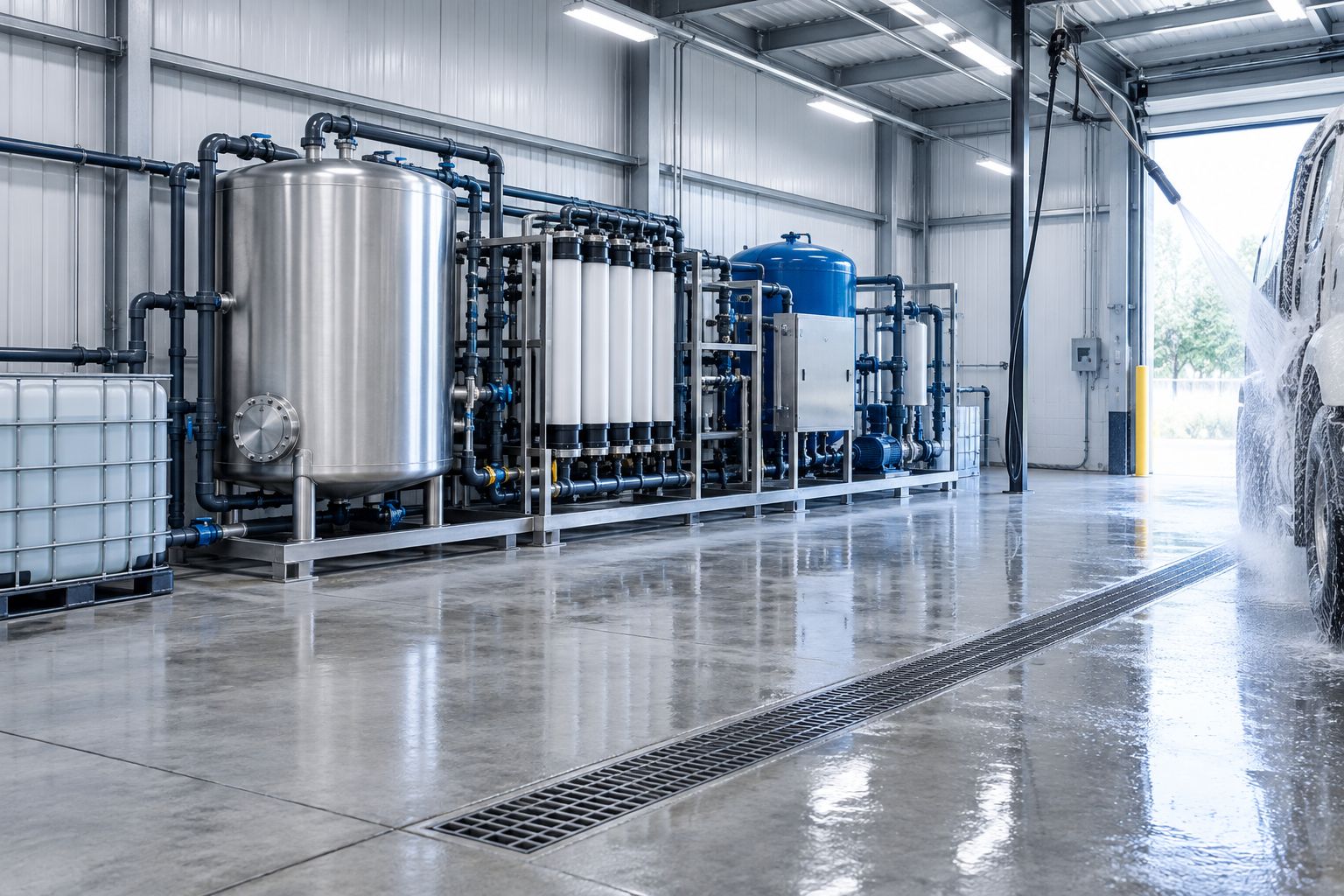
Facilities considering a closed-loop build should look at industrial wash bay systems built specifically around recirculation, not retrofit add-ons bolted onto an existing pad.
Best for: permanent facilities running multiple bays and shifts. Verdict: Buy — for high-volume operations, this is the system that pays back on water bills alone.
2. Oil-water separators: best for truck wash facilities
Oil-water separators do one job well: pulling hydrocarbons — diesel, hydraulic fluid, motor oil — out of wash water before it goes anywhere else in the treatment chain. Truck wash and fleet operations generate this exact contaminant profile every single day, which makes the separator the first stage in the system rather than an afterthought.
Design for oil-water separators traces back to the API 421 design approach used across the petroleum and industrial sectors, which is why separator sizing gets treated as an engineering decision, not a guess.
Oil-water separator pros:
- Removes hydrocarbons before they contaminate downstream filtration media
- Well-established design standards to size against
- Low mechanical complexity compared to chemical treatment systems
Oil-water separator cons:
- Doesn't address fine suspended solids or dissolved contaminants on its own
- Needs regular skimming and sludge removal to keep functioning
For fleet and truck wash operations, oil-water separators built for truck wash facilities usually sit ahead of a secondary filtration stage, not as a standalone solution.
Best for: truck wash and fleet operations with heavy fuel and oil loads. Verdict: Buy — skip this and every downstream filter clogs faster.
3. Dissolved air flotation (DAF) and chemical coagulation: best for fine solids
DAF systems inject fine air bubbles into wash water, which attach to suspended particles and float them to the surface for skimming. Chemical coagulation adds a step before that — dosing the water with coagulants that clump fine particles together so DAF or settling can catch them. This combination is built for contaminants that gravity settling misses entirely: paint overspray, heavy metal fines, and colloidal suspended solids.
DAF/coagulation pros:
- Removes fine particulates that settling tanks let pass through
- Handles contaminant loads with variable composition
- Works well ahead of discharge to municipal sewer where pretreatment limits apply
DAF/coagulation cons:
- Requires ongoing chemical dosing and monitoring
- More operational oversight than mechanical-only systems
- Not necessary for facilities without fine-particulate contamination
Best for: facilities with paint, coating, or fine-metal contamination in their wash water. Verdict: Buy for that specific contaminant profile. Skip it for a standard truck wash with no fine-solids problem.
4. Multi-stage settling and tank-based systems: best for straightforward retrofits
Settling systems use a series of tanks — often poly or aluminum — that slow water down enough for heavier solids to drop out by gravity before the water moves to the next stage. This is the most mechanically simple option on this list, and it's the one most facilities already have some version of on site.
Settling/tank system pros:
- Fewer moving parts to maintain than chemical or media-based systems
- Straightforward to retrofit into an existing washpad footprint
- Lower ongoing operational complexity
Settling/tank system cons:
- Limited on fine suspended solids and dissolved oils
- Needs periodic sludge pumping to stay effective
Before committing to a retrofit, it's worth reviewing what an industrial wash bay system costs in 2026 to understand where a tank-based upgrade fits against a full closed-loop rebuild.
Best for: facilities upgrading an existing washpad without a full rebuild. Verdict: Buy for a simple retrofit. Wait if your contaminant load includes fine solids or hydrocarbons — pair it with a separator or DAF stage first.
Not sure which system fits your site
Get a system matched to your contaminant load and flow volume, not a generic spec sheet.
5. Portable and mobile filtration units: best for remote job sites
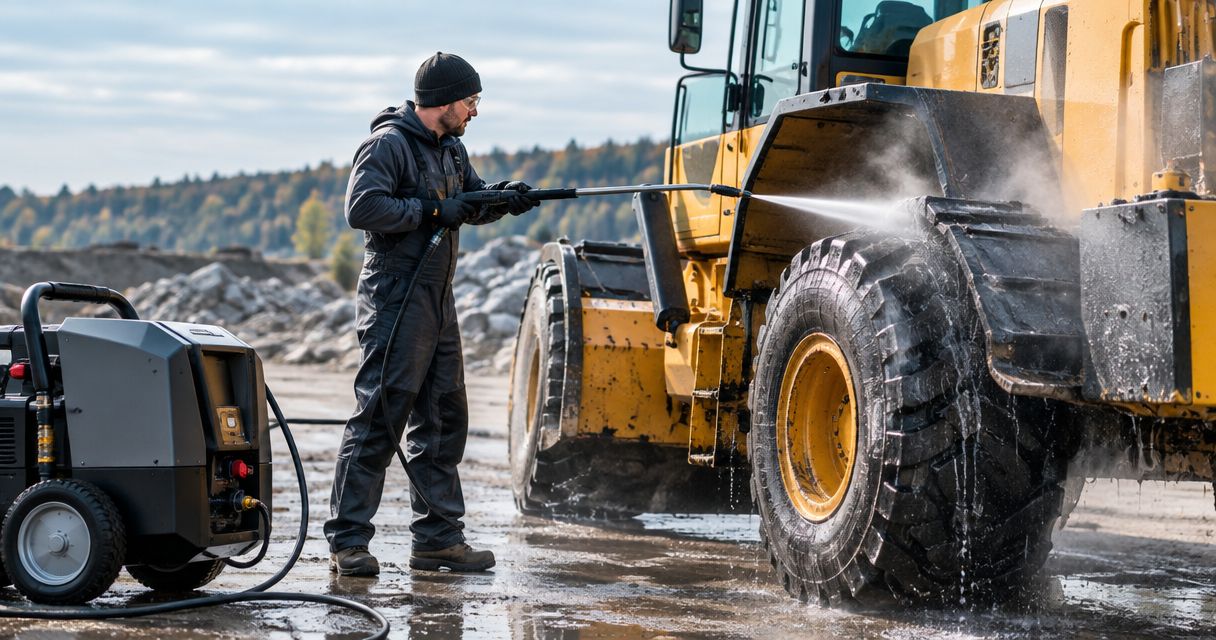
Portable filtration units bring treatment capability to sites without a permanent structure — construction sites, temporary field operations, and locations where building a fixed washpad isn't practical in the current phase of a project. These units pair with portable wash pads to give a jobsite the same recycling function as a fixed facility, just deployable.
Portable filtration pros:
- Deploys without permanent construction or site disruption
- Moves with the project as a jobsite winds down or relocates
- Supports compliance-minded wash practices on remote sites
Portable filtration cons:
- Lower throughput capacity than a fixed, multi-bay closed-loop system
- Not a long-term substitute for a permanent facility once volume grows
For jobsites without a fixed structure, portable wash pads for remote job sites pair a treatment unit with a deployable pad in one package.
Best for: remote, temporary, or short-duration construction sites. Verdict: Buy for remote and temporary work. Skip if the site is a permanent, high-volume facility — a fixed system scales better.
How we ranked these systems
Each system above gets judged against the same six criteria: TSS removal, oil and grease separation, flow rate match, footprint, maintenance load, and closed-loop compatibility. None of these systems ranks above the others in absolute terms — the ranking is about which criteria matter most for a given contaminant profile and site type, which is why the list reads as a decision tree instead of a leaderboard.
Which industrial water filtration system should you choose?
If you're running a permanent facility with multiple bays and heavy daily volume, closed-loop mechanical and media filtration is the default choice for 2026 — it's the only option on this list built to reduce fresh water draw at scale. If your wash water is loaded with fuel and oil rather than fine solids, put an oil-water separator ahead of it.
Facilities dealing with paint, coatings, or fine metal fines need DAF or chemical coagulation regardless of flow volume — settling alone won't catch that contaminant profile. Simple retrofits on existing pads do fine with multi-stage settling tanks, and remote or temporary sites should default to portable units until the project justifies a permanent build.
The honest answer for most industrial facilities in 2026: start with the contaminant profile, not the flow rate, and build the treatment stack from there.
FAQ
What's the best industrial water filtration system for wash water recycling?
Closed-loop mechanical and media filtration is the best fit for high-volume permanent wash bays because it recirculates water for reuse. Facilities with fuel or oil contamination should pair it with an oil-water separator ahead of the filtration stage.
Is a closed-loop system better than a settling tank system?
Closed-loop systems recycle water for reuse and support higher throughput, while settling tanks are simpler and cheaper to retrofit into an existing pad. Closed-loop wins for volume; settling tanks win for a straightforward upgrade.
Do oil-water separators remove all contaminants from wash water?
No. Oil-water separators remove hydrocarbons like diesel and hydraulic fluid but don't address fine suspended solids on their own. They're usually the first stage in a multi-stage treatment system, not the only stage.
When does a facility need DAF or chemical coagulation instead of settling tanks?
DAF and coagulation are needed when wash water contains fine suspended solids, paint overspray, or heavy metal fines that gravity settling can't catch. A standard truck wash without those contaminants doesn't need this stage.
Can portable filtration units handle the same volume as a fixed system?
No. Portable units are built for remote and temporary sites and run at lower throughput than a fixed, multi-bay closed-loop system. They're a fit for jobsite duration, not permanent high-volume operations.
How do I know which filtration system fits my facility?
Start with the contaminant profile in your wash water — fuel and oil, fine solids, or both — rather than flow rate alone. The contaminant type determines whether you need a separator, DAF, settling, or a full closed-loop build.
Does a closed-loop system eliminate the need for discharge permitting?
A closed-loop system reduces the volume of wastewater leaving the site, which can reduce discharge exposure, but permitting requirements depend on local and state regulations. Check with your local authority on specific requirements for your site.
One last thing
Most facilities that install a filtration system in isolation end up adding a second stage within a year — usually because the first system was matched to flow rate instead of contaminant type. Map out what's actually in your wash water before picking a system, and the retrofit two years from now becomes unnecessary.