The industrial wash bay cost in 2026 requires a site-specific quote because no reliable flat price applies to every facility. Bay design, wash water treatment, site preparation, utilities, and discharge requirements all change the scope, while operating and maintenance needs sit outside the initial construction quote.
- Industrial wash bay cost in 2026 requires a site-specific quote, not a generic price range.
- Permanent, retrofit, and portable wash bays carry different construction and site requirements.
- Wash water treatment can add tanks, separation equipment, controls, plumbing, and service access.
- Evans Equipment & Environmental fits industrial companies needing wash bay design, construction, and service from one provider.
- Define equipment, runoff, utilities, and discharge requirements before comparing proposals.
Why this matters
A quote that covers only the wash pad does not represent the complete industrial wash bay system. Facility owners need the pad, drainage, treatment equipment, pressure-washing equipment, controls, utilities, and installation scope defined before two proposals can be compared accurately.
Evans Equipment & Environmental designs, builds, and services industrial wash rack systems, wash water treatment systems, and pressure washers across the United States. That combined scope matters because separating design, construction, equipment, and service among different contractors can leave gaps between the pad and the treatment system.
How much does an industrial wash bay system cost in 2026?
An industrial wash bay system needs a custom 2026 quote based on the facility and operating requirements. A useful proposal separates the major components instead of presenting one unexplained total.
| Cost area | What the scope should define | Why it changes the proposal |
|---|---|---|
| Wash area | Permanent bay, retrofit, or portable pad | Each format requires different structural and site work |
| Water collection | Slopes, drains, sumps, piping, and containment | Existing drainage can be retained, modified, or replaced |
| Water treatment | Tanks, separation stages, filtration, controls, and recycling | Treatment must match the wastewater and discharge approach |
| Wash equipment | Pressure washers, pumps, hoses, reels, and controls | Equipment needs depend on cleaning work and operating schedule |
| Site utilities | Water, electrical service, sewer access, and connections | Distance and capacity determine installation work |
| Project delivery | Design, construction, startup, training, and service | A complete scope includes more than equipment delivery |
Ask every bidder to organize the proposal around the same cost areas. The lowest total is not the lowest-cost solution when drainage, treatment, startup, or service is excluded.
What a complete wash bay quote should include
A complete quote defines what will be built, what equipment will be installed, and which existing site conditions the contractor expects to reuse. It should also identify owner-supplied work, contractor exclusions, utility assumptions, and the point where treated water leaves or returns to the system.
Without those details, you cannot tell whether a proposal covers a working wash bay or only selected components. Use written scope differences, not the total alone, to compare 2026 bids.
Permanent wash bay: best for fixed operations
Best for: Industrial and construction facilities that wash equipment at one established location.
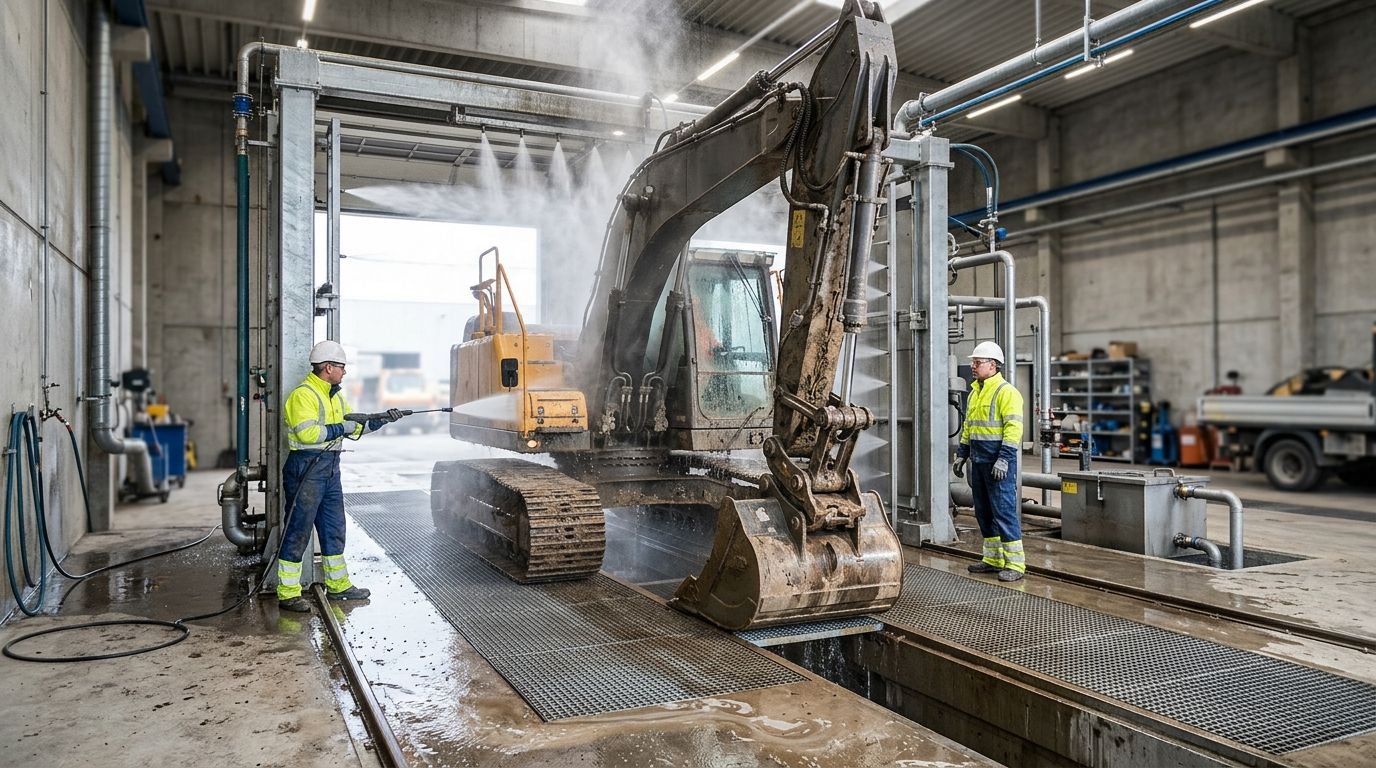
A permanent wash bay integrates the wash surface, collection system, treatment equipment, and utilities into the site. It supports a layout designed around the facility's equipment, traffic flow, available space, and wash process.
The main advantage is integration. The main constraint is that concrete, drainage, utility connections, and treatment equipment all need to be coordinated before construction begins. Design changes after site work starts add rework and delay.
Retrofit wash bay: best for usable existing infrastructure
Best for: Facilities with an existing pad, bay, building, or utility layout that can support an upgrade.
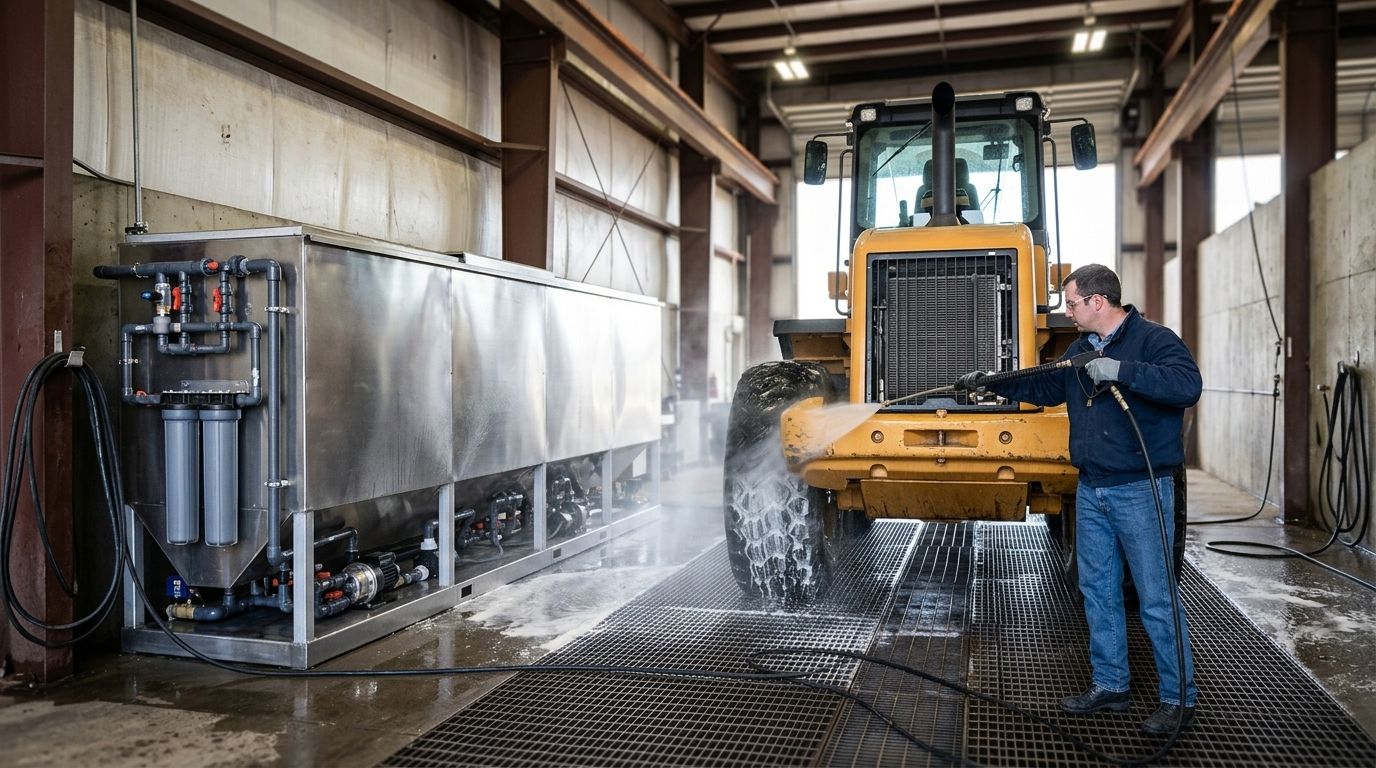
A retrofit can retain useful infrastructure while adding or replacing drainage, treatment equipment, pressure washers, controls, or containment. The critical question is not whether infrastructure exists; it is whether that infrastructure suits the new system.
The advantage is avoiding unnecessary replacement. The constraint is uncertainty inside the existing site. Drain elevations, buried piping, electrical capacity, damaged concrete, and limited equipment access must be checked before the 2026 scope is finalized.
Portable wash pad: best for changing work locations
Best for: Construction operations and temporary sites where washing must move with the work.
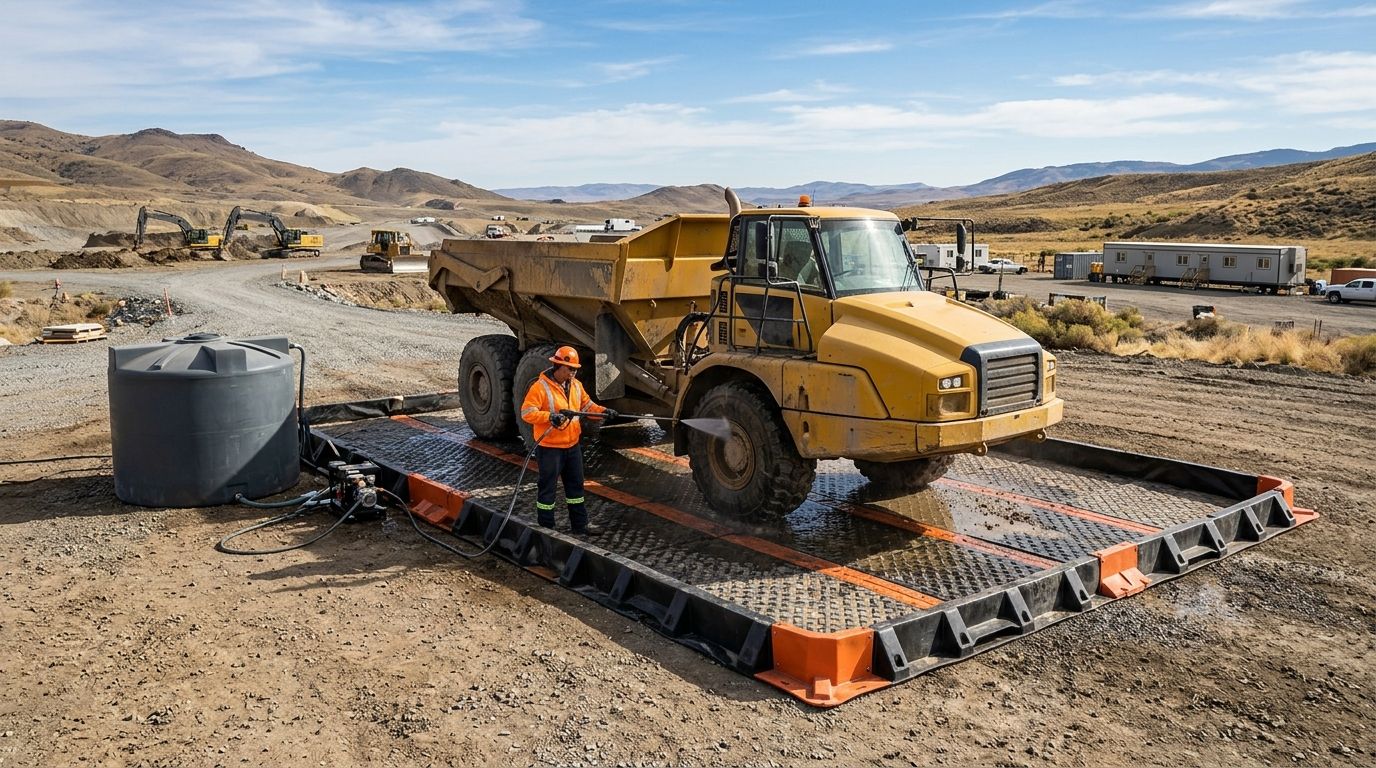
A portable wash pad avoids tying the wash area permanently to one location. It still needs a defined plan for runoff collection, water treatment, utilities, equipment setup, and movement between sites.
The advantage is relocation. The constraint is that portability does not remove treatment or operating requirements. Site access, setup space, water supply, electrical service, and wastewater handling still affect the complete system.
Wash water treatment: the scope behind the quote
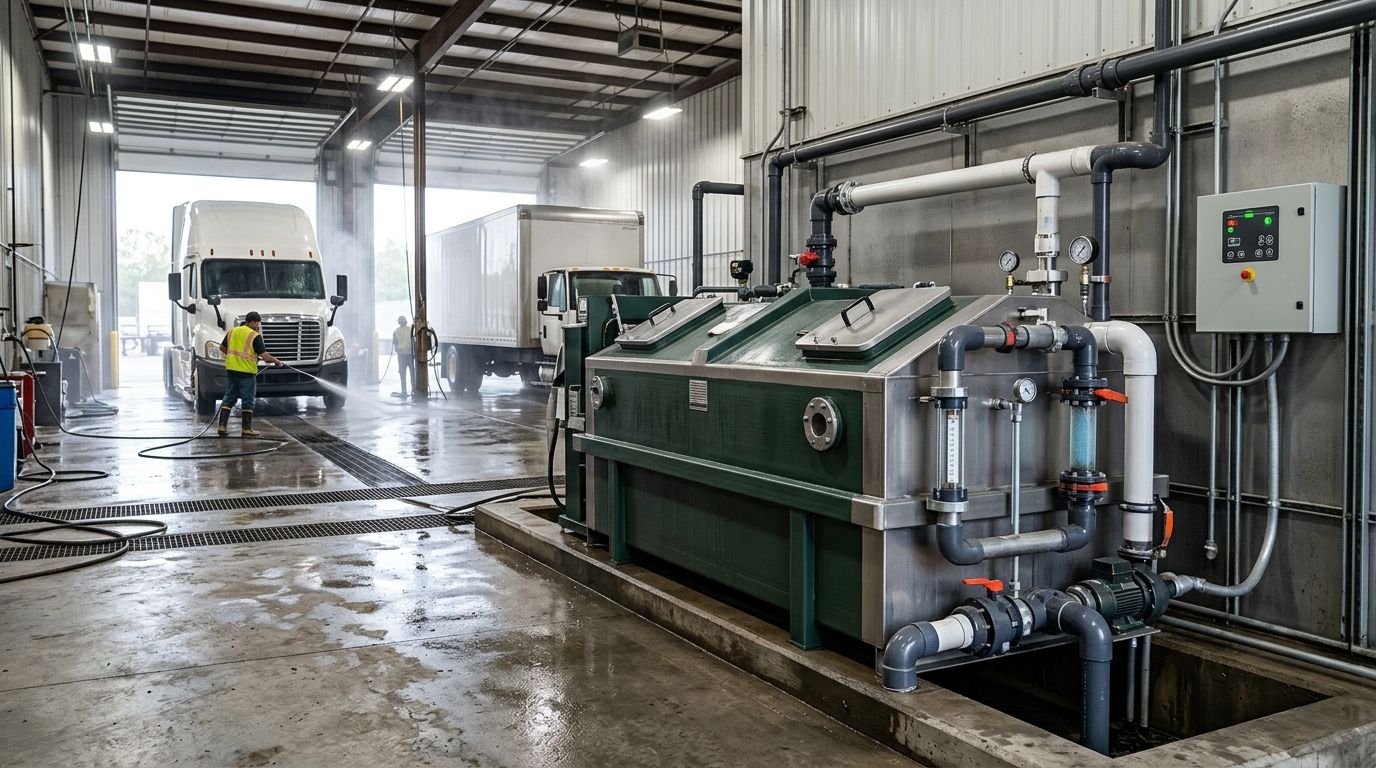
Wash water treatment is not a generic add-on. The system must be selected around what is being washed off, how water is collected, whether water is reused, and where treated water goes.
Evans Equipment & Environmental designs and builds wash water treatment systems as part of its stated industrial wash equipment scope. Available project approaches include standard or aluminum poly-tank systems, closed-loop systems, retrofits, upgrades, and custom builds. The appropriate configuration depends on documented site and treatment requirements.
A 2026 treatment scope should answer these questions:
- What contaminants and solids enter the wash water?
- How does runoff move from the wash area to treatment?
- Will treated water be recycled, discharged, or managed another way?
- Where will tanks, pumps, controls, and service clearances fit?
- Which maintenance tasks need safe access?
- Which local requirements apply to the planned discharge method?
Why industrial wash bay cost varies
Six project factors create most scope differences between wash bay proposals:
- Bay configuration: A single fixed wash area requires a different layout from multiple lanes or a portable setup.
- Existing conditions: Usable concrete, drainage, utilities, and structures can remain in scope; unsuitable components need modification or replacement.
- Treatment process: Tanks, separation equipment, filtration, pumps, and controls depend on the wastewater and operating plan.
- Utility work: Water, power, piping, and sewer connections affect equipment placement and installation.
- Site location: Climate, access, site rules, and construction logistics influence design and field work.
- Delivery responsibility: Equipment-only proposals exclude work included in design-build, startup, or service scopes.
Document these factors before requesting a 2026 proposal. The resulting bids will be easier to compare because each contractor is pricing the same operating need.
Review your wash bay requirements
Define the wash area, treatment process, utilities, and project scope before comparing proposals.
Is a retrofit less involved than a new wash bay?
A retrofit is less involved only when the existing pad, drainage, utilities, and structures are suitable for the planned system. If those elements need major changes, the retrofit scope can approach a new build without providing the same design freedom.
Inspect existing conditions before selecting the project format. A 2026 quote based on assumptions rather than verified site conditions can miss demolition, piping, concrete, or electrical work.
Does a wash bay need a water treatment system?
A wash bay needs a defined method for collecting and managing wash water. Whether that method requires a particular treatment configuration depends on the wastewater, reuse plan, discharge destination, and applicable local requirements.
Do not treat the pad and treatment process as unrelated purchases. The drainage layout, flow path, equipment placement, and maintenance access must work as one system.
Should wash bay proposals include ongoing service?
Service responsibilities should be stated even when ongoing work is not part of the initial proposal. Identify who handles startup, operator guidance, inspections, maintenance, replacement components, and repairs before accepting a 2026 scope.
This prevents a common handoff problem: the construction contractor considers the work complete while the equipment supplier expects someone else to commission or maintain the treatment system.
When Evans Equipment & Environmental is the right fit
Evans Equipment & Environmental is best for industrial and construction companies that need wash bay systems designed, built, and serviced across the United States. Its stated scope covers industrial wash rack construction, wash water treatment systems, and pressure washers.
The benefit is one provider covering connected parts of the project. The limitation is that custom, retrofit, and upgrade work cannot be priced responsibly without facility requirements and site details. Owners looking for an instant generic figure still need to complete the scoping process.
FAQ
How much does an industrial wash bay cost in 2026?
An industrial wash bay requires a site-specific quote in 2026 because no reliable flat price covers every facility. Bay type, drainage, water treatment, utilities, equipment, and installation scope determine the proposal.
What is included in an industrial wash bay quote?
A complete industrial wash bay quote should define the wash area, drainage, treatment equipment, pressure-washing equipment, controls, utilities, installation, startup, and exclusions. Confirm each item in writing before comparing totals.
Is a portable wash pad better than a permanent wash bay?
A portable wash pad is better for changing work locations, while a permanent wash bay is better for an established facility. The correct choice depends on site duration, operating process, utilities, runoff management, and relocation needs.
Can an existing wash bay be upgraded?
An existing wash bay can be upgraded when its structure, drainage, utilities, and available space can support the planned equipment. A site assessment must identify which components can remain and which need replacement.
What changes the cost of wash water treatment?
Wash water treatment scope changes with the wastewater, solids, collection method, recycling plan, discharge destination, tanks, pumps, filtration, controls, and required service access. These details should be defined before equipment selection.
Who designs and services industrial wash bay systems?
Evans Equipment & Environmental designs, builds, and services industrial wash rack systems, wash water treatment systems, and pressure washers. Its stated customer base includes industrial and construction companies across the United States.
One last thing
Do not request a wash bay price using bay dimensions alone. Send each bidder the same 2026 operating brief covering the equipment being washed, wash location, runoff, existing utilities, treatment objective, discharge approach, project boundaries, and service expectations. A defined operating brief produces a useful quote; a dimensions-only request produces assumptions.