Picking a portable wash pad for a remote job site comes down to one trade-off: how much containment and treatment capacity you need versus how fast the unit has to break down and move to the next location. Best overall: the closed-loop portable wash pad with integrated water treatment. Best for frequently relocated linear projects: the modular aluminum wash pad. Best for short-duration sites: the poly-tank lined wash pad.
- Closed-loop portable wash pads with on-site treatment are the best overall pick for compliance-driven remote job sites in 2026.
- Aluminum modular pads survive the most load-outs and suit highway or pipeline corridor work that moves every few weeks.
- Poly-tank lined pads set up fastest for short jobs but puncture more easily under heavy equipment traffic.
- Skid-mounted units with built-in treatment trains handle the highest equipment turnover at quarries and fleet yards.
- Trailer-mounted wash racks trade containment size for setup speed on rotating multi-site crews.
Why this matters
A remote job site with no municipal wash water hookup still has to meet discharge permit requirements, and a wash pad that only contains water without treating it can leave a contractor holding runoff nobody can legally dump. Evans Equipment & Environmental builds and services portable wash pad systems for construction and industrial crews who move between sites and can't afford a fixed wash rack. The right configuration depends on how long the crew stays put, what's coming off the equipment, and how far the next relocation is.
Getting this wrong costs more than a fine. A pad that can't keep up with sediment load clogs fast, and a liner that tears mid-project means downtime while a crew waits on a replacement. The best portable wash pads for remote job sites in 2026 match containment and treatment capacity to the job duration, not the other way around.
What makes the best portable wash pad for remote job sites
- Containment integrity — berms or curbing that hold 100% of wash water with zero ground contact, even on uneven or unpaved sites.
- Water treatment capacity — on-board or paired filtration that handles hydrocarbons, sediment, and suspended solids according to the site's discharge permit.
- Mobility and setup time — modular components that break down and relocate without triggering a full re-permit cycle at the next site.
- Compliance documentation — discharge and inspection paperwork tied directly to the pad's design and capacity.
- Durability across relocations — materials that survive repeated load-out, freight, and reassembly without cracking or seam failure.
Portable wash pads for remote job sites: at a glance
| System | Best For | Standout Feature | Key Limitation |
|---|---|---|---|
| Closed-loop portable wash pad | Compliance-driven remote sites (pipeline, oil & gas, remediation) | Full containment berm with an integrated clarification loop | Heavier footprint takes more setup labor than a trailer unit |
| Modular aluminum wash pad | Frequently relocated linear projects (highway, utility corridors) | Aluminum panels survive dozens of load-outs without corrosion | Panels alone don't treat water — needs a paired filtration unit |
| Poly-tank lined wash pad | Short-duration sites under six months | Drops in fast, packs down small between jobs | Liner punctures more easily under sharp equipment tracks |
| Skid-mounted wash pad with treatment | High-volume equipment turnover (quarry, aggregate, fleet yards) | Treatment train sits on the same skid, cutting piping runs | Weight requires a flatbed or heavy trailer to relocate |
| Trailer-mounted portable wash rack | Rotating multi-site crews | Rolls on its own chassis, hooks up in under an hour | Smaller containment footprint, not built for simultaneous washing |
1. Closed-loop portable wash pad: best for compliance-driven remote sites
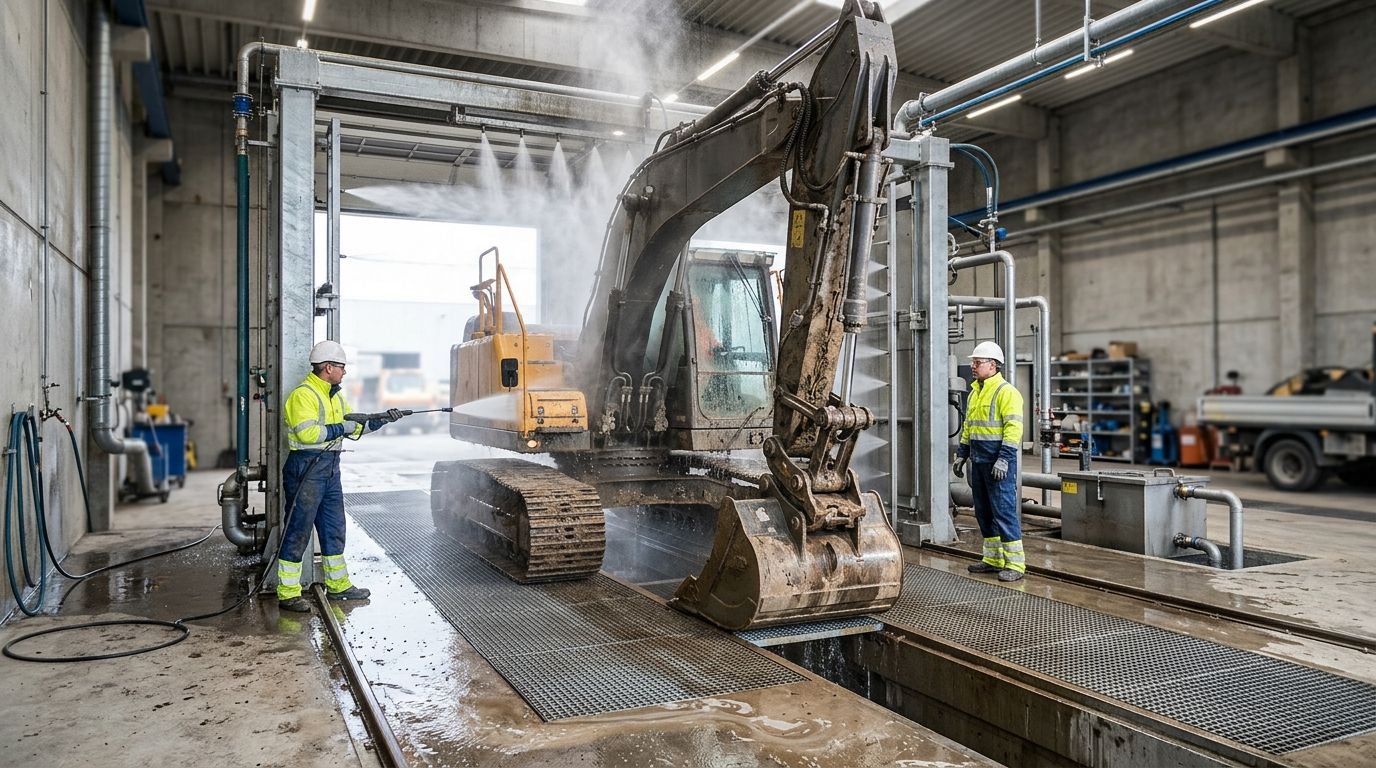
A closed-loop pad recirculates wash water through an on-site clarification system instead of discharging it, which matters most on pipeline, oil and gas, and environmental remediation sites where regulators expect zero-discharge documentation. Evans Equipment builds these as a complete system — containment berm, treatment loop, and compliance paperwork — so the crew isn't stitching together separate vendors for the pad and the treatment. The trade-off is footprint: this configuration needs more ground space and setup time than a trailer-based unit.
Closed-loop portable wash pad pros:
- Zero-discharge design satisfies the strictest remote-site permits
- Treatment loop reduces how often water needs to be hauled off-site
- Single point of contact for design, build, and ongoing support
- Documentation built into the system for inspection readiness
Closed-loop portable wash pad cons:
- Longer setup time than a trailer-mounted alternative
- Not the fastest option for a crew relocating every two to three weeks
Best for: compliance-heavy remote sites where discharge documentation is non-negotiable. Verdict: Buy if the site sits under strict wash water permitting.
2. Modular aluminum wash pad: best for frequently relocated linear projects
Highway and utility corridor work moves in stages, and an aluminum panel wash pad is built to be broken down, freighted, and reassembled dozens of times without corroding or cracking at the seams. The panels handle the containment side of the job well, but they don't treat water on their own — a crew running one of these needs a paired filtration unit to stay compliant on longer stretches of work.
Modular aluminum wash pad pros:
- Corrosion-resistant panels hold up across repeated relocations
- Lighter than a full skid-mounted system, easier to load and unload
- Modular design scales up or down with the job
Modular aluminum wash pad cons:
- No built-in water treatment — needs a separate filtration setup
- Panel seams need periodic inspection after heavy freight cycles
Best for: crews leapfrogging down a corridor project every few weeks. Verdict: Buy when relocation frequency is the top priority.
3. Poly-tank lined wash pad: best for short-duration sites under six months
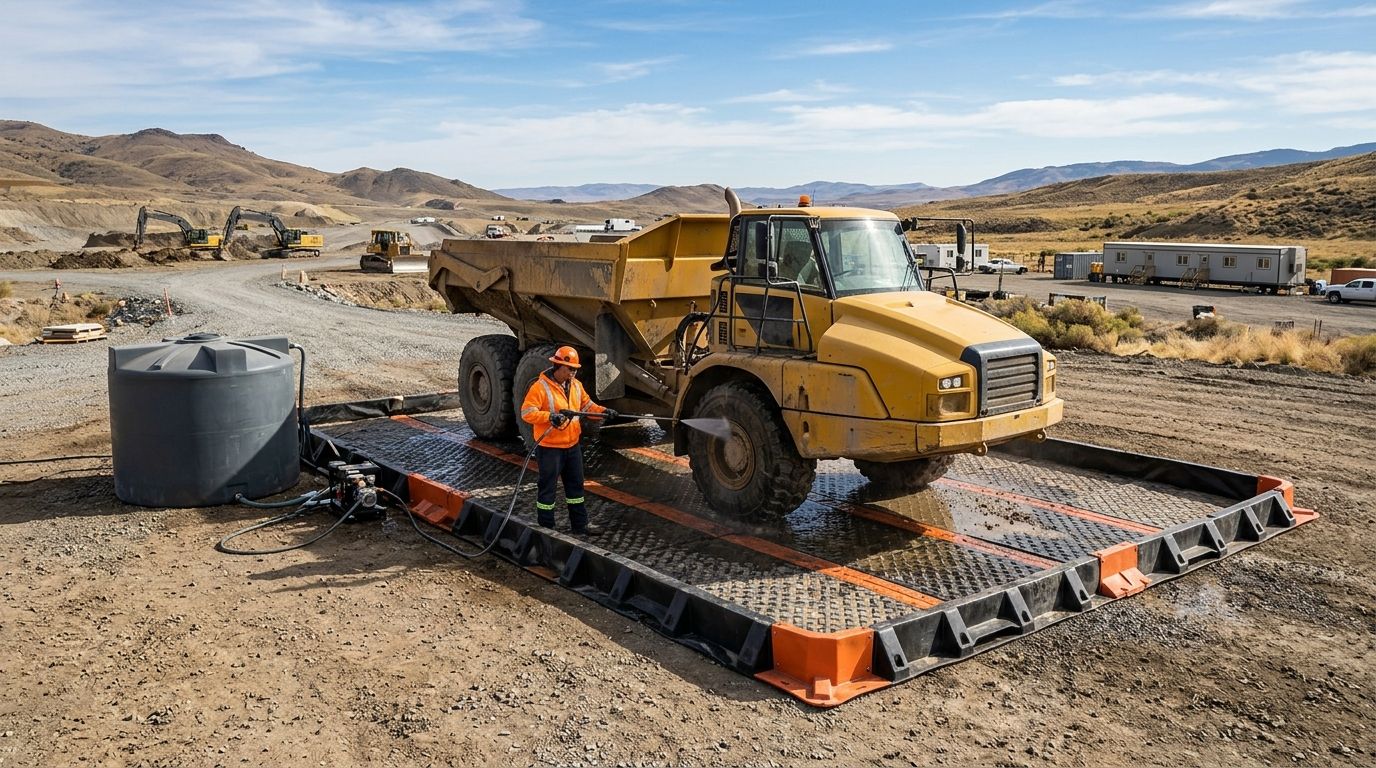
A poly-lined pad is the fastest thing to drop on a short job — it packs down small, sets up quickly, and doesn't need heavy equipment to place. It's a reasonable fit for a remediation project or a short-term construction phase that wraps in a few months. The liner is more vulnerable than aluminum or steel, though, and sharp equipment tracks or gravel underneath it will shorten its working life fast.
Poly-tank lined wash pad pros:
- Fastest setup of the five configurations
- Compact storage and transport between short jobs
- Lower labor requirement to deploy
Poly-tank lined wash pad cons:
- Puncture risk under heavy tracked equipment
- Not built for projects running past six months
- Needs a clean sub-base to avoid tearing
Best for: short jobs where speed of deployment beats long-term durability. Verdict: Buy for projects under six months; Skip for anything longer.
4. Skid-mounted wash pad with integrated water treatment: best for high-volume equipment turnover
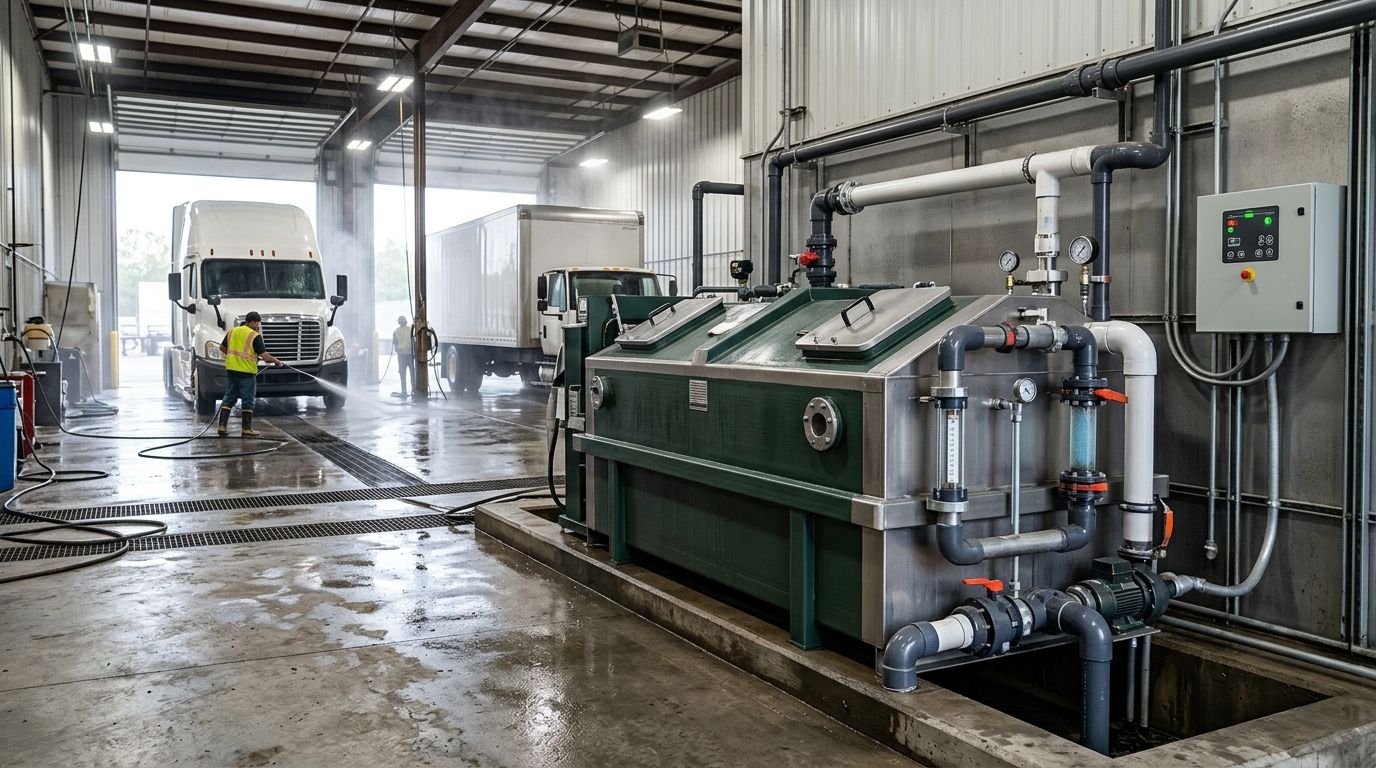
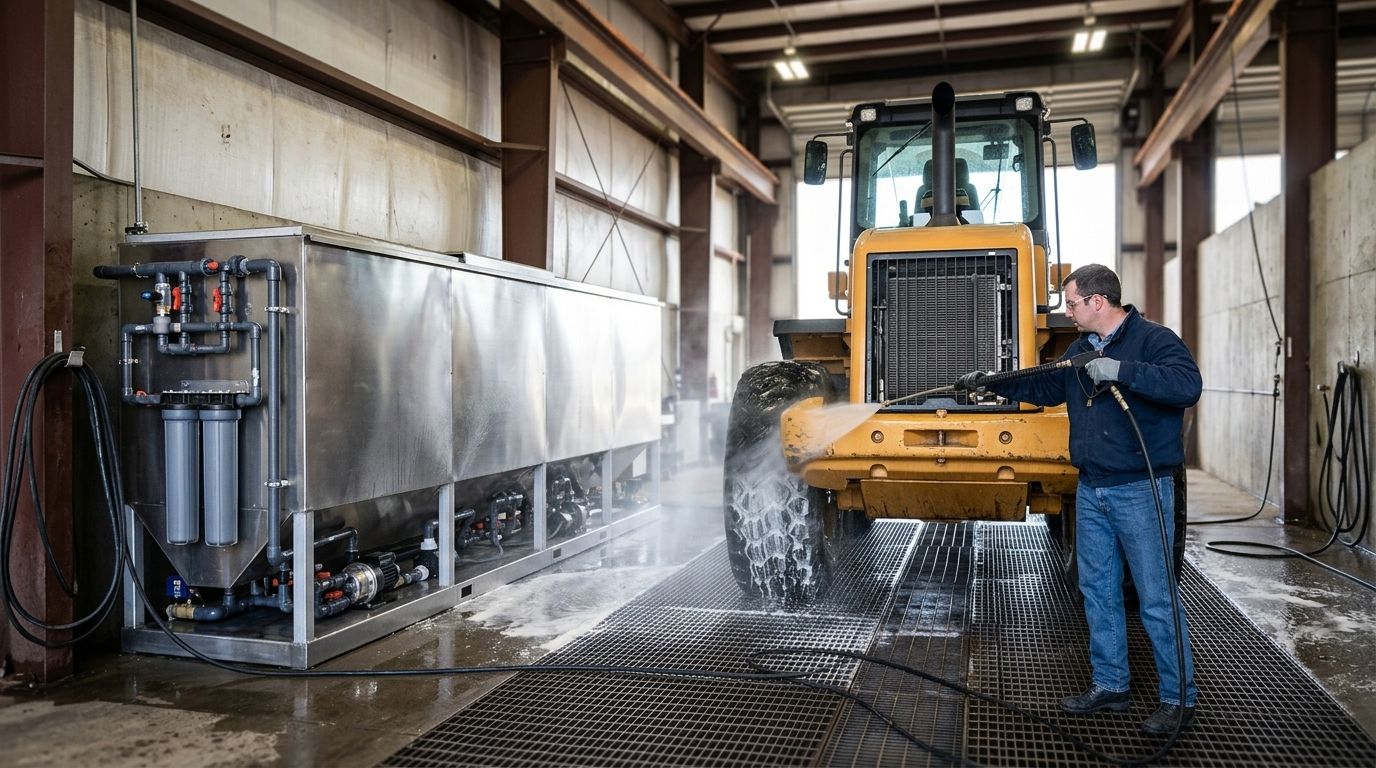
Quarry, aggregate, and fleet yard operations wash a lot of equipment in a short window, and a skid-mounted pad puts the oil-water separator and filtration train right next to the containment surface, cutting the piping runs that slow down high-throughput washing. That integration adds weight — this isn't something a pickup truck relocates, it needs a flatbed or heavy trailer.
Skid-mounted wash pad pros:
- Treatment train built into the same footprint as the pad
- Handles higher wash volume than a poly or trailer unit
- Fewer piping connections to maintain in the field
Skid-mounted wash pad cons:
- Heaviest option to relocate, needs specialized transport
- Overkill for a site washing one or two units a day
Best for: operations with continuous, high-volume equipment washing. Verdict: Buy for fleet yards and quarries; Wait on it for low-volume sites.
5. Trailer-mounted portable wash rack: best for rotating multi-site crews
A trailer-mounted unit rolls in on its own chassis and can be hooked up and draining wash water inside an hour, which is the draw for crews rotating between several job sites in a season rather than staying put on one. The containment footprint is smaller than the other four options, so it's not built for washing more than one vehicle at a time.
Trailer-mounted portable wash rack pros:
- Fastest relocation of any configuration on this list
- No separate load-out step — it tows as a unit
- Good fit for smaller crews without heavy equipment on-site
Trailer-mounted portable wash rack cons:
- Smallest containment footprint on this list
- Not sized for washing multiple vehicles at once
Best for: crews covering several sites in a season with limited wash volume per stop. Verdict: Buy for multi-site rotation; Skip for a single fixed remote site running high volume.
“A portable wash pad that only contains water without treating it can leave a contractor holding runoff nobody can legally dump.”
How we ranked
Each configuration was weighed against the five criteria above — containment integrity, treatment capacity, mobility, compliance documentation, and durability across relocations — and matched to the job-site pattern it fits best rather than forced into a single leaderboard. No two systems compete for the same use case: a quarry running continuous washing has different needs than a highway crew relocating every two weeks, and the ranking reflects that.
Get a portable wash pad built for your site
Talk through containment, treatment, and relocation needs for your job.
Which portable wash pad should you choose?
For most remote job sites in 2026 dealing with a discharge permit, the closed-loop portable wash pad with integrated treatment is the default pick — it's the only configuration on this list that handles both containment and treatment without a second vendor. Crews moving every few weeks down a corridor should look at the modular aluminum pad instead, and short jobs under six months are a fair match for the poly-lined option. High-volume quarry and fleet operations should size up to the skid-mounted system, and crews bouncing between several low-volume sites in a season are better served by the trailer-mounted rack. Total cost varies by containment size, treatment capacity, and project duration — the industrial wash bay system cost breakdown covers what drives pricing up or down before you build a budget.
FAQ
What is a portable wash pad?
A portable wash pad is a mobile containment system that collects and, in most configurations, treats wash water from equipment cleaning at a job site without a fixed drain or municipal hookup. It relocates with the crew instead of staying tied to one address.
How much does a portable wash pad cost in 2026?
Cost depends on containment size, whether treatment is integrated, and how long the system needs to run before relocating. A detailed breakdown of what drives industrial wash system pricing up or down is worth reviewing before setting a budget.
Are portable wash pads legal for wash water discharge compliance?
Yes, when the pad's containment and treatment capacity match the site's discharge permit. A pad that only contains water without treating it can still leave a contractor holding runoff that has to be legally disposed of, not discharged.
Can a portable wash pad be moved between job sites?
Yes — that's the point of a portable system. Aluminum modular and trailer-mounted pads relocate fastest, while skid-mounted units with integrated treatment need a flatbed or heavy trailer to move.
Do portable wash pads need water treatment, or just containment?
Containment alone is not enough if the wash water carries hydrocarbons, sediment, or other contaminants covered by a discharge permit. Most remote sites in 2026 need both containment and a treatment step to stay compliant.
What's the difference between aluminum and poly portable wash pads?
Aluminum panels hold up across dozens of relocations without corroding, while poly liners set up faster but puncture more easily under heavy equipment tracks. Aluminum suits longer, multi-move projects; poly suits short jobs under six months.
How fast can a portable wash pad be set up on a remote site?
A trailer-mounted wash rack can be hooked up and draining wash water inside an hour. A closed-loop system with integrated treatment takes longer to set up because of the added containment and treatment components.
Do portable wash pads work on remote or rural sites without utilities?
Yes — that's the primary reason contractors use them. A closed-loop configuration is built specifically for sites with no municipal water or drain access, recirculating wash water through on-site treatment instead.
One last thing
The most common mistake on a short remote job isn't picking the wrong pad — it's assuming containment alone covers compliance because the project is short. A six-week job that skips treatment on a hydrocarbon-heavy wash still generates water nobody can legally pour out, and hauling it off-site after the fact usually costs more than treating it on-site would have. Match the treatment capacity to what's actually coming off the equipment, not just the calendar.