Choosing the wrong heat source or mounting configuration is the single biggest reason hot water pressure washers underperform on heavy equipment. Diesel-fired hot water pressure washers win for high-volume equipment yards, trailer-mounted units win for remote job sites, and a custom-built system from Evans Equipment wins for facilities that want the washer engineered into a full wash bay from day one.
- Diesel-fired hot water pressure washers are the best hot water pressure washers for heavy equipment moving through high-volume yards in 2026.
- Trailer-mounted and skid-mounted units win for remote job sites where there's no fixed water or power hookup.
- Evans Equipment builds hot water systems directly into custom wash bay designs, which matters when compliance and drainage are part of the problem.
- Water temperature matters more than PSI for cutting grease off undercarriages and engine compartments.
Why this matters
Cold water pressure washing moves dirt around. Hot water breaks down the grease, oil, and hydraulic film that coat excavator tracks, loader buckets, and haul truck frames — the stuff cold water just pushes into a corner. Facilities that switch from cold to hot water report shorter wash cycles because the burner is doing chemical work the pump alone can't do.
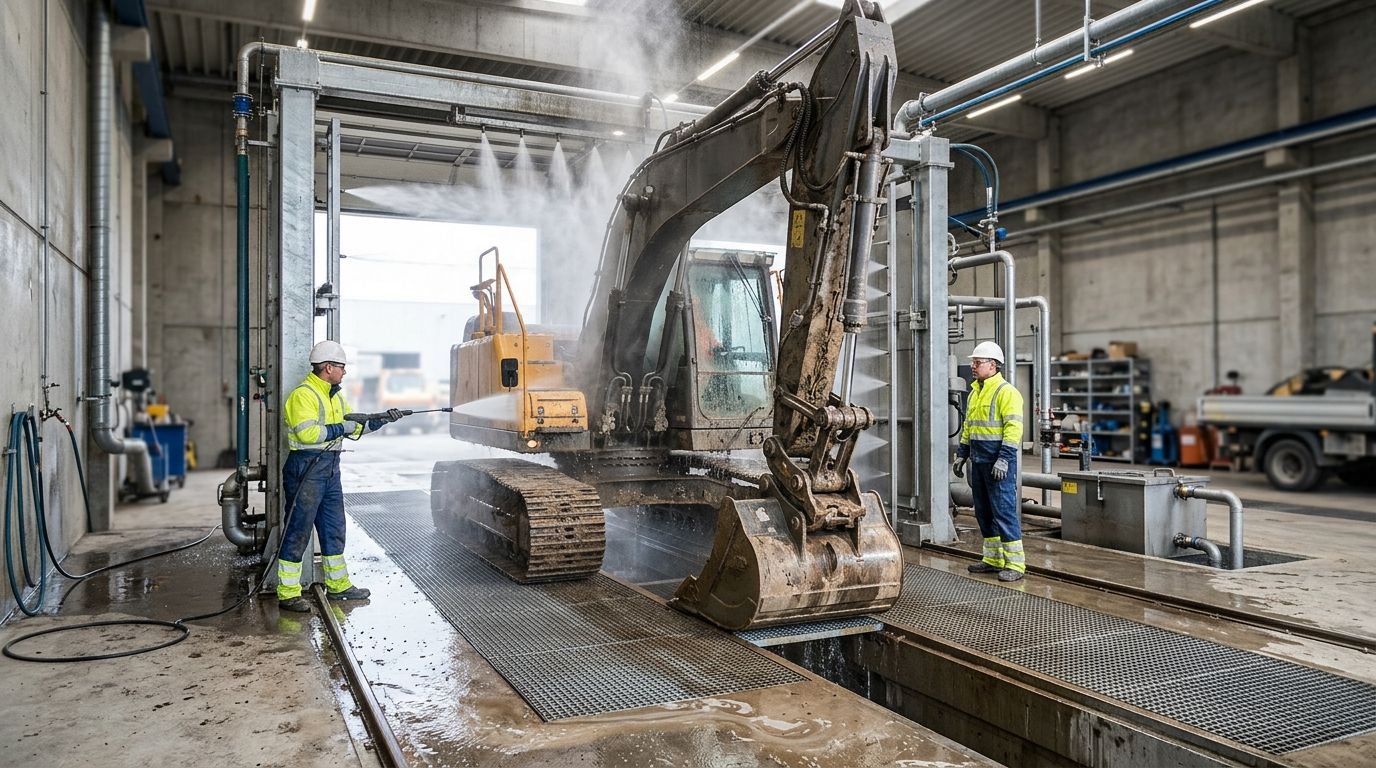
Evans Equipment builds industrial wash bay systems that pair hot water pressure washers with the drainage, containment, and treatment infrastructure heavy equipment washdown actually requires. A pressure washer bought in isolation, without a plan for where the wash water goes, creates a compliance problem the day it's installed.
What makes the best hot water pressure washer for heavy equipment
- Sustained water temperature under load — a burner that drops from 220°F to 160°F after ten minutes of continuous use isn't rated for fleet washdown.
- PSI and GPM matched to the equipment — undercarriages and tracks need flow, not just pressure, to flush packed mud and debris.
- Fuel source that fits the site — diesel and propane travel; natural gas and electric need a fixed hookup.
- Duty cycle rating — heavy equipment yards run washers for hours a day, not minutes.
- Mounting configuration — stationary, skid-mounted, or trailer-mounted changes where and how fast the unit can be deployed.
- Compatibility with wash water treatment — the washer output has to match what your oil-water separator or closed-loop system can handle.
If the pressure washer can't hold 200°F at the nozzle under continuous use, it's not cutting grease off equipment — it's just rinsing it around.
“If the pressure washer can't hold 200°F at the nozzle under continuous use, it's not cutting grease off equipment — it's just rinsing it around.”
At a glance
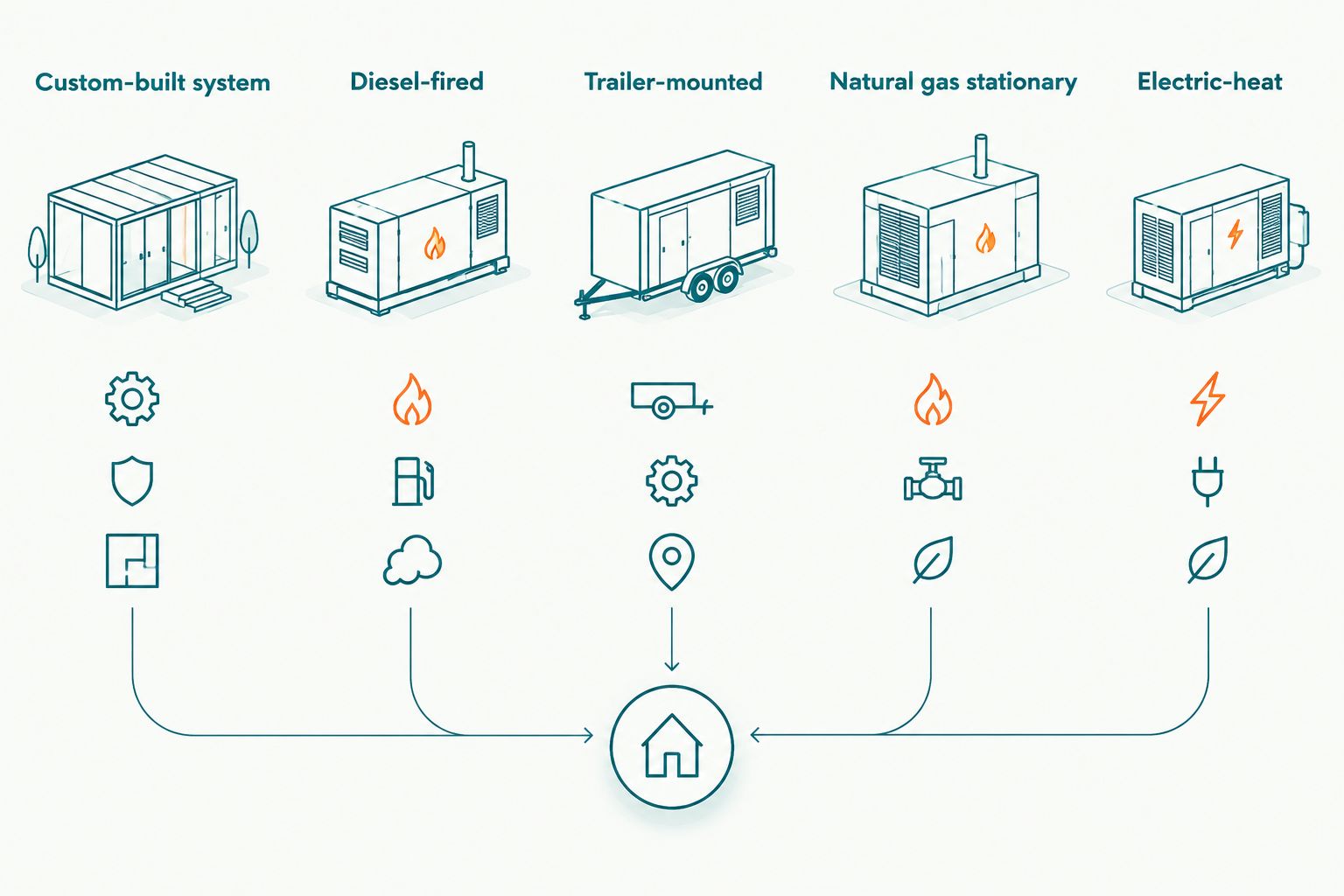
| Type | Best for | Standout feature | Key limitation |
|---|---|---|---|
| Custom-built system (Evans Equipment) | Full wash bay projects | Engineered with drainage and treatment | Longer lead time than an off-the-shelf unit |
| Diesel-fired hot water washer | High-volume equipment yards | Fast heat recovery, runs anywhere | Diesel storage and combustion venting needed |
| Trailer/skid-mounted unit | Remote job sites | No fixed hookup required | Lower duty cycle than stationary systems |
| Natural gas/propane stationary system | Fixed indoor wash bays | Lower fuel cost per hour of runtime | Needs a permanent gas line or LP tank farm |
| Electric-heat pressure washer | Enclosed, emissions-restricted facilities | No combustion exhaust indoors | Slower to reach full temperature |
1. Evans Equipment custom-built hot water systems: best for full wash bay projects
Evans Equipment designs and builds hot water pressure washer systems as part of a complete industrial wash bay system, matched to the site's drainage, containment, and treatment needs rather than sold as a standalone box.
Evans Equipment pros:
- Washer specs matched to the wash bay's actual drainage and flow capacity
- Single point of contact for design, build, and service
- Built for continuous heavy equipment duty cycles, not intermittent home-shop use
Evans Equipment cons:
- A full system build takes longer than ordering an off-the-shelf unit
- Not the right fit if you only need a replacement washer for an existing bay
Best for: facilities building or retrofitting a wash bay from scratch in 2026. Verdict: Buy if you're solving the wash pad and the pressure washer at the same time.
2. Diesel-fired hot water pressure washers: best for high-volume equipment yards
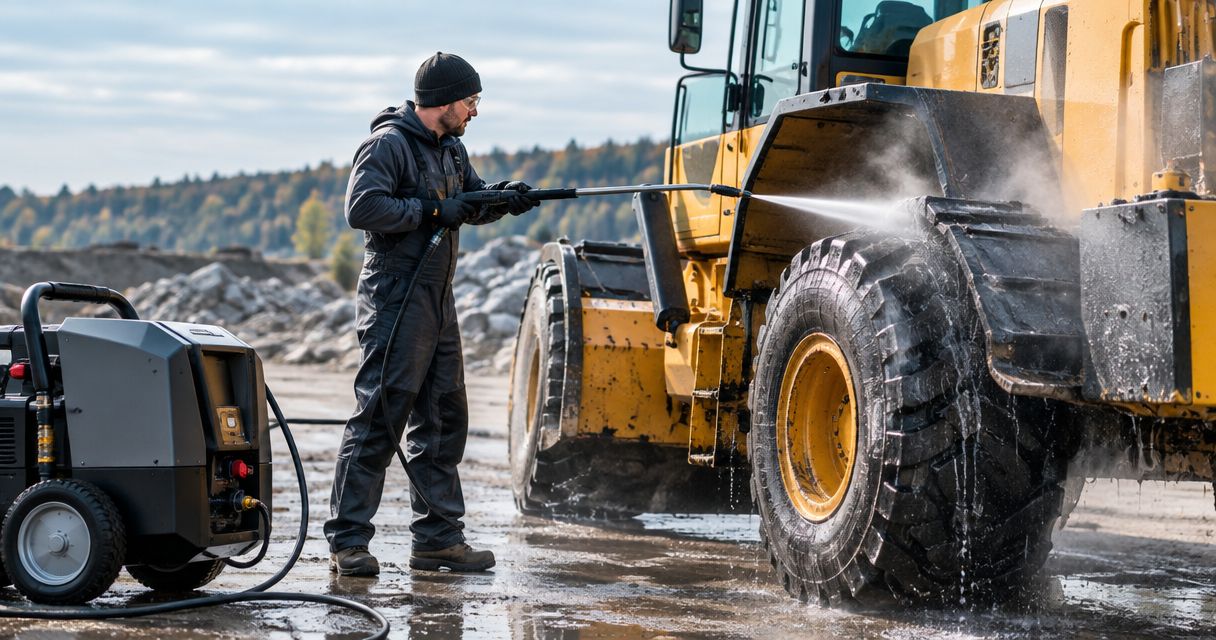
Diesel-fired units heat water fast and hold temperature under near-continuous use, which is why they show up at construction yards, quarries, and rental fleet lots where machines line up all day for washdown.
Diesel-fired washer pros:
- Fast heat recovery between wash cycles
- Runs independent of a gas line, useful on sites without utility hookups
- Handles multi-hour duty cycles without losing water temperature
Diesel-fired washer cons:
- Requires diesel fuel storage and combustion exhaust management
- Not ideal for fully enclosed indoor bays without ventilation
Best for: yards washing five or more pieces of heavy equipment per day. Verdict: Buy for high-throughput outdoor washdown.
3. Trailer-mounted and skid-mounted units: best for remote job sites
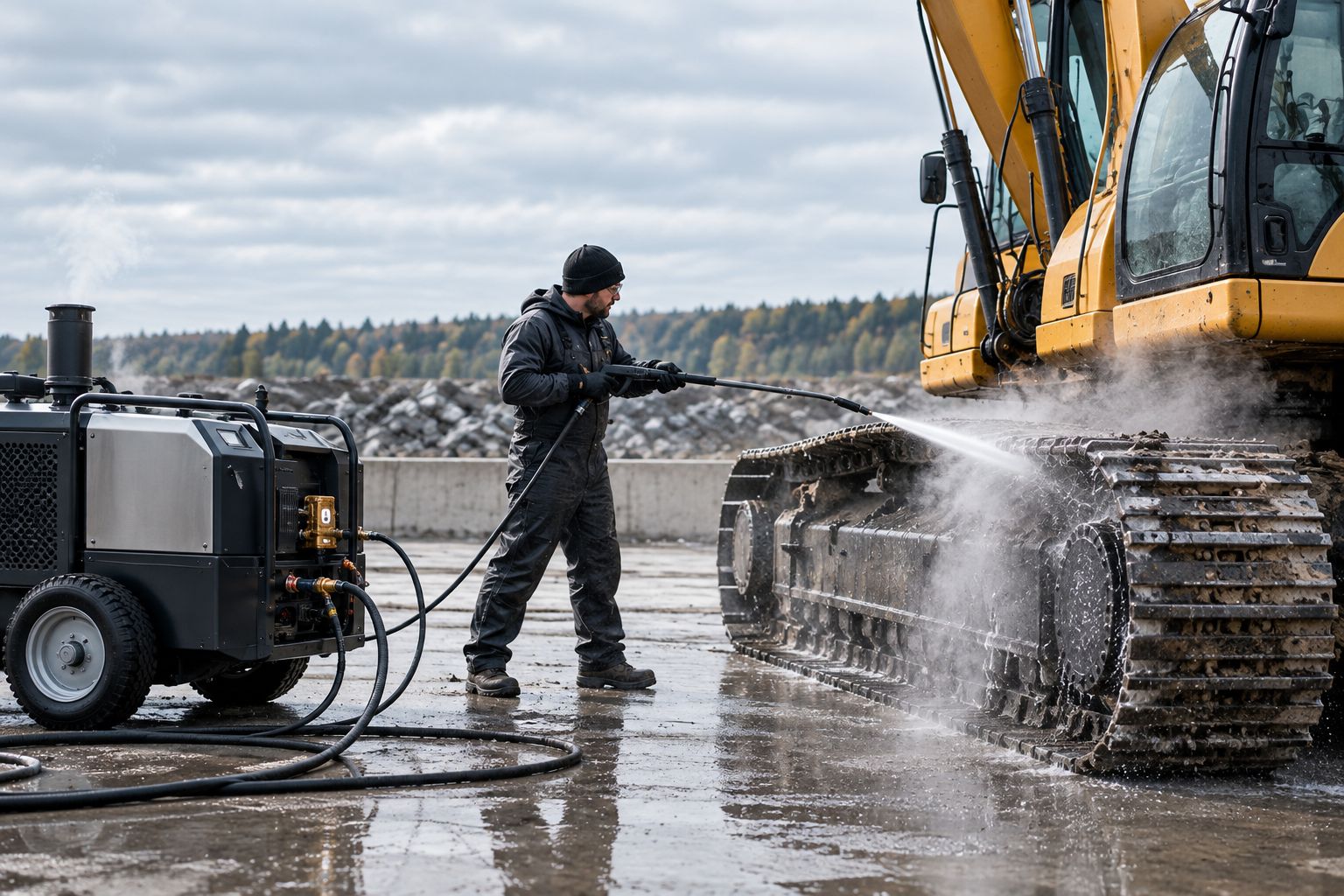
Trailer and skid-mounted hot water pressure washers carry their own fuel, water heater, and pump, which makes them the practical choice for job sites without a fixed wash bay. They pair well with a portable wash pad setup where the whole washdown operation needs to move with the project.
Trailer-mounted washer pros:
- Deploys to any site without permanent infrastructure
- Moves with the crew as a project changes location
- Works alongside a portable containment pad for compliant remote washdown
Trailer-mounted washer cons:
- Lower duty cycle than a stationary diesel or gas system
- Water and fuel tank capacity limits how long it runs between refills
Best for: contractors and rental operators washing equipment at rotating job sites. Verdict: Buy for remote and mobile operations; Skip if the equipment always comes back to one fixed yard.
4. Natural gas or propane stationary systems: best for fixed indoor wash bays
Stationary gas-fired units cost less to run per hour once a gas line or LP tank farm is in place, and they're the standard choice for enclosed wash bays that run the same washer for years without moving it.
Gas-fired stationary washer pros:
- Lower fuel cost per hour of runtime than diesel
- Simple to integrate with a fixed wash bay's plumbing and treatment system
- Long service life when maintained on a regular schedule
Gas-fired stationary washer cons:
- Requires a permanent gas line or on-site LP storage
- Can't move if the wash bay location changes
Best for: facilities with one permanent indoor wash bay and consistent daily volume. Verdict: Buy for a fixed location; Hold if you're still deciding where the wash bay goes.
5. Electric-heat hot water pressure washers: best for emissions-restricted facilities
Electric-heat units skip combustion entirely, which matters in enclosed spaces where diesel or gas exhaust isn't an option — food-grade facilities, some indoor military and government sites, and buildings with strict indoor air permits.
Electric-heat washer pros:
- No combustion exhaust to vent indoors
- Simpler installation where gas lines aren't available
- Quieter operation than combustion-fired units
Electric-heat washer cons:
- Slower to reach full operating temperature
- Electrical service upgrades are sometimes needed to support the load
Best for: indoor facilities under emissions or air-quality restrictions. Verdict: Buy if combustion exhaust is off the table; Wait if a gas or diesel unit is otherwise available.
How we ranked these
Each type is ranked against the six criteria above: sustained temperature under load, PSI/GPM match to heavy equipment, fuel source fit, duty cycle, mounting flexibility, and compatibility with downstream wash water treatment. No two entries compete for the same use case — the ranking is a decision tree based on where and how often you're washing equipment, not a single leaderboard.
Get a wash system built for your fleet
Match the pressure washer to your wash bay's drainage and treatment setup.
Which hot water pressure washer should you choose?
If you're building or retrofitting a wash bay in 2026, start with a custom-built system from Evans Equipment so the washer, drainage, and treatment are matched from the start instead of bolted together later. If you already have a fixed bay and just need washing power, a diesel-fired unit covers the highest volume, a stationary gas system covers steady daily use with lower fuel cost, and a trailer-mounted unit covers job sites that move. Electric-heat stays the right call only when combustion exhaust isn't allowed indoors.
FAQ
What's the best hot water pressure washer for heavy equipment in 2026?
Diesel-fired hot water pressure washers are the best fit for high-volume heavy equipment yards in 2026 because they hold temperature under continuous use. Trailer-mounted units are better for remote job sites without fixed hookups.
Is hot water better than cold water for cleaning heavy equipment?
Yes, hot water breaks down grease and oil film that cold water only pushes around. Most heavy equipment washdown needs water in the 200-250°F range at the nozzle to cut through undercarriage buildup.
How much does a hot water pressure washer cost for heavy equipment washdown?
Cost depends on fuel type, GPM, mounting configuration, and whether it's part of a full wash bay build. Check the wash bay system cost factors for the variables that drive the total up or down.
Can a trailer-mounted pressure washer run all day at a job site?
It depends on tank capacity for fuel and water. Trailer-mounted units have lower duty cycles than stationary diesel or gas systems and typically need refilling during a full day of washdown.
Do heavy equipment wash bays need a hot water pressure washer or is cold water enough?
Cold water works for light dirt and debris, but grease, hydraulic fluid, and undercarriage oil film need hot water to break down. Most industrial wash bays built for heavy equipment run hot water as the primary system.
What PSI and GPM does a heavy equipment pressure washer need?
Heavy equipment washdown typically runs 3,000 to 4,000 PSI at 8 to 10 GPM. Flow rate matters as much as pressure for flushing packed mud out of tracks and undercarriages.
Does a hot water pressure washer need a separate wash water treatment system?
Yes, wash water carrying oil, grease, and sediment from heavy equipment needs treatment before it can be discharged. The pressure washer's output volume and temperature should match what the treatment system is built to handle.
Electric or gas hot water pressure washer — which is better for indoor use?
Electric-heat units are the better choice indoors when combustion exhaust isn't allowed, since they skip the burner entirely. Gas-fired units cost less to run per hour but need venting for the exhaust.
One last thing
The washer is only half the system. A hot water pressure washer that outputs more volume than your oil-water separator or closed-loop system can process turns a good cleaning tool into a compliance headache — check the washer's GPM against your oil-water separator's rated capacity before you buy, not after.